Initiatives inMaritime Hydrogen Fuel Cell Systems
Toward Zero Emissions
In 2023, the International Maritime Organization (IMO) revised its GHG reduction strategy,
requiring the introduction of zero-emission technologies by 2030, with the goal of achieving zero emissions by around 2050.
Additionally, regulations on air pollutants such as NOx and SOx are being strengthened, particularly in Europe,
where further tightening of NOx regulations and the introduction of zero-emission regulations in certain regions are planned.
Growing Focus on Hydrogen Fuel Cells
Against this backdrop, hydrogen fuel cells are gaining attention as a solution capable of achieving zero emissions, including GHG, NOx, and SOx. Numerous hydrogen fuel cell ship projects are currently underway worldwide, particularly in Europe, China, North America, and Japan.
Features of Yanmar's Maritime Hydrogen Fuel Cell System
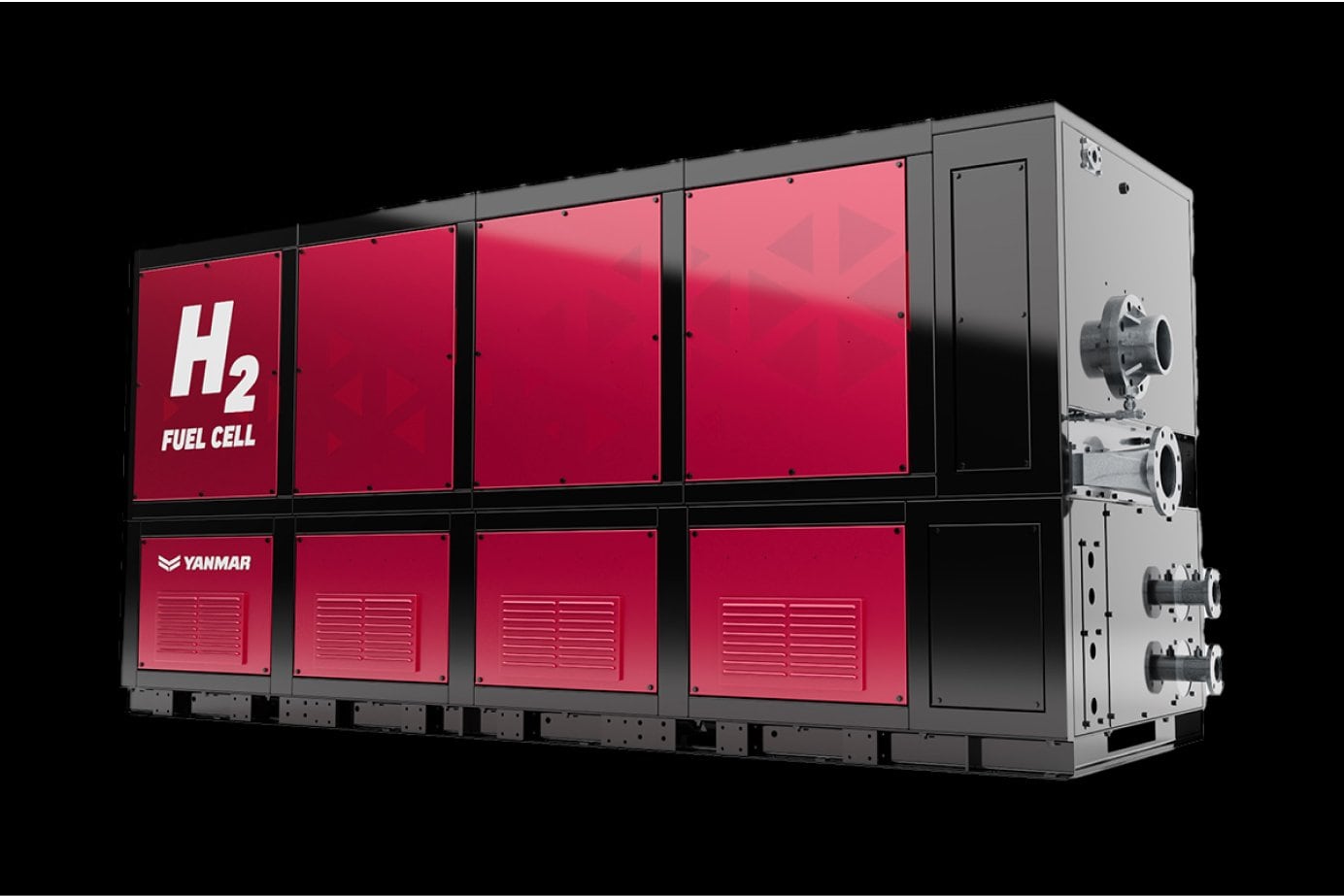
Yanmar's maritime hydrogen fuel cell system not only offers the common benefits of zero emissions, low vibration, low noise, and reduced exhaust odor, but also provides easy installation, scalable output, as well as outstanding safety and reliability.
Total System Solutions
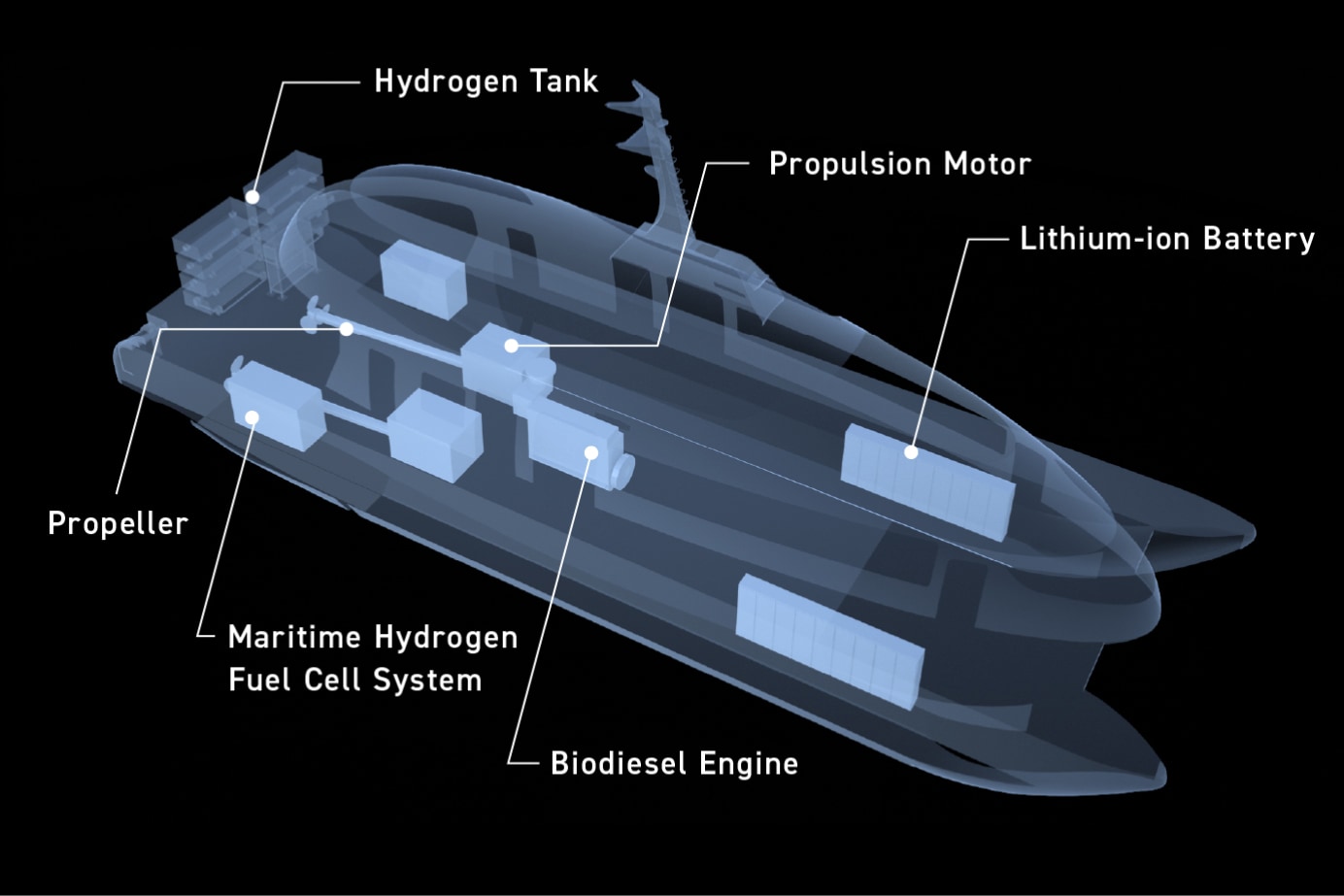
We provide a complete system that includes maritime hydrogen fuel cell systems, lithium-ion batteries, alternative fuel generators, and propulsion motors and propellers.
Hybrid Passenger Vessel "HANARIA"
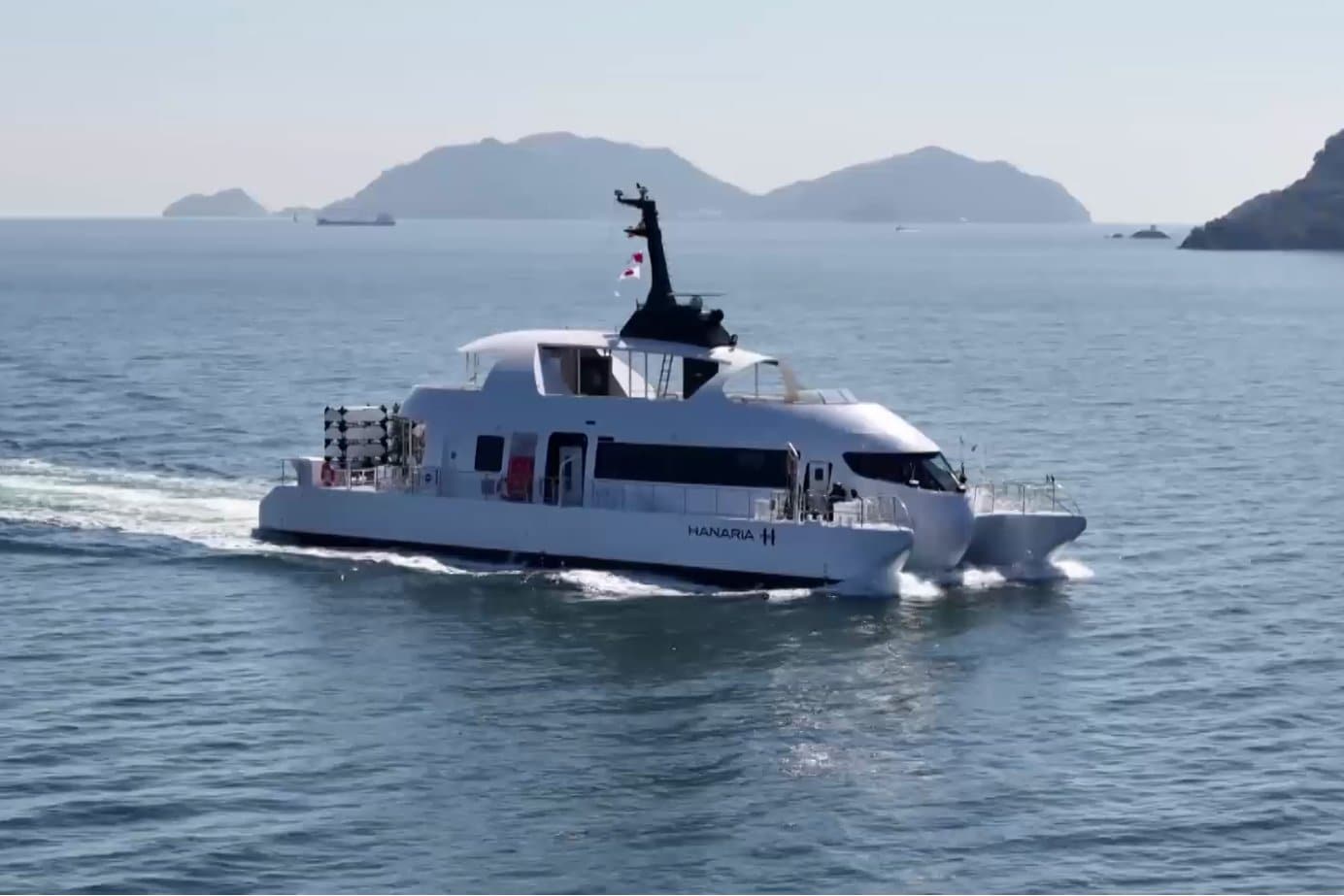
This vessel is equipped with the maritime hydrogen fuel cell system and lithium-ion battery system developed by Yanmar, as well as a system that integrates and controls the entire power supply of the ship. During operation, it can switch between a zero-emission mode, where it navigates using only the maritime hydrogen fuel cell system and lithium-ion batteries, and a hybrid mode, where the hydrogen fuel cell, lithium-ion batteries, and biodiesel generator operate in parallel.
Related Pages
High-Speed Engines