Transforming harsh labor into comfortable work. Everyone can work comfortably and earn a steady income while living a rich life in harmony with nature.
- Work free from unsafe conditions
- Labor saving and higher productivity
- Stable income through new value creation
- Building disaster-resistant communities




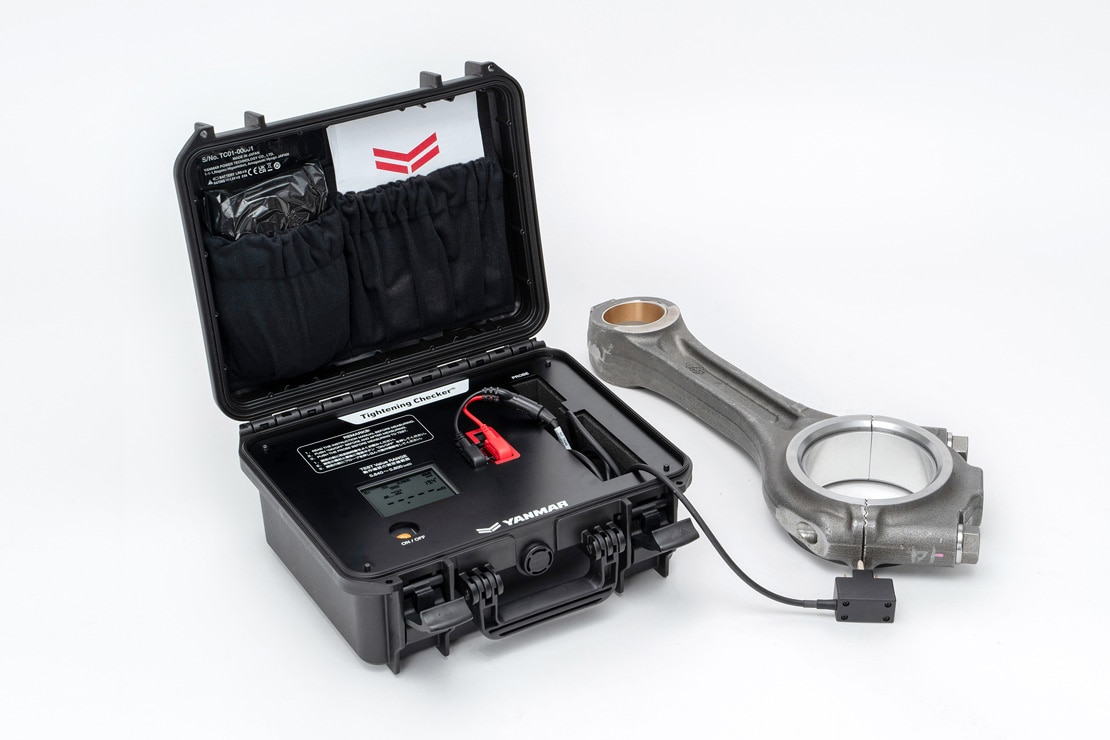
Development of a “Tightening Checker” to Check the Tightening of Engine Connecting Rod Bolts to Prevent Marine Accidents
YANMAR POWER TECHNOLOGY CO., LTD.
Many maritime accidents are caused by human error, making them difficult to prevent. However, when human judgment is difficult, technology to support it is essential, and technological advances are the key to safety.
Yanmar Power Technology Co., Ltd., a group company of Yanmar Holdings, has been addressing the improper tightening of connecting rod bolts, one of the leading causes of marine engine accidents. Traditionally, connecting rod bolt tightness was checked using a hammering test, a method that requires expert skill and does not allow for quantifiable or recorded results.
To solve this, Yanmar Power Technology developed a tightening checker capable of accurately assessing the tightening condition of connecting rod bolts, a critical component of marine engines through an investigation of its own engines. This device allows even less-experienced personnel to perform reliable maintenance checks, while also providing measurable data that can be recorded and managed.
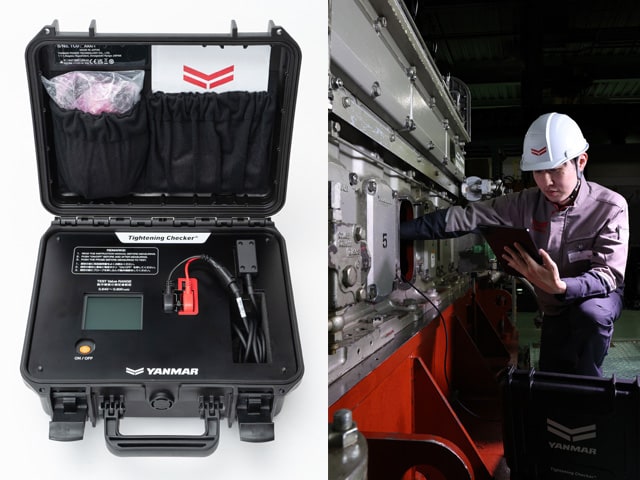
In Japan, the Ship Safety Act requires ship owners to ensure the safety of their ships. However, Yanmar Power Technology and Yanmar Engineering believe that manufacturer support is important for after-sales engine maintenance. By supporting maintenance work with tools such as the tightening checker, the companies aim to enhance safety and increase the overall life cycle value delivered to customers.