Standardizing Your Wheel Loader Fleet: What Are the Concrete Benefits for Construction Professionals?
- Introduction
- Why homogenize your machines? A common-sense approach
- More efficient teams, smoother sites
- Streamlined maintenance and smoother after-sales service
- And what about the commercial relationship?
- When full standardization is not possible
- Partial or modular standardization
- Conclusion
- FAQ: Standardizing Your Wheel Loader Fleet
Introduction
In public works, managing the equipment fleet is a strategic pillar.
Each machine involves resources: financial, human, and technical. Every breakdown or misuse can slow down an entire operation.
In this context, more and more companies choose to standardize their wheel loader fleet by opting for identical or very similar machines.
This approach, often seen as secondary, is actually a significant source of productivity, safety, and cost control.
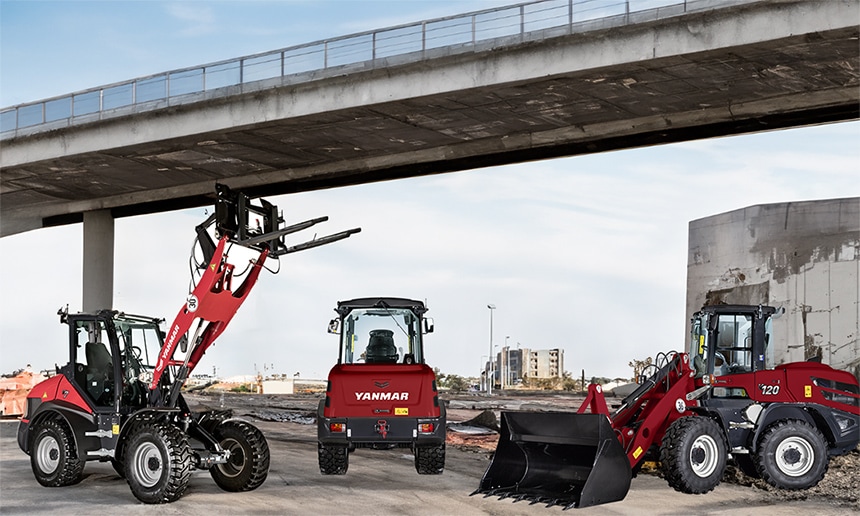
Why homogenize your machines? A common-sense approach
Standardizing a fleet means reducing complexity.
By using loaders from the same range (or at least the same brand), you create a coherent equipment environment, easily manageable by all stakeholders: operators, mechanics, site or fleet managers.
Benefits include:
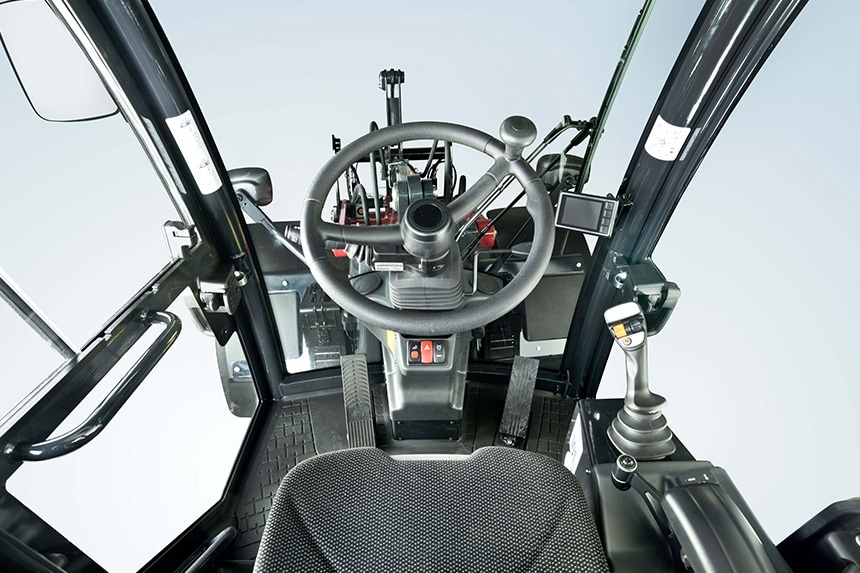
- Less training needed: only one model to learn and master.
- Reduced risk of errors: identical controls, sensors, dimensions.
- Easier substitution in case of unexpected issues: teams can swap machines without relearning.
- Time savings in mechanical diagnostics: symptoms, error messages, and maintenance routines are the same.
A fleet manager in Hauts-de-France explained:
“When all machines operate the same way, operators feel reassured and it prevents unnecessary errors. They save time, and so do we.”
In some cases, this approach goes to extremes. A rental company manager told us he deliberately replaced a stolen machine with an identical loader to those already in the fleet to maintain homogeneity and ease technical management.
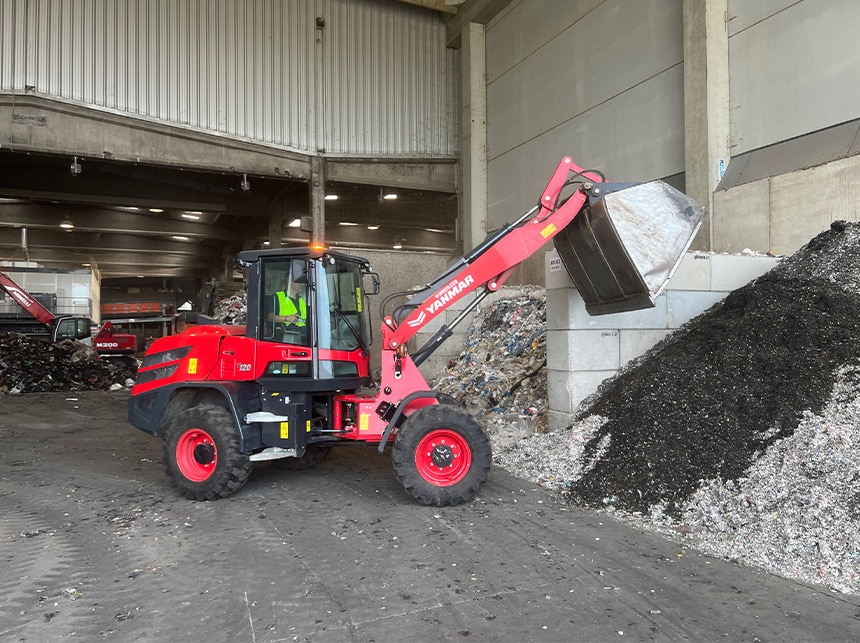
More efficient teams, smoother sites
The feedback is unanimous: identical machines mean fewer frictions.
“We have new drivers rotating across several sites. When they find the same models, they’re operational within 5 minutes.” — Equipment manager at a national civil engineering group.
By standardizing loaders, operators gain confidence. They handle machines they know, have tested on several sites, and anticipate how they behave.
Result: less wasted time, fewer mistakes, and better site fluidity.
This homogeneity also benefits team exchanges:
- Experience feedback is shared and used more quickly.
- Settings can be uniform.
- Incidents become simpler to diagnose internally.
A site manager told us, “When everyone works with the same equipment, there are far fewer frictions.”
Streamlined maintenance and smoother after-sales service
This is often the most decisive argument.
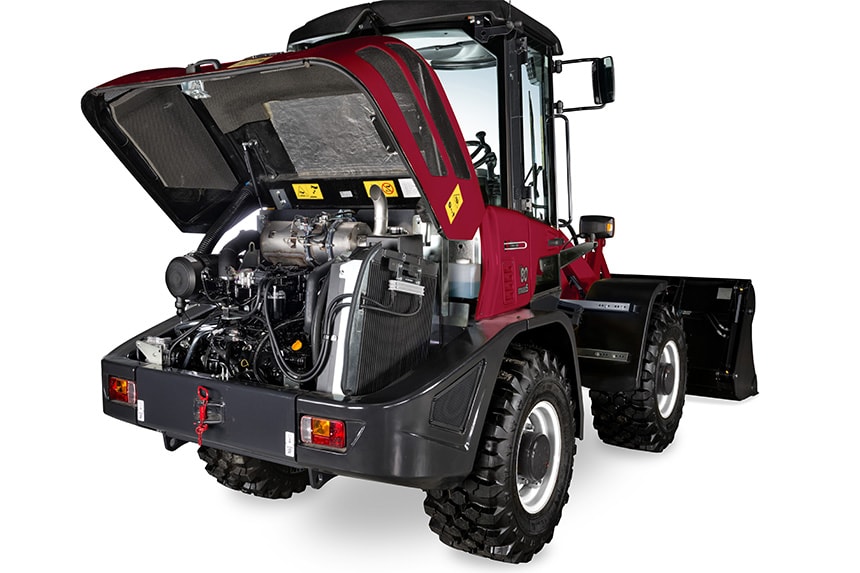
With a standardized fleet, maintenance becomes predictable and reactive:
- One spare parts stock
- Faster diagnostics
- One maintenance routine for all machines
A workshop technician mentioned the ease of management:
“When you know a model’s weak points, you save huge time. You know what to monitor and what to replace in advance.”
Another key point: the relationship with the dealer.
Many clients underline that standardization fosters a trustful relationship with their local after-sales service, which knows their fleet and can anticipate needs.
And what about the commercial relationship?
Standardizing your fleet also helps build a lasting relationship with your supplier or dealer.
It facilitates long-term negotiations on:
- Pricing conditions
- Warranty durations
- Associated services (extended warranty, loan machines, maintenance contracts)
- Trade-in or renewal offers after 3 or 5 years
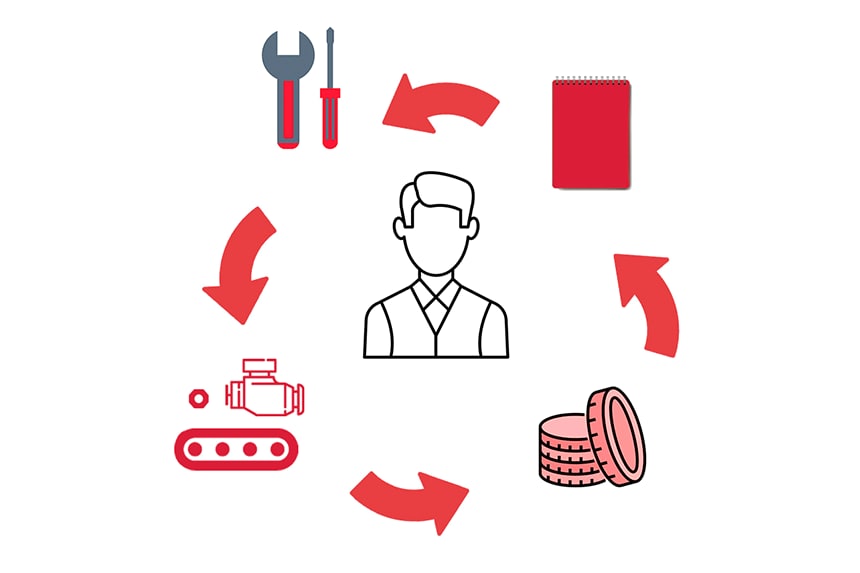
A fleet manager working with a national group said that loyalty to a single brand allowed him to negotiate a favorable master contract, including machines of other brands serviced in the same workshop.
When full standardization is not possible
100% standardization isn’t always realistic or desirable. Sites differ, and some cases require specific adaptations. Here are the main situations where total homogeneity can be problematic — and solutions to address them wisely.
1. Very different site requirements
Urban sites require compact, maneuverable loaders with small footprints and tight turning radii, whereas rough terrain or continuous work with heavy materials demands more powerful, stable machines with reinforced equipment.
In such cases, it’s better to think in terms of a coherent range rather than a single model.
2. Adaptation to peripheral equipment
Some companies use their loaders with specific buckets, timber or rubble grabs, onboard weighing systems, or interfaces for trailers or auxiliary hydraulic equipment.
Not all machines are compatible with all accessories, so sometimes diversifying the fleet is necessary while keeping a technical grouping logic (same manufacturer, same interfaces, same mounting sizes).
3. Budget or contractual constraints
Sometimes budgets at a given time lead to choosing a more accessible model or a recent secondhand machine that doesn’t match the usual model.
Also, companies subject to framework agreements or public contracts may have supplier diversity or competition obligations, limiting strict loyalty to one brand or range.
Partial or modular standardization
Instead of total uniformity, adopt functional coherence, for example:
- Choose a single brand for the entire fleet, even with several models.
- Favor common interfaces (mounting systems, controls, onboard electronics).
- Maintain a common spare parts stock for shared components (filters, tires, safety equipment).
- Uniform maintenance and inspection programs, even across different machines.
The goal isn’t perfection but coherence and progressive simplification.
Conclusion
Standardizing your wheel loader fleet primarily means gaining control, saving time, and improving safety.
It’s also an intelligent way to prepare for the future: simplified maintenance, lasting supplier relationships, and better equipment and performance tracking.
Is it a strategy for every company? Not necessarily.
But for those operating multiple machines across different sites, it’s a serious option to consider.
FAQ: Standardizing Your Wheel Loader Fleet
Q1: What are the benefits of standardizing a loader fleet?
It simplifies maintenance, reduces spare parts costs, and makes operator training easier.
Q2: Does standardization limit the range of possible uses?
No, it involves selecting versatile models suited to the main tasks while minimizing the number of machine types.
Q3: How do you start a standardization process?
Assess the current fleet, analyze on-site needs, and then choose a reduced, reliable range of machines.