Complying with Environmental Standards: How Wheel Loaders Adapt to New Construction Industry Requirements
Introduction
The construction sector can no longer ignore environmental challenges.
Between European regulations, client expectations, and local constraints on urban sites, companies must adapt their practices and equipment.
Among the most impacted machines: wheel loaders, with combustion engines, particle emissions, noise...
But manufacturers like Yanmar are adapting their models to meet these new requirements.
Emission Standards: Where Do We Stand?
“Before, it was all about power. Now, the first question is: is it Stage V?”
— Technical Manager, utilities company
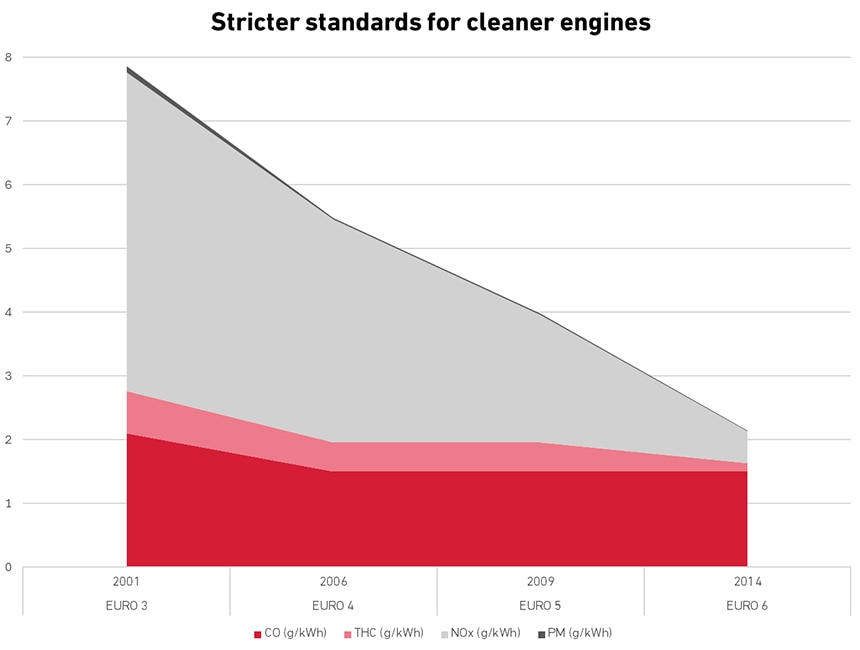
For several years, Europe has imposed pollutant emission standards on non-road mobile machinery (NRMM).
The current standard: Stage V (or "Stage 5")
- Drastic reduction of fine particles and NOx
- Mandatory diesel particulate filter (DPF)
- Engines optimized for cold start emissions
Consequence: it is now impossible to deliver a machine to some public sites without Stage V compliance.
What This Means for Companies
Site access
Tenders often require “Stage V or equivalent equipment.”
It has become a selection criterion.
Brand image
Some companies use it as a selling point:
“We proudly display a 100% compliant fleet with the latest standards. It reassures
Fuel budget
Stage V engines sometimes consume less as they are more efficient — but their maintenance (especially particulate filters) requires real follow-up.
Manufacturers’ Offerings Are Evolving
Manufacturers like Yanmar now integrate:
- Stage V-compliant engines across all recent ranges
- Noise reduction (important in urban areas)
- Intelligent engine speed management (savings + emissions)
- Connected systems to monitor consumption and emissions
“The fact that Yanmar manufactures its own engines gave us confidence. We know where it comes from.”
— Workshop Manager, rental company
Some models even offer eco modes, adapted to precision work or sensitive zones.
Urban Work: Even Stricter Requirements
In some cities (Paris, Lyon, Geneva...), requirements exceed European standards.
We now speak of:
- LEZ (Low Emission Zones)
- Noise restrictions by time
- Carbon neutrality on public sites by 2030
“In city centers, a machine that is too noisy or polluting is refused. We have to plan accordingly.”
Solutions used:
- Compact, quiet machines
- Well-maintained fleet (no visible smoke)
- Maintenance contracts with filter monitoring
Concrete Questions to Ask Before Purchase
- Is the engine Stage V certified?
- What is the noise level during use?
- Is there an economical or smart mode?
- What are the maintenance intervals for the pollution control system?
- Are there sensors to monitor emissions?
A Gradual but Inevitable Transition
Interviewed companies all confirm the increasing environmental constraints.
Some have already converted 100% of their fleet. Others proceed step-by-step, adapting priorities:
“We started by renewing machines used in the city. The rest will follow.”
Conclusion
Choosing a wheel loader today means anticipating tomorrow’s uses.
Standards will not relax — they will tighten.
Betting on a compliant, optimized model adapted to your work areas is:
- a responsible investment
- a commercial advantage
- and a guarantee of longevity in tenders
Next read: Why field teams directly influence purchasing decisions?
FAQ: Environmental Standards and Wheel Loaders
Q1: What environmental standards affect wheel loaders?
Emission standards (Stage V, Euro 6), reduced fuel consumption, and material recyclability.
Q2: Why comply with these standards?
To reduce environmental impact, comply with regulations, and avoid penalties.
Q3: Are there subsidies for purchasing compliant machines?
Yes, some countries or regions offer grants or ecological bonuses.