






















-
A virtual solution to a real energy crisis
-

Driving Sustainability with the Farm Circular Solution
-
The Marine Technology Experience
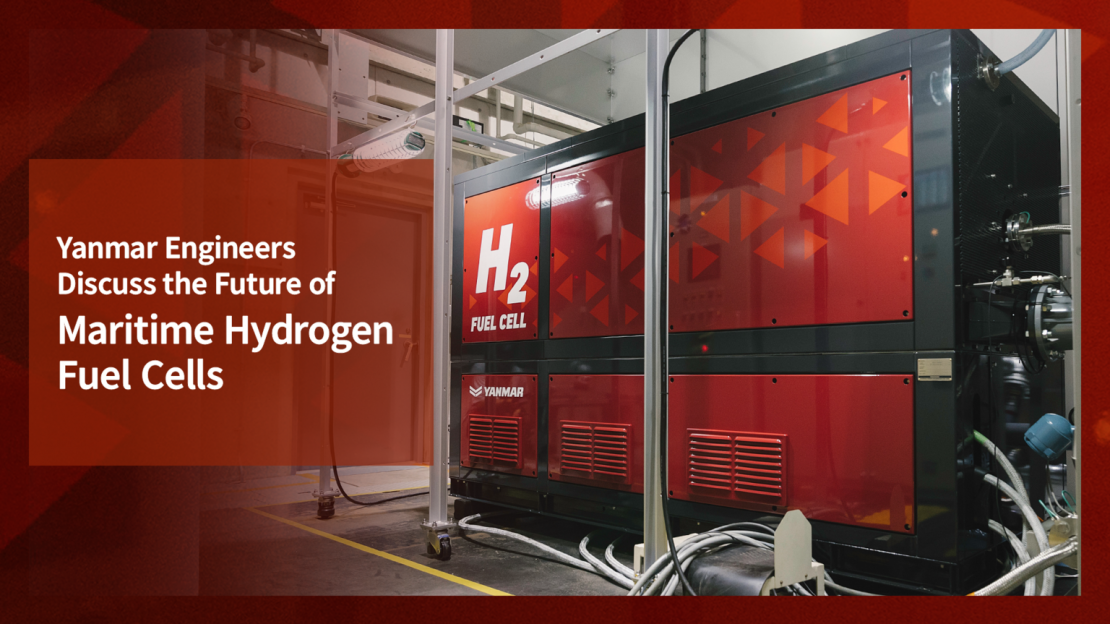
Hydrogen fuel cells are attracting attention as a zero-emission power source that emits neither greenhouse gases such as carbon dioxide nor air pollutants such as nitrogen oxides. Around 2018, Yanmar accelerated its development of maritime hydrogen fuel cell systems constructing a test vessel equipped with a hydrogen fuel cell system, hydrogen tank, and lithium-ion batteries., The company also conducted 70 MPa hydrogen refueling tests and sea trials at Kunisaki Bay, Oita, Japan as well as in the waters around the Expo 2025 Osaka site.
In 2023 Yanmar commercialized its maritime hydrogen fuel cell systems. Since delivering the system to the passenger ship HANARIA, based out of Moji Port in Kitakyushu City, Fukuoka, the company has been making steady progress in this field.
Hydrogen fuel cell systems are one of the technologies supporting Yanmar’s “Purpose: Why We Exist” is “A SUSTAINABLE FUTURE — New Value through Technology —”. In this interview, Takehiro Maruyama and Takuya Hiraiwa, who are leading this project, discuss their journey so far and their vision for the future.
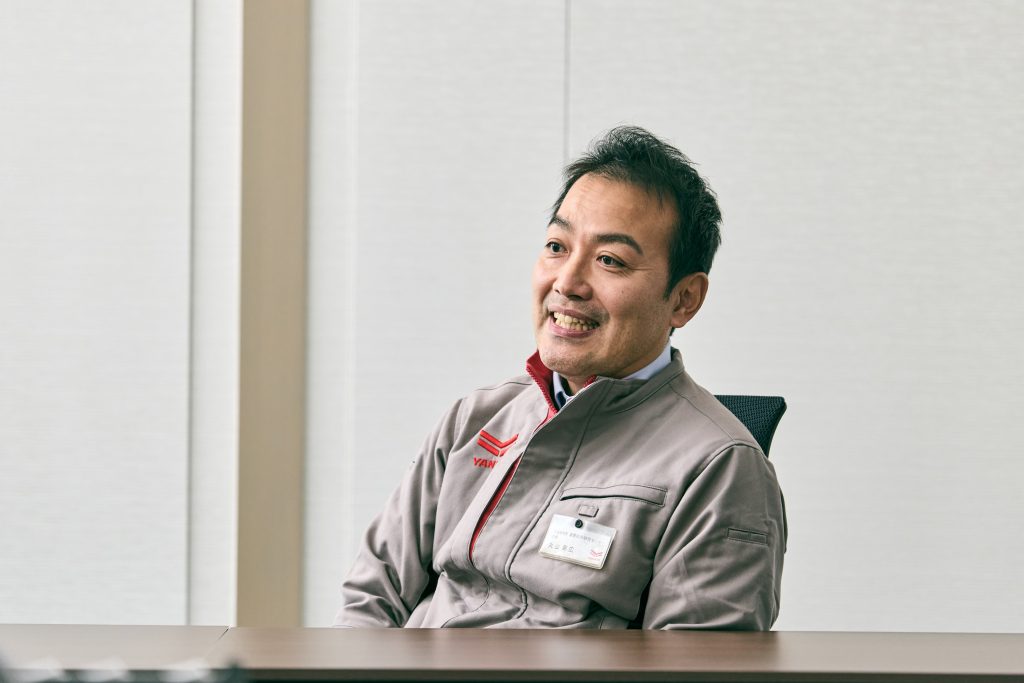
Innovation & Technology Division, YANMAR HOLDINGS CO., LTD.
Maruyama joined Yanmar in 2016. Drawing on his previous experience in fuel cell system development, he has served as project leader for maritime hydrogen fuel cell system development since 2018. He is currently responsible for research and development for global model and hydrogen safety. He also serves as convener of Working Group 305 (WG305) for the development of safety standards for maritime hydrogen fuel cell systems at IEC (International Electrotechnical Commission) on Fuel Cell Technologies (TC105).
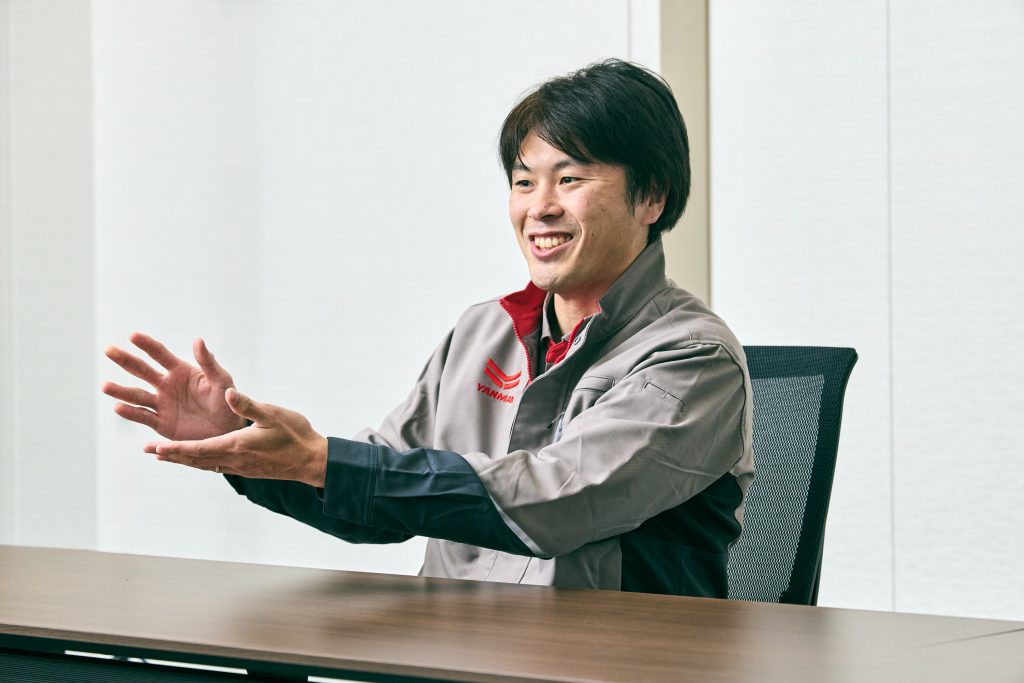
System Engineering Division, YANMAR POWER SOLUTION CO., LTD.
Hiraiwa joined Yanmar in 2012. He participated in demonstration tests and related projects commissioned by Japan’s Ministry of Land, Infrastructure, Transport and Tourism and the Ministry of the Environment to establish safety guidelines for hydrogen fuel cell ships and formulate a hydrogen deployment roadmap. Since 2018, he has been involved in developing technologies for regulatory compliance and the integration of maritime hydrogen fuel cell systems with lithium-ion batteries and propulsion motors. He currently serves as project manager for customer projects involving maritime hydrogen fuel cell systems, including HANARIA.
What is the Maritime Hydrogen Fuel Cell System that Yanmar is introducing to the market?
――Yanmar is developing fuel cell technology that generates electricity using hydrogen. Mr. Maruyama and Mr. Hiraiwa, could you explain what a “maritime hydrogen fuel cell system” is?
Maruyama: A hydrogen fuel cell, as the name suggests, is a device that generates electricity using hydrogen as fuel. Electricity is generated through an electrochemical reaction between hydrogen and oxygen in the air, and the only byproduct is water. Unlike fossil fuel-powered internal combustion engines, hydrogen fuel cells emit neither greenhouse gases such as carbon dioxide, nor any pollutants such as nitrogen oxides. As a result, they are a zero-emission power source with minimal environmental impact. They are also quiet, produce little vibration, and generate no unpleasant odors.
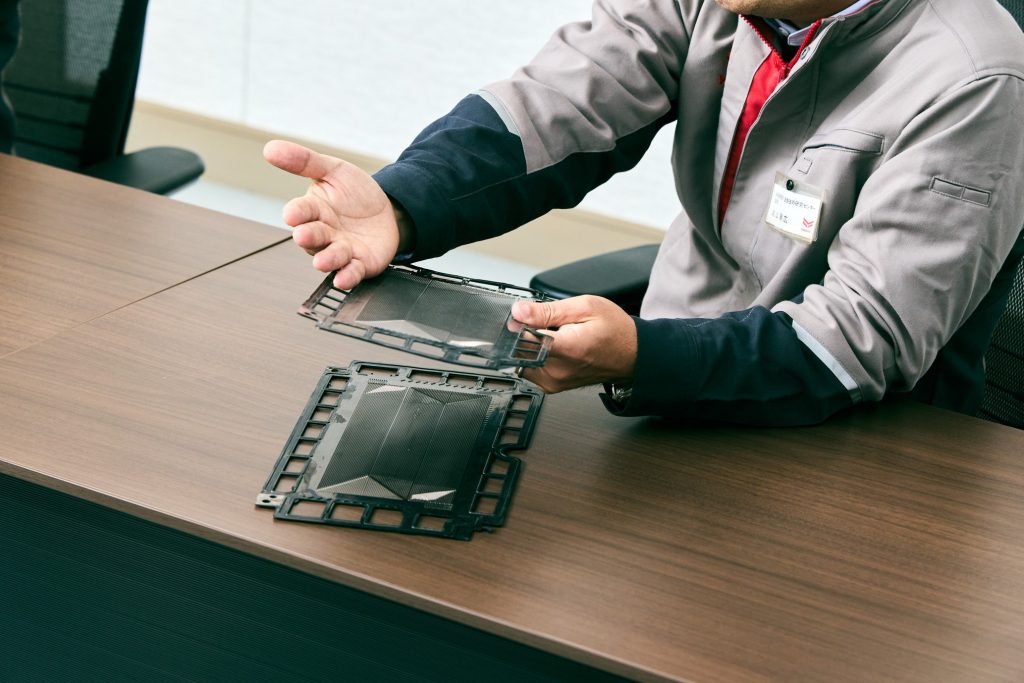
Hiraiwa: Fuel cell vehicles (FCV) are becoming increasingly common in the automotive market, but hydrogen fuel cells used for cars cannot simply be used in ships without modification. One reason is the difference in salt concentration between marine and inland environments.
If salt-laden sea air enters the fuel cell, performance degradation may occur, making filtration systems essential. We also had to address challenges unique to the marine environment such as vessel motion and heeling, varying customer requests regarding rated output of fuel cell system, and strict maritime safety standards. Most importantly, we were able to identify technical issues, understand customer needs, and collaborate closely with related industries and government agencies. We are deeply grateful to everyone who supported our maritime fuel cell system development during the difficult period of the COVID-19 pandemic.
Read more about Yanmar’s maritime hydrogen fuel cell system development here.
Providing flexible solutions tailored to customer needs rather than pursuing 100% hydrogen immediately
――I understand that development started 10 years ago. Could you tell us how the project began?
Maruyama: The project began in 2015, when Land, Infrastructure, Transport and Tourism in Japanese government launched an initiative to establish Safety Guidelines for Hydrogen Fuel Cell Ships and Yanmar joined the project. At the time, there was a need for guidelines covering the safe design and operation of ships equipped with hydrogen fuel cells, and we decided to collaborate in developing those guidelines.
Around 2018, “zero emission” became a major global focus. In the maritime field as well, momentum increased after the International Maritime Organization (IMO) announced a target to reduce total GHG emissions by at least 50% by 2050 (compared to 2008 levels). Around that time, hydrogen fuel cells started to come up more often in conversation with our customers.
Historically, Yanmar’s business focused on fossil fuel engines. However, we recognized our responsibility to respond to customer demands for technologies that comply with future greenhouse gas and zero-emission regulations. We believed this field should become a greater focus for the company, so we started developing a test vessel with team members from multiple departments. Personally, I worked on this with the hope that many people would have the chance to experience a ship powered by hydrogen fuel cells and to deepen their understanding of the technology.
――How did customers respond once development began?
Hiraiwa: Fortunately, we received inquiries from many customers. We have been developing not only the hydrogen fuel cell systems themselves, but also integrated powertrain technologies including lithium-ion batteries, motors, hydrogen tanks, and engines onboard. There were many positive responses, perhaps because we could provide the entire powertrain including hydrogen fuel cell systems tailored to each customer’s needs. Also, it might be too early for some customers to completely transition to hydrogen fuel cells right now even though they want to achieve zero emissions in the future. Our strength lies in our ability to provide flexible options, including hybrid powertrains that combine engines and fuel cells. That flexibility comes from Yanmar’s long history as an engine-focused company.
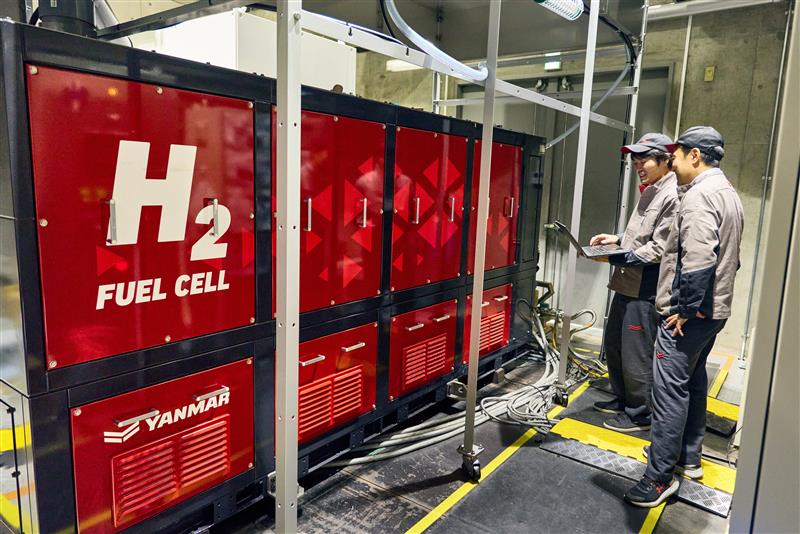
――Is it difficult to commercially operate a ship powered entirely by hydrogen fuel cells at this stage?
Maruyama: It depends on the size. For large ships, it remains quite challenging. The reason is that the global hydrogen supply infrastructure has not yet been enough established, so there will inevitably be bottlenecks in hydrogen supply.
However, we believe that there is no need to switch all at once. In the first stage, implementation of hydrogen fuel combined with a biodiesel engine would be a major step forward compared to the past when we only used fossil fuel. Then, as the hydrogen supply infrastructure develops, we can gradually bring the ratio of hydrogen fuel closer to 100%.
――Taking a realistic approach based on current social conditions seems like a significant strength.
Hiraiwa: Our goal is to become a system integrator for hydrogen-fueled ships. Acquiring all the necessary technologies to utilize hydrogen as energy, including the hydrogen fuel cell system, engine, switchboard, motor, and propeller, and delivering them to our clients in a full package that also includes service is a major business strength. At the same time, we believe that it is important to create an environment where people can use hydrogen safely.
Maruyama: Yanmar’s traditional business focused on selling individual products. However today, we are also focused on delivering experiences and solutions that solve customer challenges by combining hydrogen fuel cell systems with integrated technologies and services.
Significant organizational growth through overcoming challenges
――You mentioned that there have been many inquiries. Could you share any specific examples?
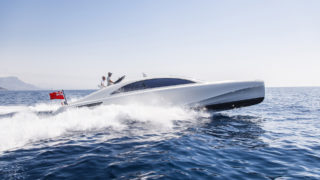
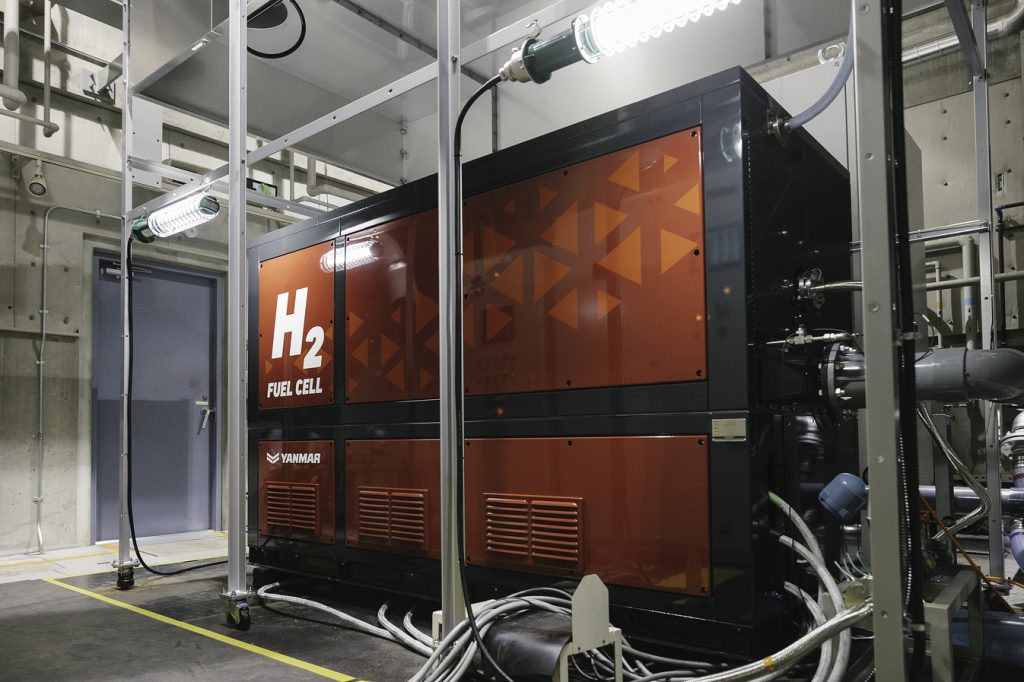
Maruyama: One example is HANARIA, a passenger ship equipped with our GH240FC hydrogen fuel cell system, which started operating at Moji Port, Kitakyushu City, Fukuoka, Japan in 2024. It was our first customer project and the first domestic commercial passenger ship in Japan to adopt hydrogen fuel cells.
―― Mr. Hiraiwa, you led the HANARIA project…
Hiraiwa: Yes, the project lasted about two years, and I worked hard on it. Because it was our first customer project, there considerable technical difficulties. The most challenging task was system integration, which involved combining three power sources: the hydrogen fuel cell system, lithium-ion battery, and a biodiesel engine. It was a demanding journey, but our entire team, including the service department, were able to achieve significant growth while bringing the technology to market.
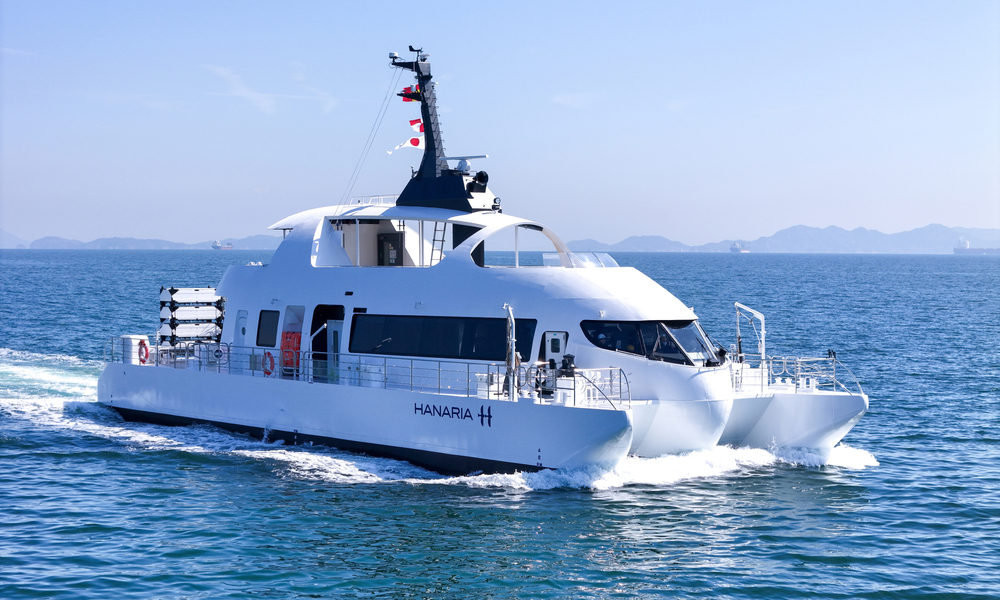
――HANARIA won the Marine Engineering of the Year 2024 (Dokou Memorial) award, given to outstanding technology in the marine engineering field, and the Ship of the Year 2024 award, for an outstanding ship from technical, artistic, and social perspectives. You must have been delighted with this recognition…
Hiraiwa: Yes. It was the first time for a ship to win both awards simultaneously, so I was really happy. It made me feel that it had been worth all the struggles [laughs].
Of course, many people contributed: the shipowner and shipbuilder, Toyota Motor Corporation which supported us in the development of the maritime hydrogen fuel cell system, the supplier of the specialized piping, the trading company that procured specialized parts, and numerous Yanmar personnel in charge of service, procurement, production, sales, PR, design, and intellectual property. The list goes on. This project made me truly realize the power of many people working together with a shared purpose. I’m grateful to everyone who was involved.
Looking ahead to the next 50 and 100 years
――The number of projects in Japan continues to grow. Are you planning to expand overseas in the future?
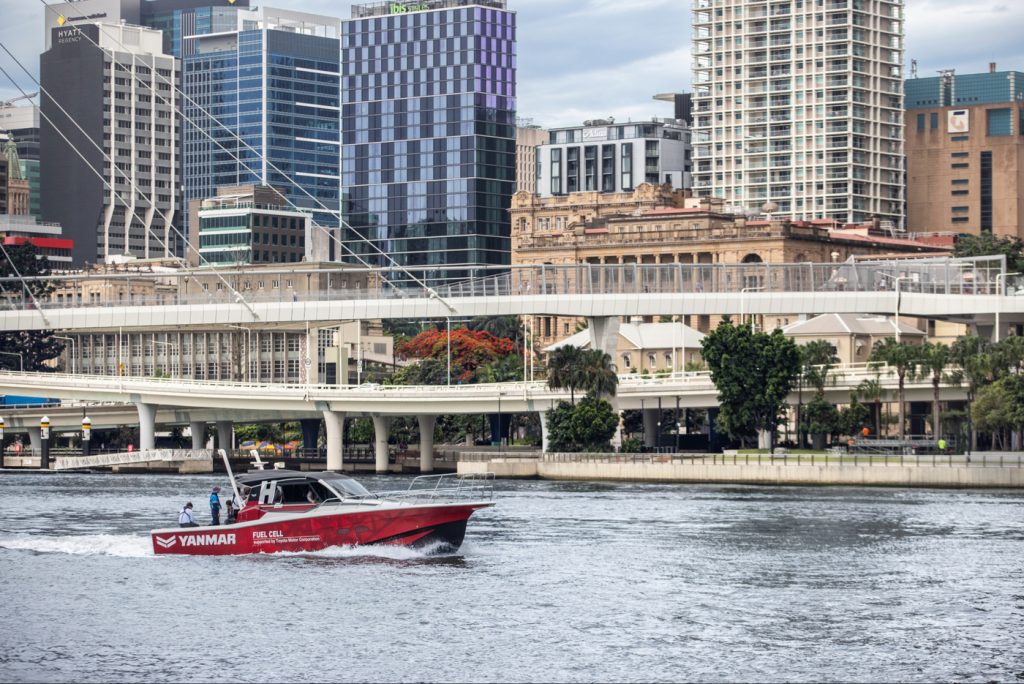
Maruyama: Yes, we are steadily preparing for overseas expansion. In November 2025, Yanmar conducted the first overseas trial of a hydrogen fuel cell ship in Brisbane, Queensland, Australia. The project combined green hydrogen made with Australian renewable energy and Japanese hydrogen fuel cell technology. It was a very meaningful project in terms of understanding how our initiatives are received overseas and the key requirements in those markets.
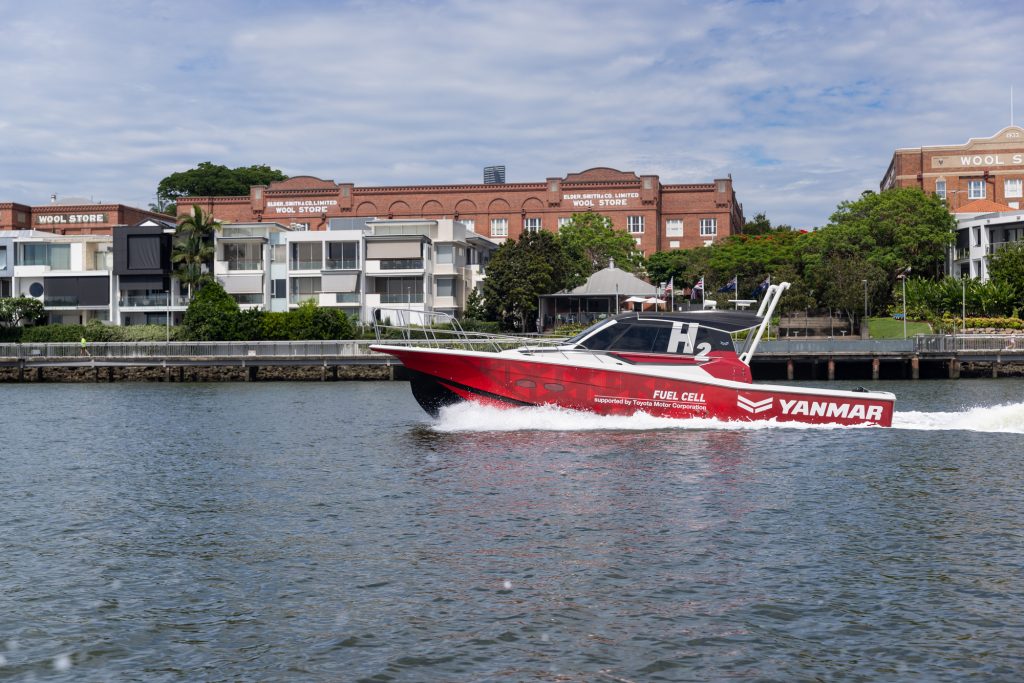
We are also working towards obtaining approval for maritime hydrogen fuel cell systems from a European certification body by the end of 2026, and overseas expansion is expected to begin after that.
――Will it take some time before the market environment and hydrogen supply infrastructure for ships is ready?
Maruyama: That’s right. Formulation of rules and standards regarding hydrogen fuel cell ships is still in progress both in Japan and internationally, and infrastructure that can supply large quantities of hydrogen is still under development. At present, many countries appear to be proceeding cautiously due to various economic and social factors.
What we can do is to continue sharing these initiatives to help build momentum for the wider adoption of hydrogen fuel cells in maritime applications. We will continue passing on our expertise and vision to the next generation.
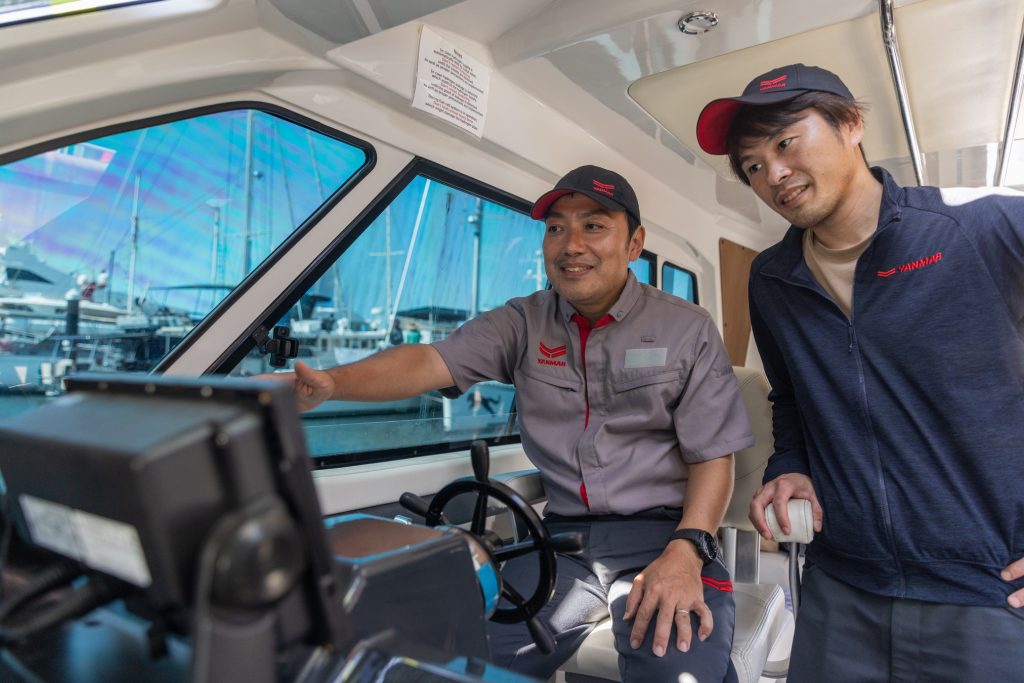
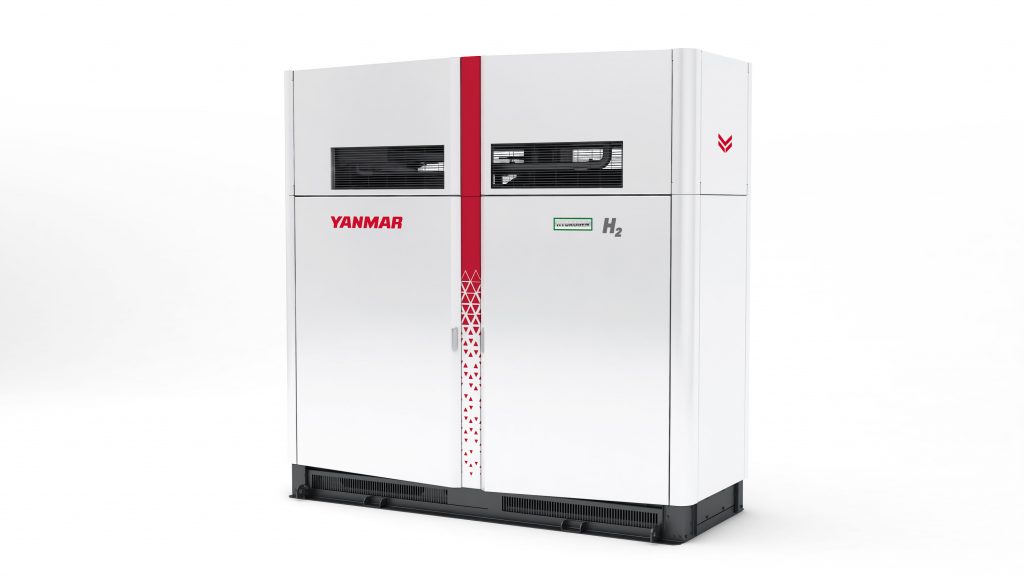
Hiraiwa: As well as developing hydrogen fuel cell systems, we are also developing hydrogen engines, steadily making progress step by step. The Yanmar Group is also expanding its hydrogen-related initiatives. In 2024, Yanmar Energy System introduced a stationary hydrogen fuel cell power generation system.
――So both of you are working on what you can do now, focusing not only on short-term goals but also the distant future…
Maruyama: Yanmar’s “Purpose: Why We Exist” is “A SUSTAINABLE FUTURE —New Value through Technology —.” As a company, we focus on the future 50 or 100 years from now. We do not want to let hydrogen fuel be a passing trend; rather, we want it to become a standard technology for the future.
To do this, we will continue to steadily build on what we can do today, as Mr. Hiraiwa just said. Together with partners around the world, we are working toward a sustainable future.
*The job titles of interviewees were correct at the time of the interview.
Interview/text: Noriyuki Enami (Yajirobe) Photos: Marie Ishihara