





















-

Driving Sustainability with the Farm Circular Solution
-
Cultivating Innovation on the European Sake Rice Journey
-
A virtual solution to a real energy crisis
-
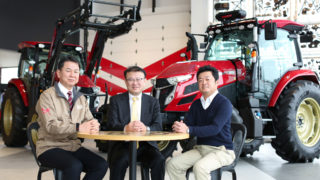
Changing the Future of Agriculture!
Researchers, Farmers and Engineers Taking on the Challenge of Robot Tractor Development
Due to an aging farming population and a shortage of younger generations to take over their work, the amount of abandoned farmland is increasing. Once farmland stops producing vegetables or rice and no one takes care of it, it eventually becomes abandoned. If this trend continues, Japanese agriculture may struggle to survive.
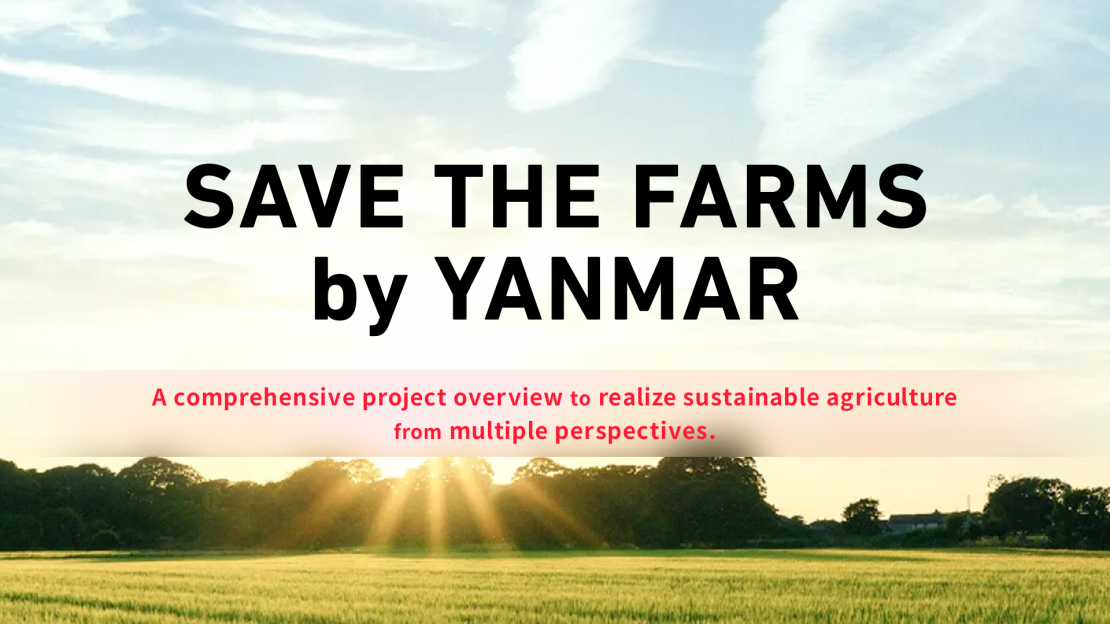
In 2025, Yanmar launched the SAVE THE FARMS by YANMAR project to promote sustainable agriculture. With this initiative, we spoke with project members about how they are working to sustain farmland and ensure agriculture continues to thrive for years to come.
Sustaining Farmers and Safeguarding the Farmland of the Future
Yanmar launched the SAVE THE FARMS by YANMAR project in 2025 to realize sustainable agriculture. First, could you give us an overview of the initiative?
Kenichi Tanaka: Even before the term “sustainable” became widely used, Yanmar adopted the brand statement “A SUSTAINABLE FUTURE — New Value through Technology―,” offering solutions aimed at realizing a sustainable future for society. Guided by this philosophy, the SAVE THE FARMS by YANMAR project was created to help farmland endure and remain productive for the generations ahead.
Japanese agriculture currently faces various challenges. Of particular concern is the aging population of farmers and the lack of farmers coming through in the younger generation. If this trend continues, much farmland may end up abandoned. Before this happens, a system must be established to keep farmland productive.
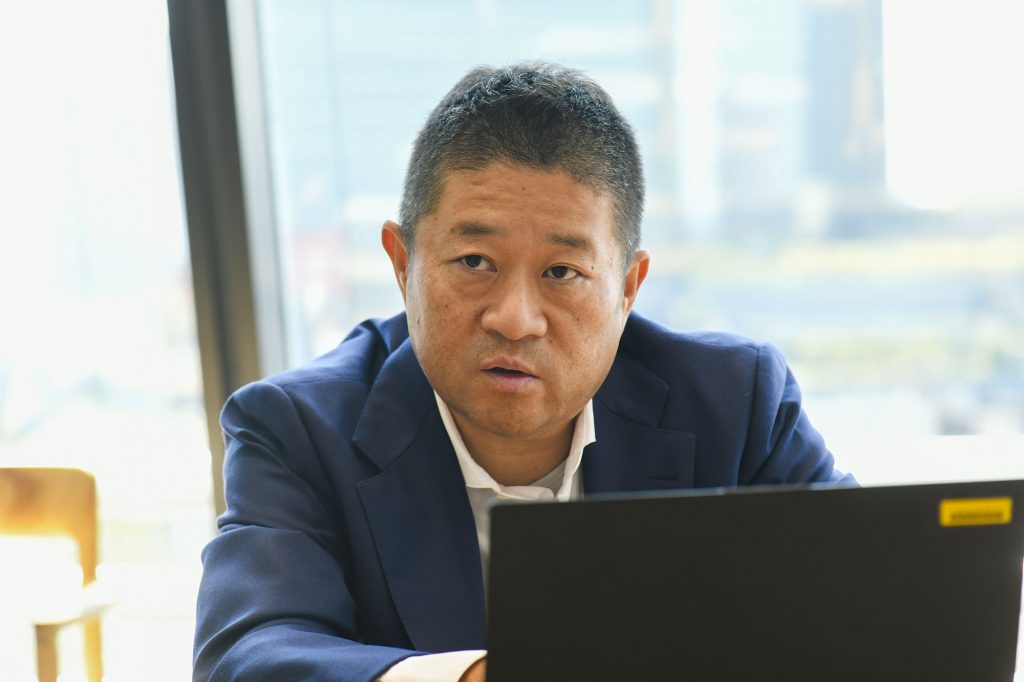
Team Leader, Business Planning & Administration Team, Yanmar Network Organization “Yanmar Sustainable Farm”, Yanmar Holdings Co., Ltd.
Leader of the project’s business planning and management team. Currently in charge of planning the Maibara City’s Decarbonization Leading Area project and is promoting demonstrations of renewable energy supply projects. Leveraging his expertise in the energy sector, he is responsible for the entire project’s planning and implementation from conception to launch.
What specific measures are in the project’s plan to maintain productive farmland?
Tanaka: Our first priority is to bring more new people into agriculture. At the same time, we must address the issue of farmers leaving the industry. Equally important is making farming a profession that children can look up to and aspire to in the future. To achieve this, we must establish a system where farming generates stable profits. That means using technology to improve efficiency and reduce the burden on farmers.
As the first initiative under SAVE THE FARMS by YANMAR, we have launched a solution that combines regenerative agriculture with solar power generation on farmland. This initiative is designed to support the realization of stable farming businesses. Members from across the Yanmar Group, including Yanmar Holdings Co., Ltd., Yanmar Agri Japan Co., Ltd., and Yanmar Energy System Co., Ltd. have come together advancing the project with combined efforts across the Group.
I’d like to ask about regenerative agriculture and agrivoltaics models later on. For now, could you tell us more about the current state of Japanese agriculture and the challenges it faces? As you mentioned earlier, the aging of the farming population and the shortage of a younger generation of farmers are issues. How has the aging of the farming population grown at this point?
Tanaka: The average age of farmers in Japan is currently 69.2 years old. (1) One example is Mr. Kengo Sato, a farmer in his 60s who participates in the SAVE THE FARMS by YANMAR project in Okayama City, Okayama Prefecture. Despite his age, he is considered a young farmer. There is also a severe shortage of younger farmers coming through into the industry. In a survey of farmers, about 70% responded that they have no one to take over their operation. (2)
Given this situation, the amount of abandoned farmland left untended for years without crops continues to increase. Additionally, while not officially designated as abandoned, it is believed that a considerable amount of farmland is not actually being used for farming.
(1) Source: Statistics on Agricultural Labor Force, Ministry of Agriculture, Forestry and Fisheries
(2) Source: 2020 Census of Agriculture and Forestry, Ministry of Agriculture, Forestry and Fisheries
What problems might arise if the amount of abandoned farmland increases due to more people giving up farming and a shortage of people to take over farm operation?
Tanaka: Even if the number of new farmers increases or companies enter the agricultural sector to compensate for the shortage of workers, there won’t be enough farmland to accept them if the amount of abandoned farmland continues to grow. If existing farmland is not maintained, it could lead to serious consequences. For example, we might find ourselves in a situation where Japan eventually stops producing rice, meaning we could no longer eat Japanese rice.
Supporting Farming Businesses through Regenerative Agriculture and Agrivoltaics Models
Could you tell us about regenerative agriculture and agrivoltaics models, the first solutions under the SAVE THE FARMS by YANMAR initiative?
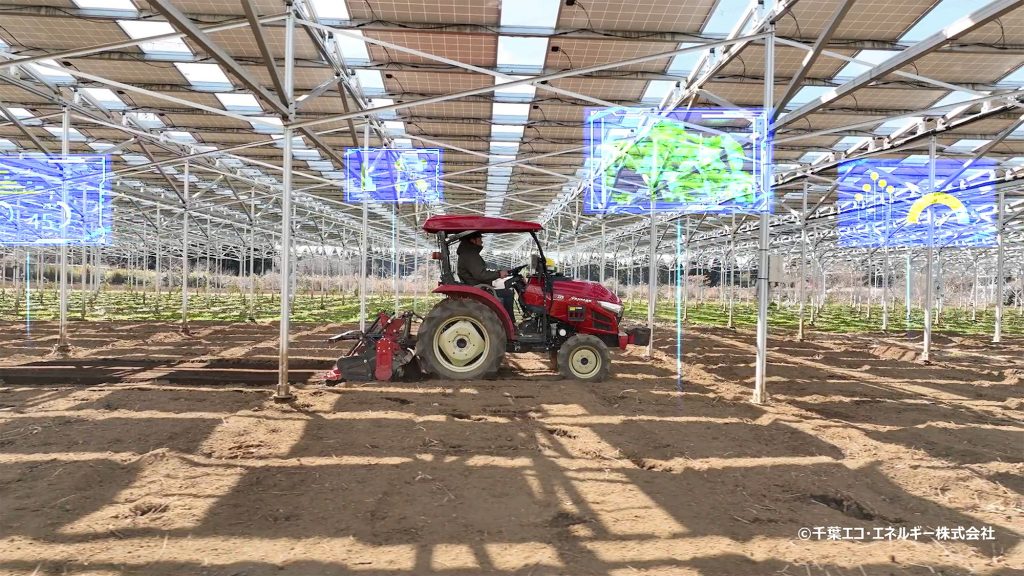
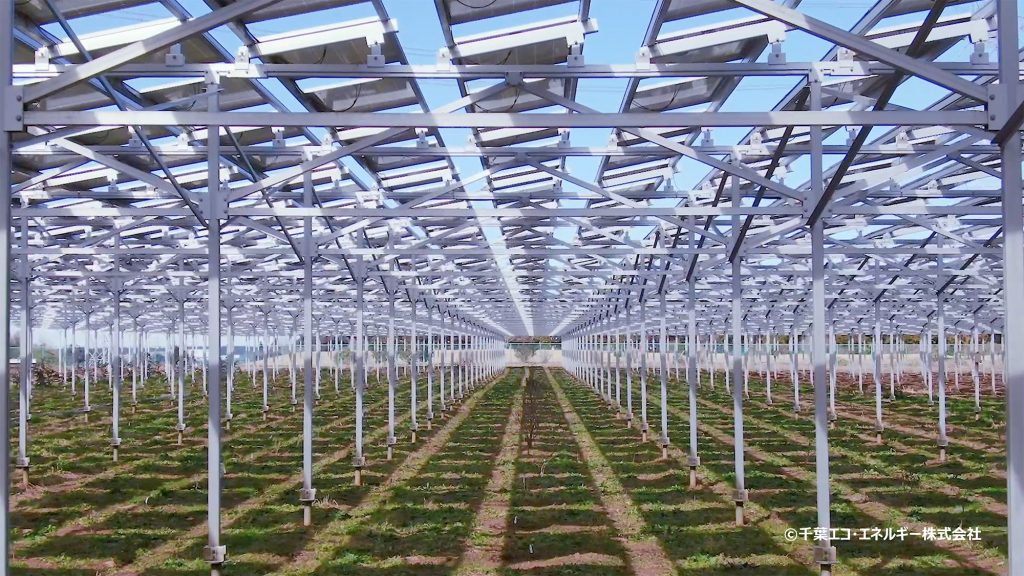
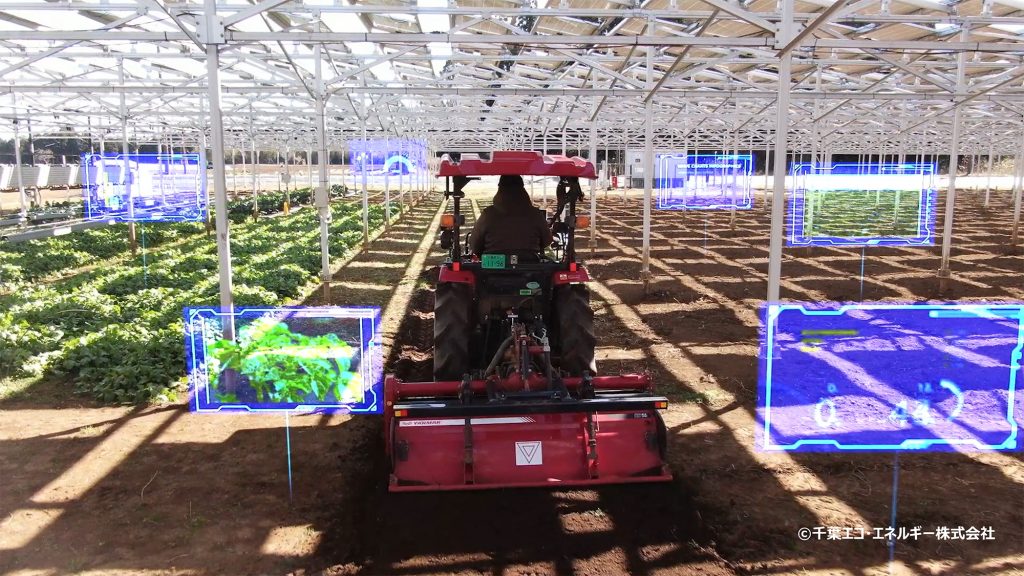
Tanaka: Agrivoltaics refers to a technology that creates solar power on farmland, generating renewable energy while simultaneously carrying out farming. Pillars are erected on farmland to install solar power equipment, and farming can continue beneath this equipment. This system enables farmers to generate income from electricity production and selling surplus power while continuing their farming activities.
Our goal is to develop new solutions by combining this technology with regenerative agriculture, which reduces greenhouse gas emissions from farming while improving soil quality. This approach supports stable farming businesses while reducing environmental impact.
Are there any sites already in operation?
Tanaka: Currently, two model types are moving toward full-scale operation. One is the Yanmar-led model, in which Yanmar leases farmland in Ritto City, Shiga Prefecture, and Yanmar Symbiosis Co., Ltd., a subsidiary within the Yanmar Group, undertakes the farming operations. The other is the farmer-led agrivoltaics model, in which farming operations are entrusted to farmers. This model is proceeding in Okayama City, Okayama Prefecture. Looking ahead, we aim to expand the number of cases across the country, with a focus on the two models: the Yanmar-led model and farmer-led agrivoltaics model.
Could you explain in more detail the differences between the Yanmar-led model and the farmer-led agrivoltaics model?
Tanaka: First, the approaches leading up to the implementation of the solutions are quite different. The Yanmar-led model starts by identifying abandoned or unused farmland. After acquiring it, we handle the farming activities, as well as the construction, management, and operation of the solar power generation equipment, in-house.
In the farmer-led model, solar power systems are installed on farmland where farmers are already engaged in farming. Yanmar handles the construction, management, and operation of the solar power generation equipment while the farmers continue their farming activities. A portion of the revenue generated from power generation is returned to the farmers. Additionally, this model supports stable farming operations by providing assistance with smart farming and improving management efficiency.
Why are there two types of models?
Tanaka: The Yanmar-led model focuses more on regenerating farmland that is already abandoned back into usable land. The farmer-led model aims to prevent farmers from giving up farming and to stop the increase of newly abandoned farmland. Each model has a different purpose.
In any case, it’s unrealistic to implement the Yanmar-led model on all of Japan’s farmland. Therefore, I believe it’s important to gradually expand our initiatives by collaborating with partners such as local farmers and landowners.
Ms. Adachi is joining the project from Yanmar Agri Japan, which sells agricultural machinery, and Mr. Mino is joining from Yanmar Energy System, which deals with energy equipment, such as generators and air conditioning systems. What are your respective roles?
Ayumi Adachi: There are two major roles for Yanmar Agri Japan in this project. First, for the agrivoltaics model, we examined machinery that could operate without hinderance to farm work when solar power equipment is installed on farmland.
Another key initiative is regenerative agriculture, which uses various techniques such as rice husk biochar production, ratoon rice cropping, and extending the mid-season drying period for rice. I was responsible for examining the best way to combine these methods to reduce environmental impact while ensuring sufficient yields.

Farming Support Team, Yanmar Network Organization “Yanmar Sustainable Farm”, Yanmar Agri Japan Co., Ltd.
Member of the farming support team for this project. Supports the regenerative agriculture initiative launched in Okayama City, Okayama Prefecture.
Yota Mino (hereinafter Mino): Yanmar Energy System’s primary role involves the design, construction management, and operation of power generation equipment for agrivoltaics models. We also handle the installation application procedures with relevant parties such as power companies and transmission/distribution companies.
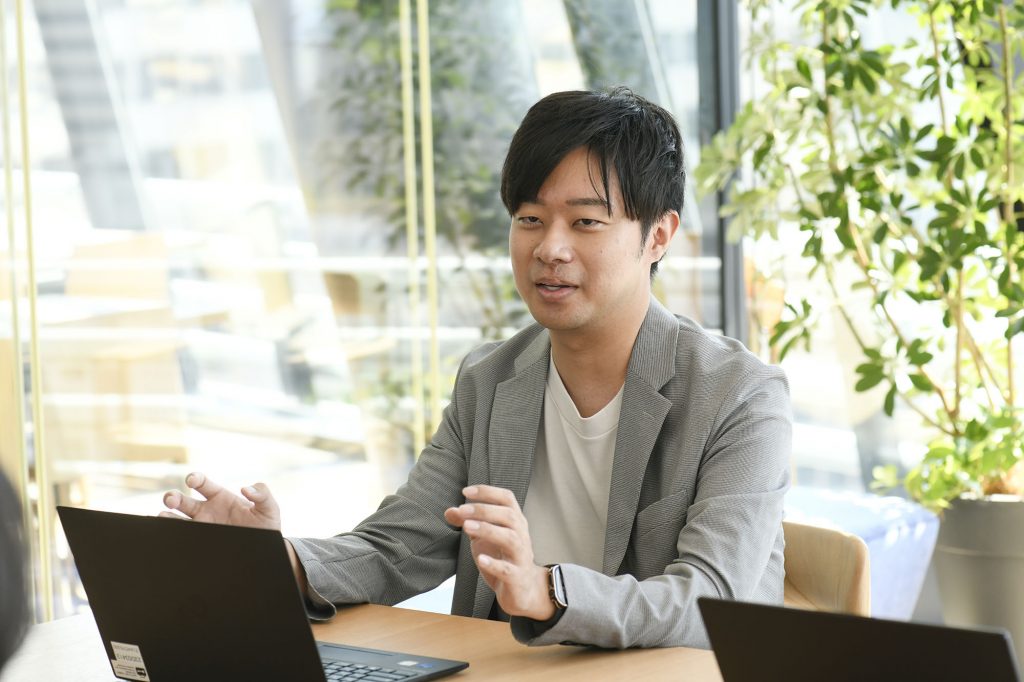
Power Generation Team, Yanmar Network Organization “Yanmar Sustainable Farm”, Yanmar Energy System Co., Ltd.
Member of the power generation team for this project. Responsible for areas such as agrivoltaics equipment design.
What particular challenges did you face in carrying out your roles?
Adachi: The most important thing is to avoid having the solar power equipment interfere with farming and cause an additional burden for farmers. To prevent that, we need to maintain close communication with the farmers and carefully design the layout, incorporating their feedback. For the Ritto City and Okayama City projects, we reviewed the plans repeatedly, considering various scenarios, such as, “with this design, the combine harvester won’t be able to turn around,” and “if we install certain machinery in the future, these pillars will get in the way.”
Additionally, we must consider how the shade created by the solar power generation system installed on top of the farmland will affect crop yields. Although we consulted with R&D facilities such as The Bio Innovation Center Kurashiki Laboratory, Okayama Prefecture, different farmlands have different shapes, climates, and other environmental factors, so we are carefully considering this factor.
Mino: With conventional solar power, the focus tends to be on the cheapest installation and the most electricity generated. However, with our agrivoltaics model, the primary focus remains on farming. Solar power generation is positioned as an additional income source.
As Ms. Adachi mentioned, the fundamental premise was to design something that wouldn’t interfere with farming work. As such, we, the Yanmar Energy System team, also spent time on-site and held in-depth discussions with farmers. We believe that we were able to properly grasp the farmers’ requests and concerns and incorporate them into the design.
Compared to conventional solar power equipment, is the agrivoltaics model more challenging to design?
Mino: Yes, it is. It is especially difficult with rice farming or paddy fields because the ground is soft. Also, to allow agricultural machinery to pass through, the pillars must be taller, which makes the structure more prone to instability. To increase strength, the spacing between the pillars should be reduced within the range where agricultural machinery can pass, or the pillars should be more deeply embedded. Designing according to the farmland requires surveying the local ground strength and other factors. However, we were able to gather valuable data from cases in Ritto and Okayama this time, so we believe we can apply that to future projects.
Yanmar’s Vision for the Future of Sustainable Agriculture
What are Yanmar’s strengths in driving this project forward?
Tanaka: First and foremost, the Yanmar Group has diverse resources. In the case of the agrivoltaics model, I believe Yanmar’s unique strength lies in its ability to handle both agriculture and energy in-house.
Another factor is that farmers have a positive impression of Yanmar. I know this may sound self-congratulatory, but farmers who regularly use Yanmar’s agricultural machinery have a certain sense of familiarity and trust with us. This is why, when we propose new solutions like this, they’re willing to at least hear us out. We are truly grateful when they say things like, “If it’s done by Yanmar, it’ll be done right.”
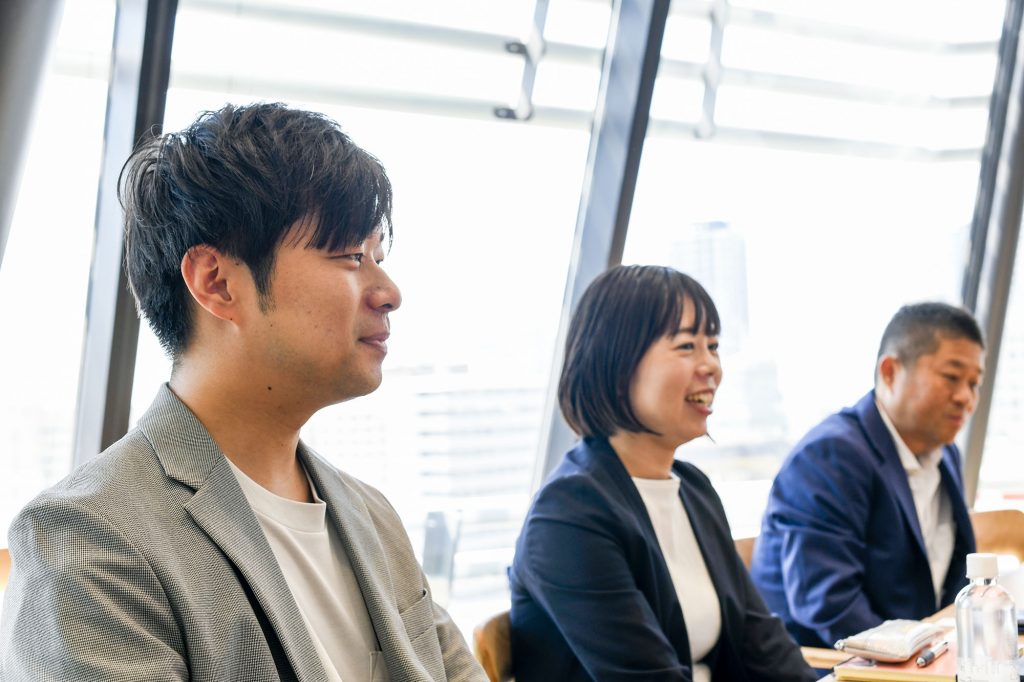
As you mentioned, the SAVE THE FARMS by YANMAR project has launched in Ritto City and Okayama City. In order to expand its solutions nationwide, is it important to get these two initiatives on track first?
Tanaka: That’s right. In Ritto City, for example, we have about 50 hectares of farmland across the region. For now, we lease part of that land to run farming operations. Local farmers are showing a lot of interest in the project, saying things like, “if it works out well, please keep us informed.”
The first important step is to demonstrate to everyone that we can carry out farming operations smoothly. Once we do that, more farmers will be willing to join the project and the amount of farmland we can utilize will grow. Once such a process has been established in Ritto and Okayama, we hope to extend the initiative to other municipalities as well.
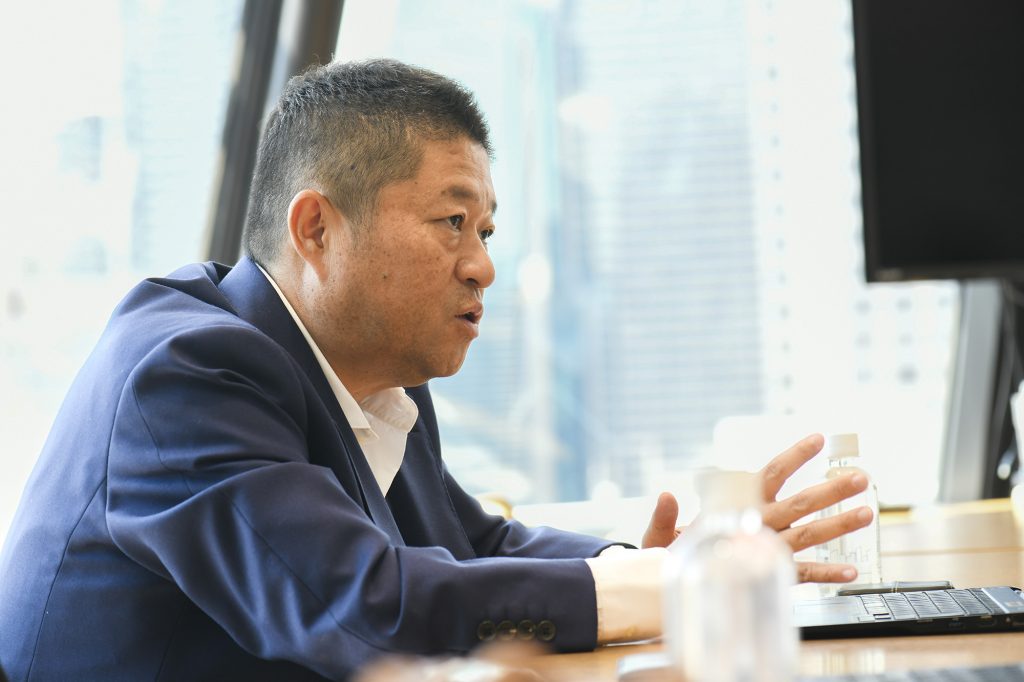
Finally, I would like to ask you about Yanmar’s brand statement: A SUSTAINABLE FUTURE — New Value through Technology. Could you share your vision with us about the future of sustainable agriculture?
Tanaka: Once again, to make Japanese agriculture sustainable, it is necessary not only to prevent current farmers from leaving the land, but also to increase the participation of new farmers. To achieve this, farming must be transformed into an attractive, well-paying profession.
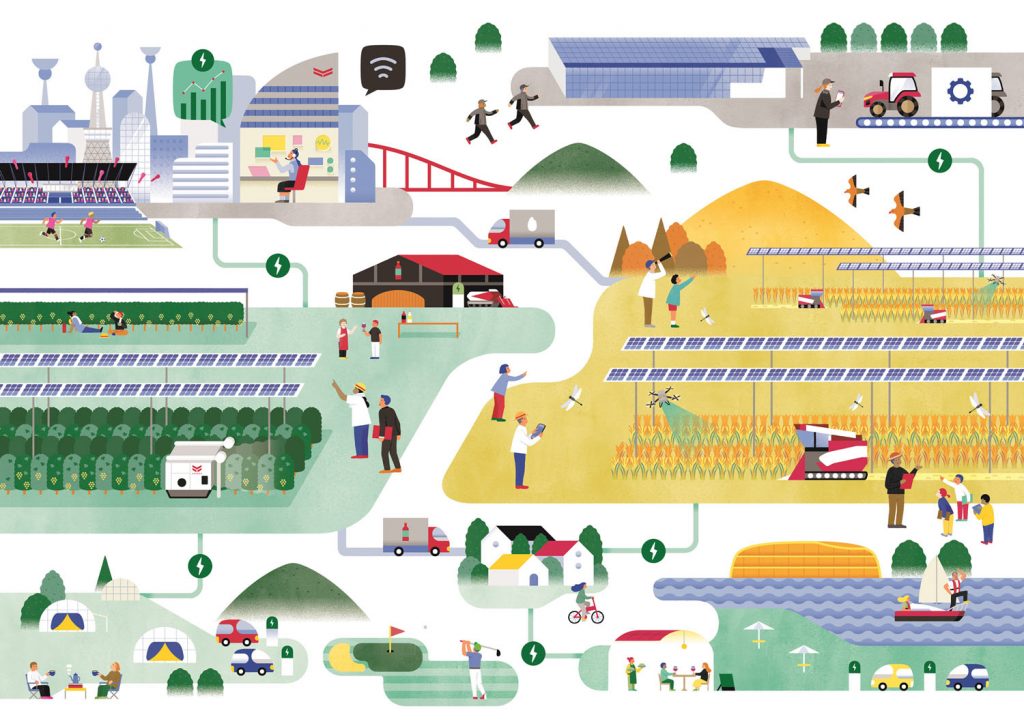
In the future, farmland will be equipped with solar panels overhead, automated tractors passing between equipment pillars, and drones spraying fertilizer. Farmers will control it all from cool, comfortable locations, achieving efficient yields. That’s our ultimate vision. We’re determined to make it a reality by creating a world where children aspire to become farmers.
A Farmer’s Opinion on the Potential of SAVE THE FARMS by YANMAR
The project has now taken its first steps toward this vision. Its success depends not only on Yanmar but also on the understanding and cooperation of local residents, landowners, and, most importantly, farmers.
How do farmers, who are the most important partners in this project, view this initiative, and what do they expect from it? We visited the farm of Mr. Kengo Sato, a farmer in Okayama City who joined the SAVE THE FARMS by YANMAR project starting in 2025.
What potential does the project hold from the perspective of an active farmer?
I heard that when you introduced the agrivoltaics model to your farm, you explained the plan to various stakeholders, including farmers with adjacent plots of land, landowners, and members of the Agricultural Commission. Could you share any new challenges you identified in farming, specifically in rice cultivation, through these conversations with different stakeholders?
Kengo Sato: First of all, aging. All the current farmers are getting older, and farm work is really tough for them. Then, of course, there are financial issues. Since income from farming is low, there is a definite shortage of people willing to take over the land. This is especially severe for rice paddy farmers.
When you think of farming as a job, as long as these challenges remain unresolved, it’s hard to ask your own children to “take over the farm.”
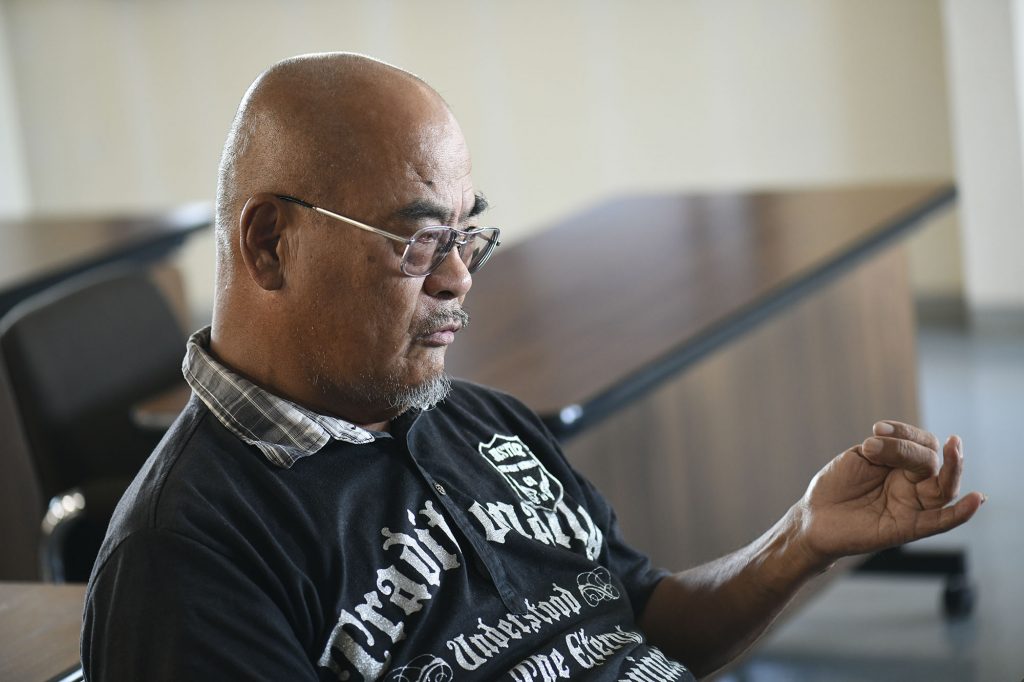
A farmer based in Okayama City, Okayama Prefecture, who is collaborating on this project with a farmer-led agrivoltaics model.
Sato: If there’s no successor or someone to take over, it’s hopeless, no matter how much farmland you have. That’s how abandoned farmland keeps increasing. It’s a vicious cycle.
Asuka Hayakawa: In addition to his own farmland, Mr. Sato manages farmland that other farmers can no longer care for, preventing it from becoming abandoned. I accompanied Mr. Sato on his visits to local farmers, and many of them asked him, “Could you take care of my farmland, too?” I could sense the high level of trust that the community has in him, but at the same time, I was deeply struck by the harsh reality that farmers face.
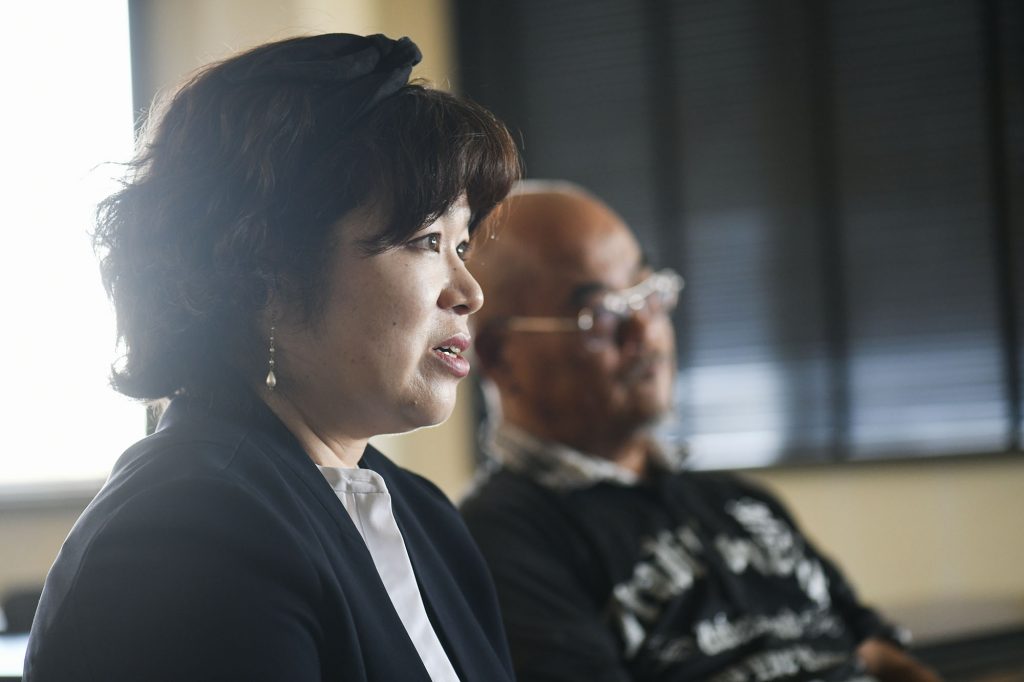
Business Planning & Administration Team, Yanmar Network Organization “Yanmar Sustainable Farm”, Yanmar Holdings Co., Ltd.・
Member of this project’s planning and management team. She is responsible for liaising with various municipal departments, local residents, and neighboring farmers.
The SAVE THE FARMS by YANMAR project was launched precisely to address these challenges facing farmers.
Sato: I think farmers’ expectations and interest are quite high. When Ms. Hayakawa and I visited various farmers, many told us, “I’m getting older, and I don’t know how much longer I can keep this up. If agrivoltaics works out, please let me know.” In this project too, whenever there are good outcomes, it’s best to share them widely so that they can help ease the difficulties faced by other farmers.
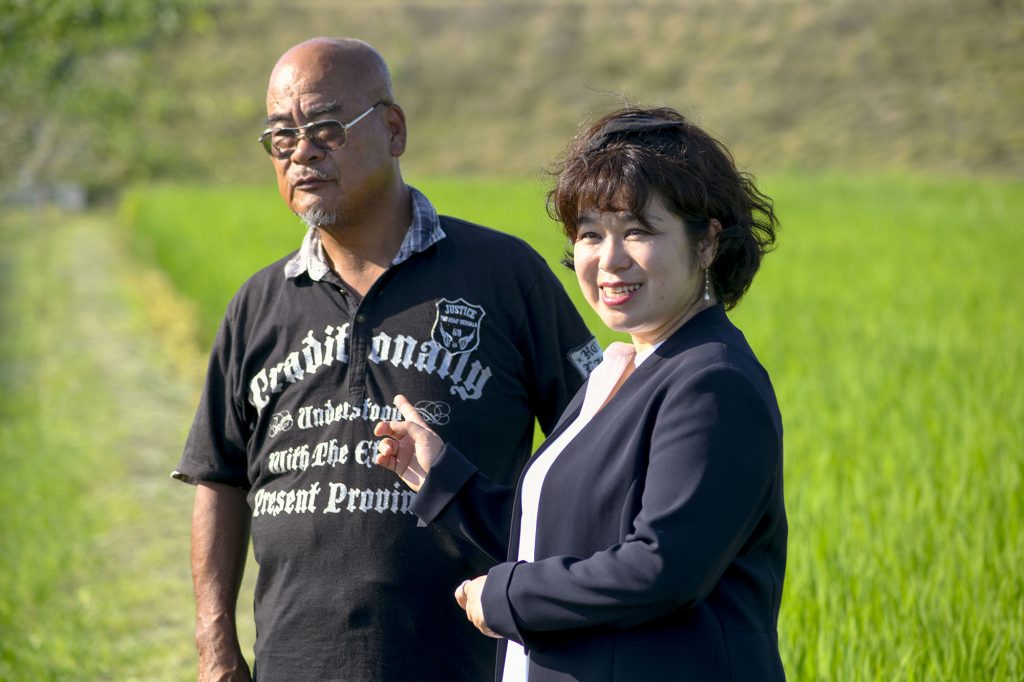
Did you consider introducing the agrivoltaics model because you thought it might be a way to improve the current situation?
Sato: Ms. Hayakawa was very persistent about it! That’s just a joke, but I had actually thought about introducing a similar system a few years before Yanmar approached me. Working directly under the sunlight was becoming too taxing, so I wondered if we could install solar panels like a roof over the farmland. Since I already had solar panels on my home and warehouse roofs, I asked a supplier I was acquainted with, and they said, “It’s not impossible.” Due to a lack of funds, the idea fell through at that time.
Since it was something I had originally intended to do, I readily accepted Yanmar’s proposal when they approached me.
So, you were ready to install them right away?
Sato: No, when I first listened to the proposal, they said it was for rice paddies. Since I also grow vegetables, I thought that could be an option. But paddy rice farming is already mechanized, so I thought installing solar panels in rice paddies would make things, like weeding, and other management tasks more troublesome, so I wasn’t keen on it at first.
But Yanmar kept patiently persuading me and even showed me an actual installation site. It made me think that, depending on the methods used, it might not be that much extra work after all. I still wasn’t sure if it would really work, but I decided to give it a try and draw my own conclusions.
Construction of the solar power generation equipment will begin after the harvest this fall. It is scheduled to be completed by February 2026 and begin full-scale operation shortly thereafter.
Hayakawa: We’ve finally reached this point thanks to the cooperation of many people in the community, including Mr. Sato, of course, as well as neighboring farmers and members of the Okayama City Agricultural Commission. Some people may view this initiative with skepticism, which is understandable. But by steadily advancing the mission of SAVE THE FARMS by YANMAR—ensuring farmland continues to be cultivated and Japanese agriculture has a sustainable future—we hope to deliver tangible results and expand our network of partners.
Finally, Mr. Sato, I’d like to ask you something. Despite the many hardships, what makes you glad to be a farmer?
Sato: The best part is definitely hearing customers say, “Thank you” and “It tasted great.” I also take pride in caring for farmland that has been entrusted to me. It’s a privilege to be trusted, and I feel that I’m doing my part to slow the decline of farmland in the community. It’s challenging, but deeply fulfilling to be engaged in this work.
By contributing to the environment, creating local employment, and creating new revenue models for agriculture, Yanmar, guided by its brand statement of “A SUSTAINABLE FUTURE — New Value through Technology,” is exploring diverse approaches to sustainable agriculture through this project, with the aim of securing a prosperous future for farmland.
*The titles and positions of the interviewees are as of the date of the interview.
Cooperation: Kengo Sato, Chiba Ecological Energy Inc.
Photography: Eri Yamada
Interview and text: Noriyuki Enami (Yajirobe)