


Takumi Minamino touches the
“heart of the ocean”:
the evolution of energy
that will power the future
“I still barely know anything. That’s why I want to learn.”
His “MINAMINO REPORT” was born from that simple desire.
After competing on the world stage, Takumi Minamino headed on a journey off the pitch in search of “sustainability.”
This third act, following those focused on agriculture and construction, features the ocean. What unfolded there is a new challenge deeply connected to the global environment.
He visited Yanmar Power Solutions Co., Ltd., a company that develops and manufactures commercial marine engines.
After exploring agricultural and construction machinery, Minamino set foot in Yanmar's “field” and experienced hands-on the pulse of technology that will drive the future.
Changing the future through the ocean: Takumi Minamino enters Yanmar Power Solutions!
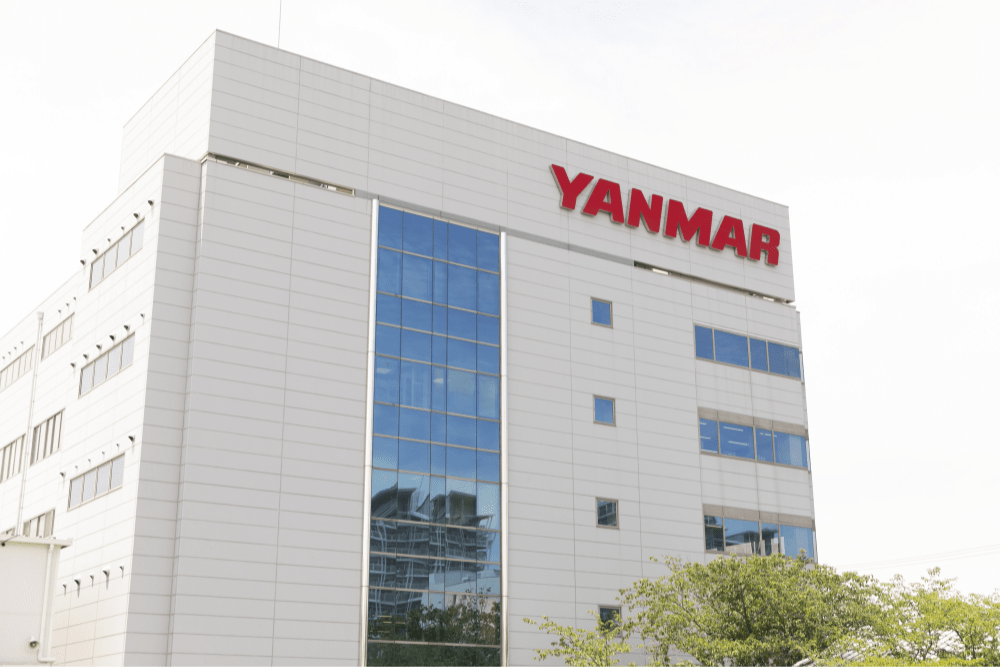
Under a clear sky, Takumi Minamino visited Yanmar Power Solutions Co., Ltd. in Amagasaki City, Hyogo Prefecture. The large windows on the white exterior walls shone in the sunlight, and the red “YANMAR” logo stood proudly on the front of the building.
This is the front line of the development and manufacturing of commercial marine engines–the “heart of the ship” that supports maritime logistics and is directly linked to our lives and industries.
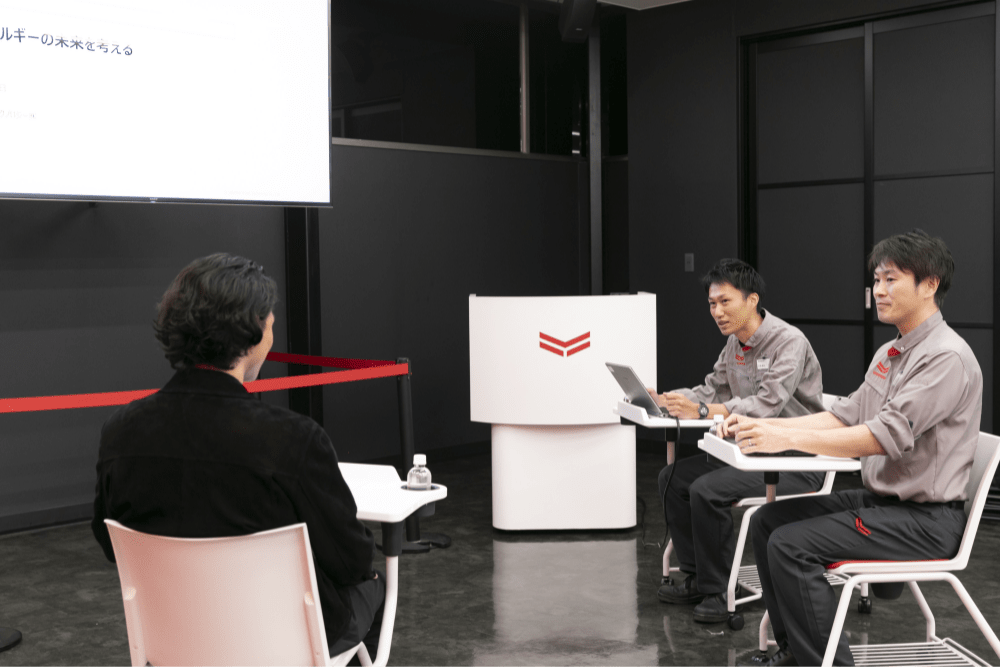
“Have fun and learn a lot today!”
These were the words of Takuya Hiraiwa from the Systems Engineering Department and Kenya Ohnishi from the Development Headquarters Testing Department.
The first program was a lecture covering Yanmar's history and Japan’s relationship with ships as a “maritime nation.”
“About 99.6% of Japan's trade is actually transported by ship. It’s truly the major artery of our logistics.”
Large tankers, container ships, and bulk carriers.
When Minamino learned that these ships we don't usually think about in our daily lives are the “background” behind familiar objects such as our smartphones, clothes, and food, he couldn't help but exclaim:
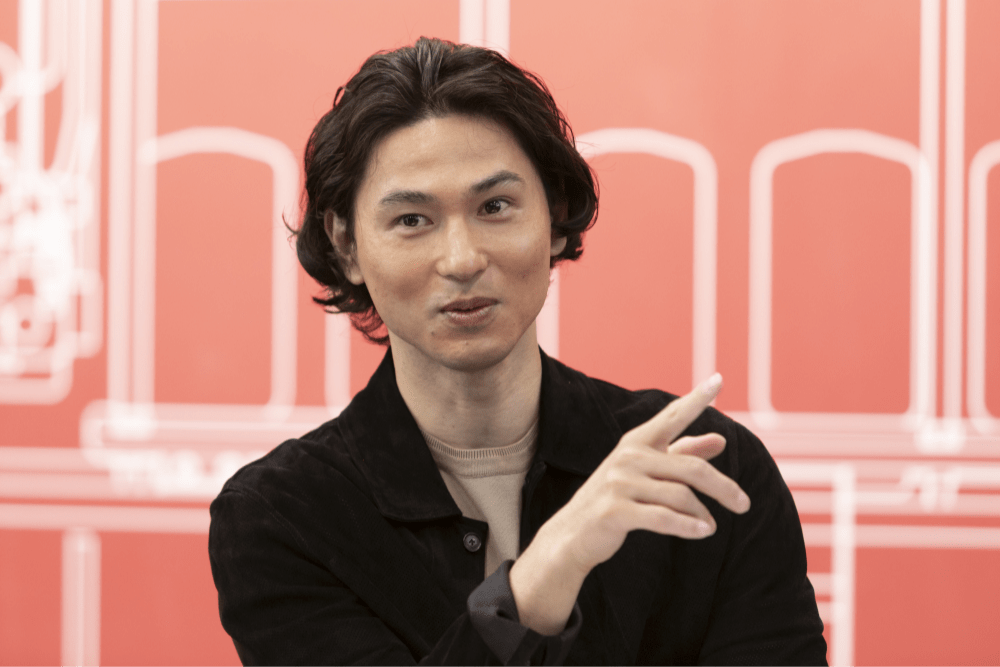
“Wow, that much?! So most things we take for granted are brought here by ship.”
The ocean and energy, along with life in the future…
What Minamino saw next was the site that supports these “taken for granted” things.
Minamino’s discovery that Japan is a “shipping powerhouse”
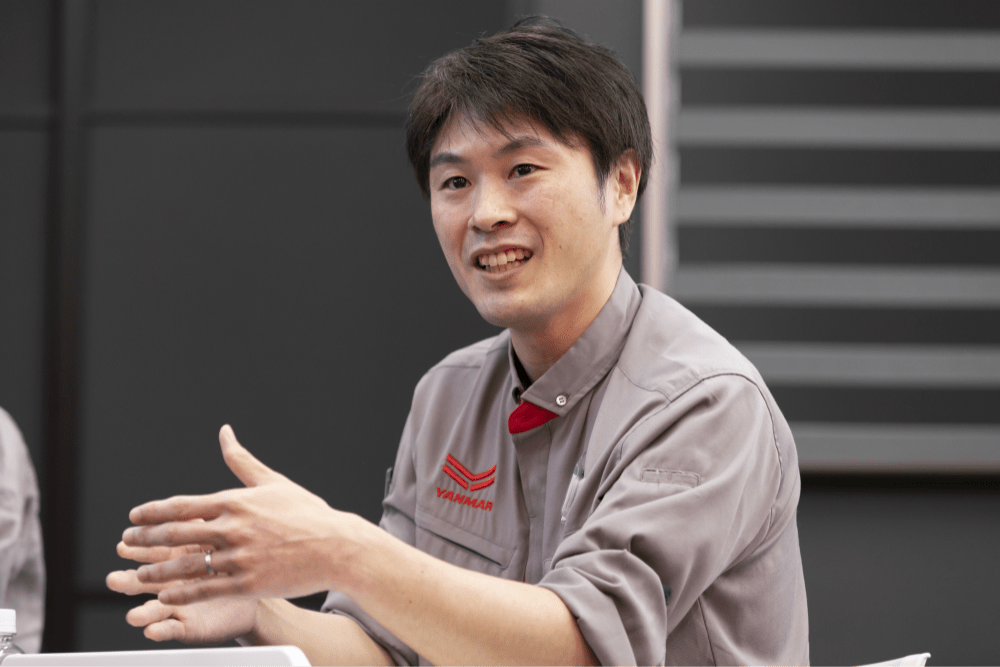 Takuya Hiraiwa, System Engineering Division
Hiraiwa witnessed Minamino’s surprised expression and continued.
“In fact, Japan owns the third highest number of ships of any country in the world.”
Number one is China, and number two is Greece, while Japan is third. Behind this fact is said to be the accumulation of shipbuilding technology over many years, as well as policy support.
“The engine may not stand out much, but it is the ‘heart of the ship.’ Without power, the ship cannot move across the ocean.”
Minamino nodded quietly at those words. The weight of the technology that supports the marine workforce gradually sank into his heart.
A growing shipping industry, with a growing responsibility
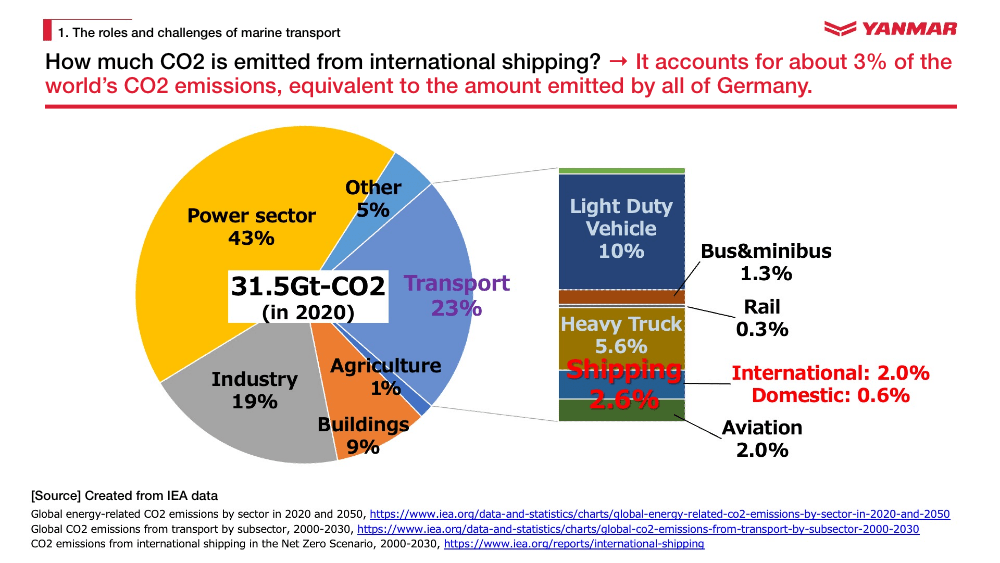
“Wow, it emits that much CO2...?”
After seeing the data from the lecture, Takumi Minamino couldn't help but speak out.
While the number of ships is increasing every year and transportation volume is expanding, CO2 emissions from marine transport account for approximately 2.6% of the total. That is on a scale equivalent to the volume emitted by all of Germany.
The impact of ballast water on the ecosystem is also serious.
“Water loaded into the ship in the US can sometimes transport invasive species to Japan,” says Hiraiwa.
“The ocean is connected to the whole planet in ways we can’t see”
Minamino was beginning to grasp the “dark side” of the ocean.
To overcome the waves of change
The decarbonization wave has swept over the marine transport industry, too.
The International Maritime Organization (IMO) has set a target of achieving net-zero greenhouse gas emissions from marine transport by around 2050.
“In Europe, there are rules that require zero emissions in order for a ship to operate“
In countries such as Norway, zero-emission zones have already been introduced.
“Wow, so will Japan’s ships also have to follow those rules in the future?”
Hiraiwa nodded in response to Minamino’s question.
“Yes. If an engine does not comply, it will not be used. We have to make changes in order to survive.”
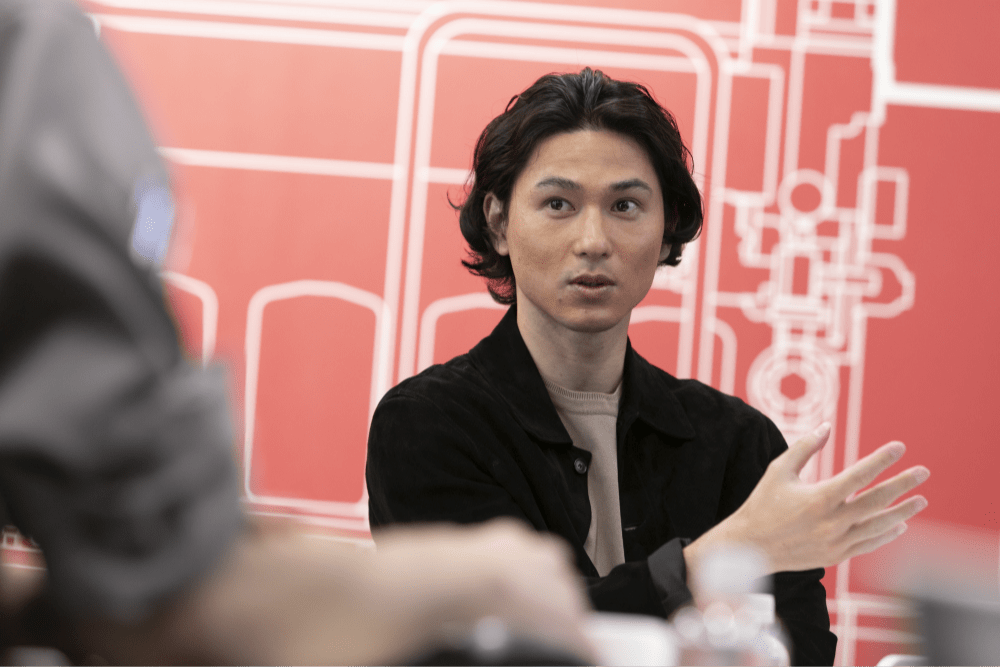
“I’ve also updated how I play to suit my opponents and the times. Corporations need to adapt for the future too, don’t they?”
Minamino's words, which seem to overlap with his own journey, resonate with Yanmar's attitude toward the challenge.
Batteries cannot power it: The reality of the ocean
In contrast to automobiles, where the shift to electric vehicles is progressing, the reality in the world of ships is that “full electrification will not be enough.”
“Ships are large and heavy. With electricity alone, the energy supply will not be sufficient,” Hiraiwa said.
So what is attracting attention now is changing the fuel itself.
The shift toward next-generation fuels with lower impact on the environment, such as LNG (liquefied natural gas), methanol, and ammonia, is progressing.
“Even when burned, no CO2 is emitted”: A new form of fuel
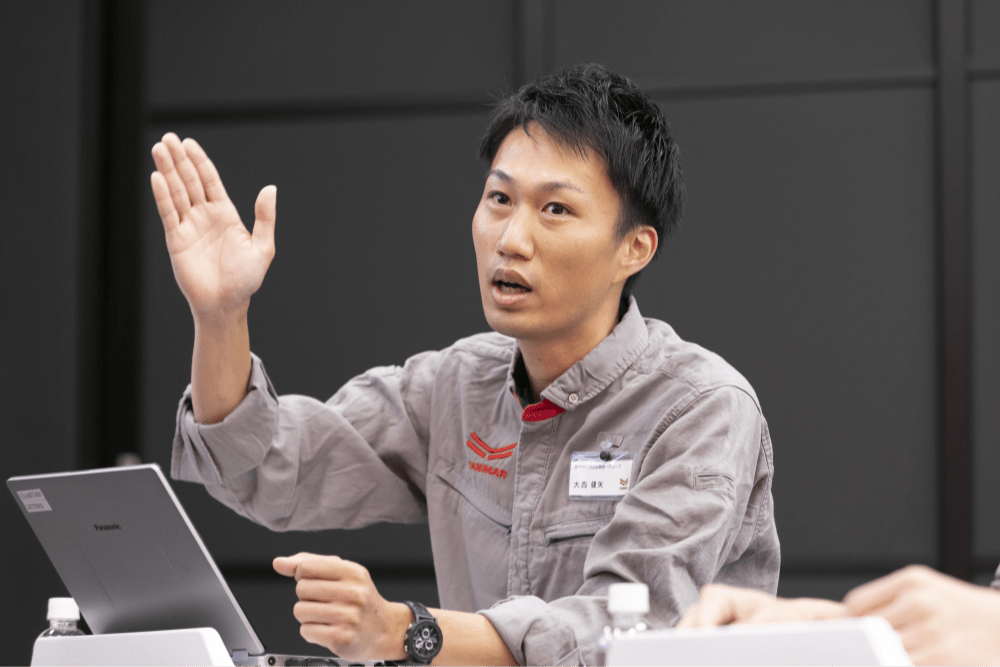 Kenya Ohnishi, Testing Division
“Conventional heavy fuel oil emits a lot of CO2, and the environmental impact has been a challenge,” said Ohnishi.
Hydrogen and ammonia do not contain carbon, so they do not emit CO2 when burned.
Biofuels are also attracting attention as “carbon neutral” because plants absorb CO2 during the growth process, which can offset emissions.
Of those, “green methanol,” which is produced from renewable energy, is being increasingly introduced in Europe.
Between ideals and reality: How Minamino sees energy challenges
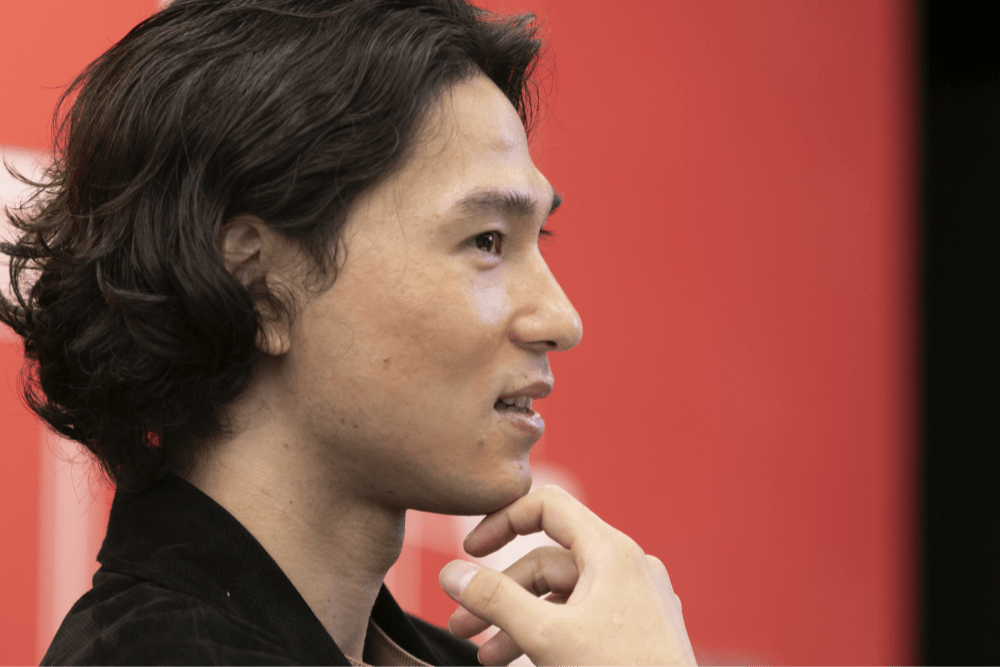
Minamino: “If it’s so ideal, you’d think it would catch on right away…”
Ohnishi: “It’s not that easy. New fuels have lower energy density, so fuel tanks have to be larger. That reduces shipping volume, which impacts profitability.”
Safety and cost also present challenges, such as the toxicity of ammonia and management of hydrogen. In particular, hydrogen’s impact on the environment varies depending on manufacturing method, so its “greenness” is also important to consider when using it.
Hiraiwa: “That’s why ‘hydrogen produced with renewable energy,’ or ‘green hydrogen,’ is attracting attention. However, the cost of renewable energy in Japan is high, so it would have to be procured from overseas.”
Minamino: “The ‘energy of the future’ is interesting precisely because we don’t know what form it will take yet. I’ve been reminded that that’s why we need the courage to take action.”
Understanding the “heart“ of a ship: Minamino's encounter with two engines
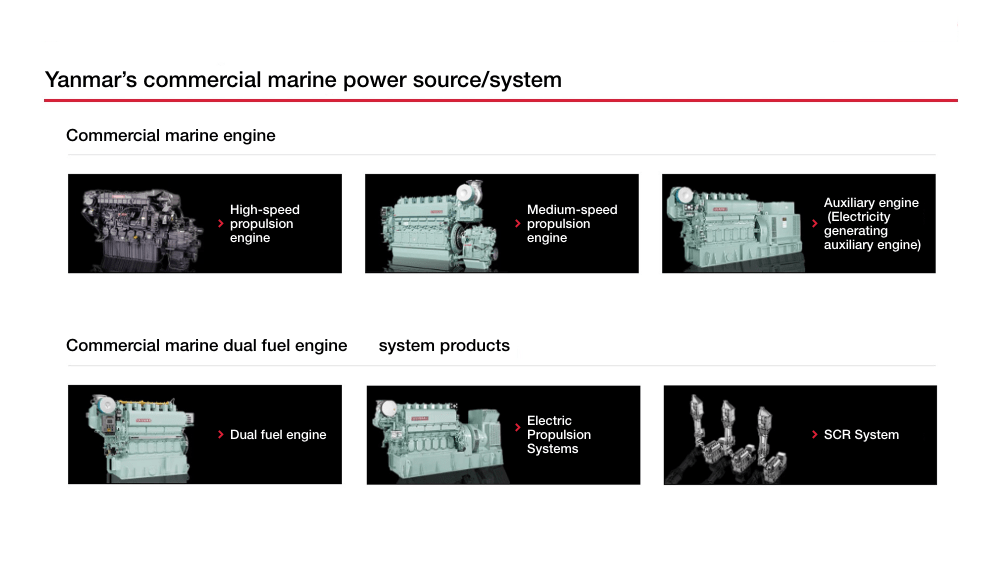
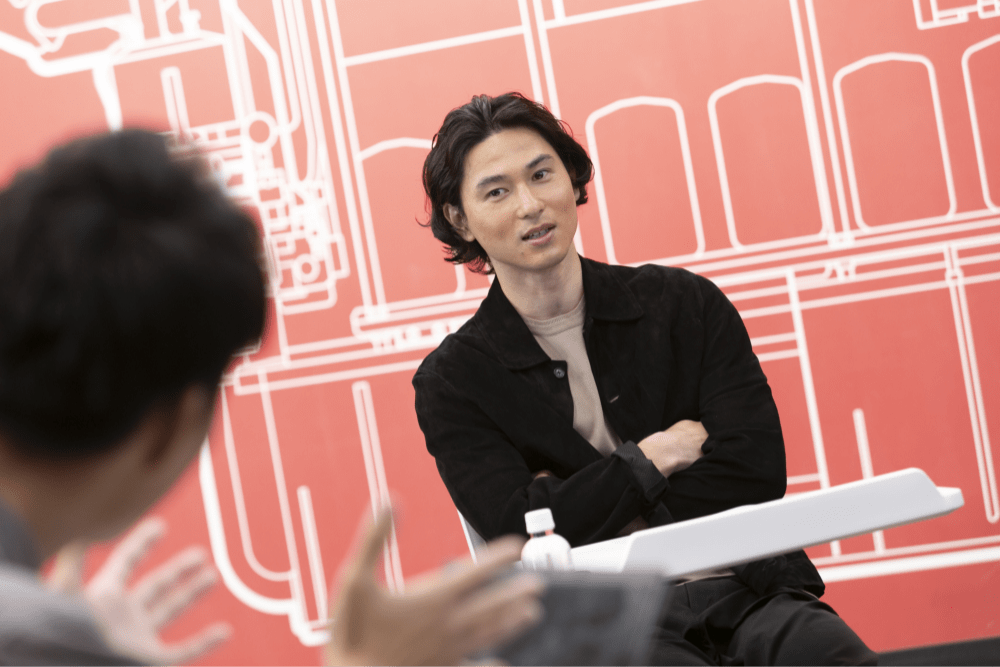
The first thing Minamino learned was that “a ship has two major engines.”
One is the “main engine,” which propels the ship across the ocean.
The other is the “auxiliary engine,” which generates the electricity used inside the ship.
“Wow, so it’s divided up like that!”
Minamino’s eyes widened with surprise.
This engine is the “unsung hero” that provides electricity for things such as lights, climate control, and communications devices, supporting life on the ship.
It does not normally get much credit, but the comfort of life on the ocean is supported by this technology.
Yanmar’s “future engine” to propel the next generation
“An engine isn’t finished once it’s built.”
Yanmar aspires to create an environmentally friendly “future-ready ship.” To this aim, several technologies are being developed:
Dual fuel engine: A “dual-wielding style” that uses two types of fuel, such as heavy fuel oil and liquid natural gas, depending on the location and rules. It can also conform to strict international environmental standards.
Electric propulsion system: Generates electricity with an engine, and propels the ship with an electric motor. It is quiet, and keeps the interior of the ship comfortable.
SCR system (exhaust gas treatment device): A device similar to an air purifier that removes pollutants from gas emissions.
“You’re not just propelling ships, you’re trying to change for the future”
Minamino's words were full of surprise and empathy.
What is the “best energy” for each type of ship?
◆Ocean-going vessels (tankers and container ships)
→ Long-distance voyages between Japan and other countries.
→ Require large fuel tanks and safety guarantees, and ingenuity is vital when introducing new fuels.
◆ Domestic vessels, coastal ships, and fishing ships
→ Short-distance voyages connecting ports and fishing grounds.
→ Electrification, fuels such as hydrogen, and new technologies are practical to adopt.
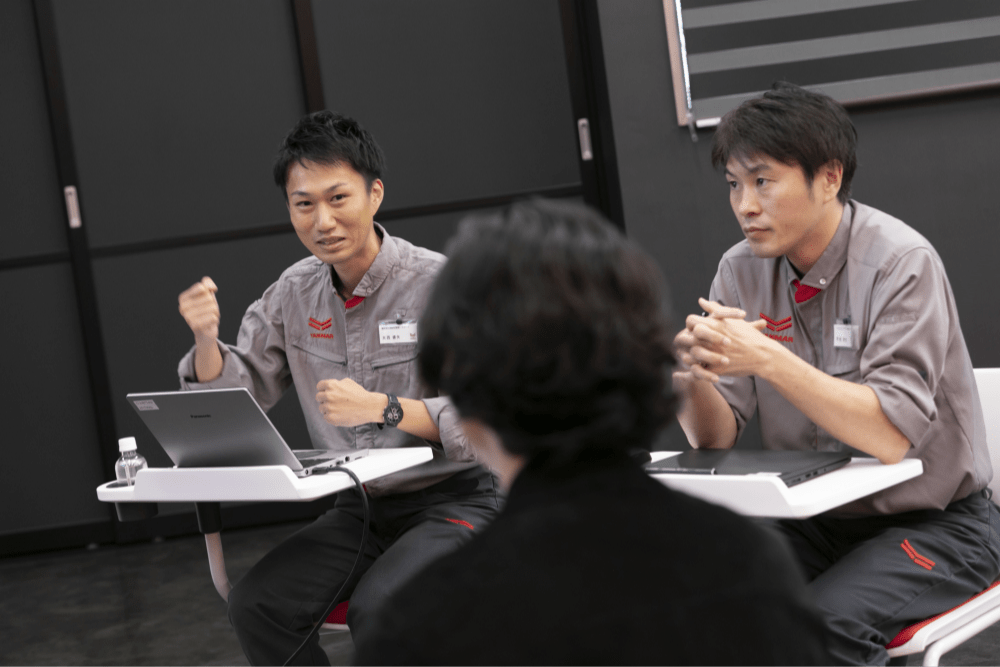
“That’s why we’re preparing for everything…liquid natural gas, methanol, ammonia, and hydrogen.”
Minamino nodded quietly at Ohnishi’s words.
Building on our performance, pursuing the forefront of hydrogen technology
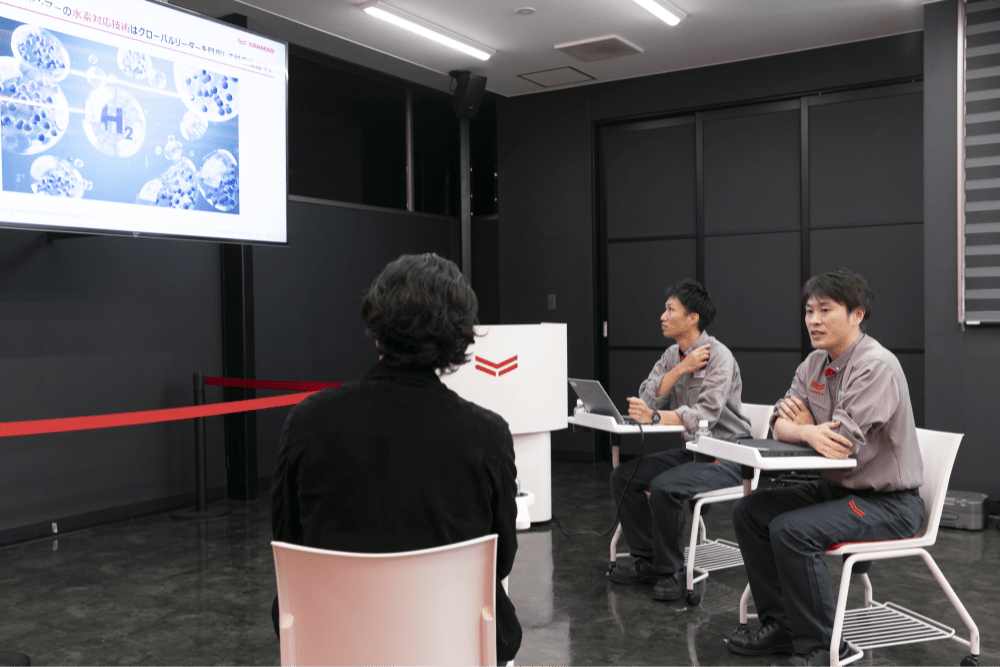
“‘Hydrogen has no track record.’ Those words have been repeated throughout the ship industry. But Yanmar is different.”
Hiraiwa's words exuded the pride of someone who has been involved in fuel cell research for over 10 years, right down to system design.
“At the time, there were no rules for running a ship on hydrogen. That's why we joined the Ministry of Land, Infrastructure, Transport and Tourism’s project and were involved from the very beginning of the system.”
The culmination of this initiative is the “fuel cell recreational marine boat” currently in a pilot program near Oita Airport. The eye-catching crimson ship is a fully electric vessel that runs solely on batteries and fuel cells, without the use of an internal-combustion engine. Powered by hydrogen, it glides surprisingly quietly and smoothly across the water, truly worthy of the name, “the ship of the future.“ The results of this recreational marine boat pilot program were reflected in the amendment of the above-mentioned Ministry of Land, Infrastructure, Transport and Tourism rules in 2021.
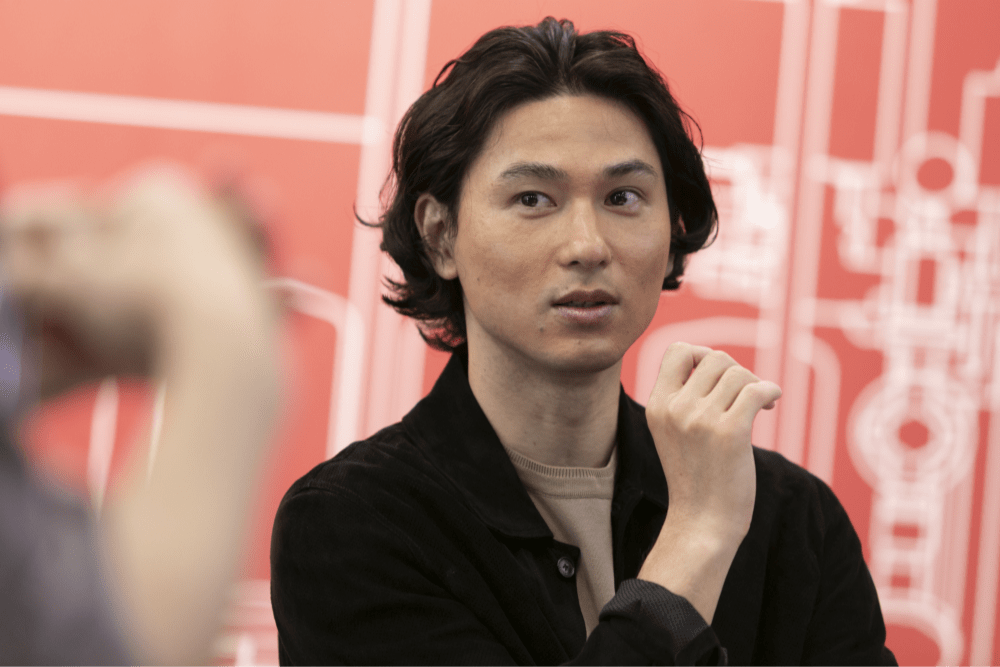
Minamino: “Wow, so it’s already running? I thought hydrogen was something further in the future.”
Comfort provided by the “silent ship”
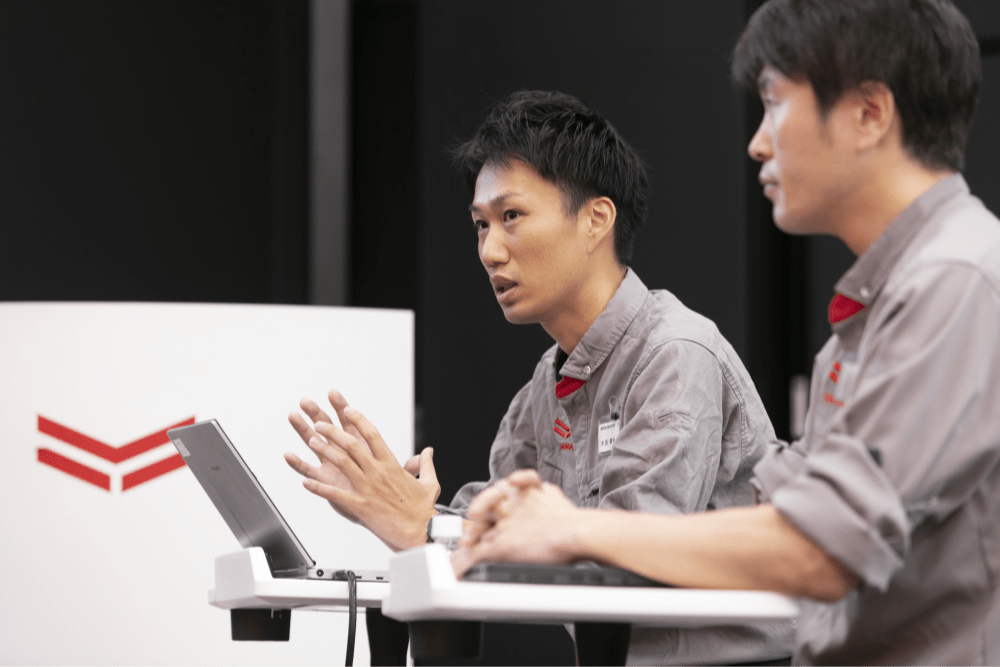
“Because it's motor-driven, the torque rises quickly and it moves smoothly and quietly. There's also no oily smell at all,” said Onishi.
On tourist boats, it is not uncommon for noise and smells to cause seasickness. But on this electric boat, there is no need to worry about that. Quiet and comfortable, it feels like gliding on the ocean of the future.
“Moving quietly is more exciting than I would have imagined,” said Minamino with a sparkle in his eye.
This fuel cell recreational marine boat is not for sale, but is a pilot program boat to demonstrate the potential of hydrogen technology. Development of the fuel cell system as a product started in 2021, with the first unit completed in just two years. It was installed on passenger ships that began commercial operation in 2024, and development of the “second generation” is now underway.

“We really are that close to the ‘technology of the future.’” Minamino's words echoed quietly around the site.
Toward a new stage: The arrival of the “age of choice”
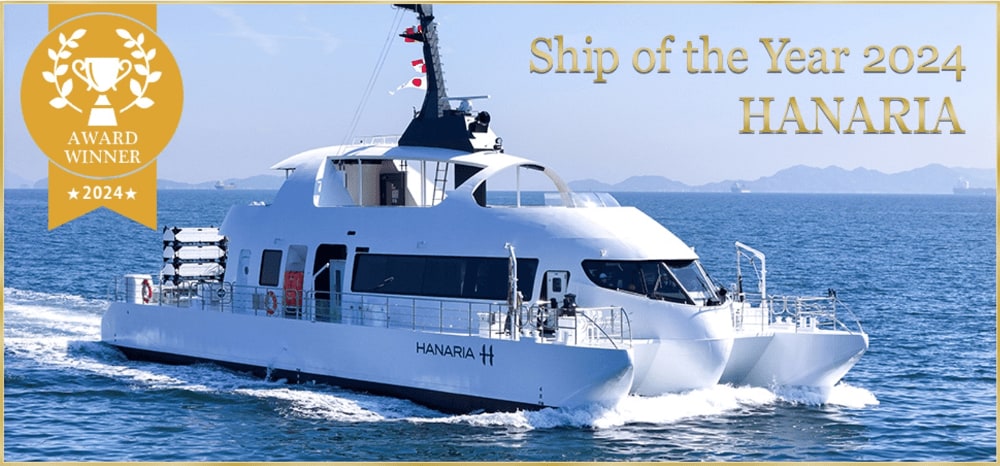
The passenger ship “HANARIA,” launched in 2024, is a “triple hybrid” model equipped with three power sources: a Yanmar hydrogen fuel cell, a large battery, and a biofuel engine. This new generation ship allows one to choose the optimal power source depending on one’s purpose, route, and desired performance.
For example, if you want to operate quietly with zero emissions, you can choose to use just the electric power. When you need speed, you can use all three power sources are simultaneously. Hearing about such flexible options, Minamino murmured,
“It’s like an all-in-one.”
This unprecedented challenge was made possible by the combined technology, experience, as well as the "guts and collective efforts" of the entire team.
The day when this innovation will become a new standard for the ocean is not far off.
World-class “on-site capabilities”
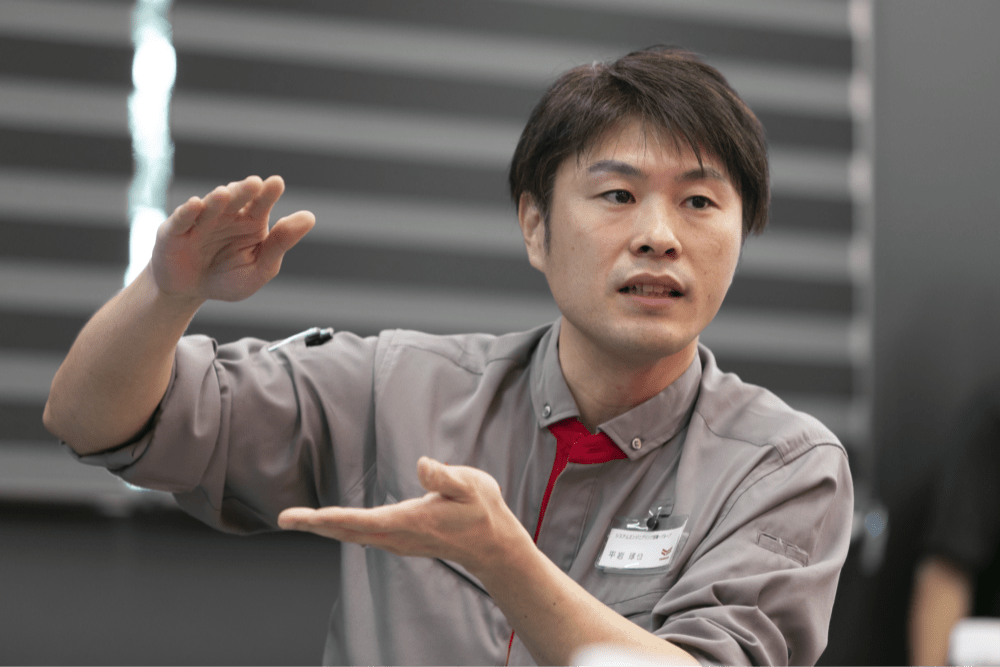
Hiraiwa: "We don't just sell our products and move on. If there is trouble overseas, we fly there right away and solve it. That is Yanmar’s sense of responsibility”
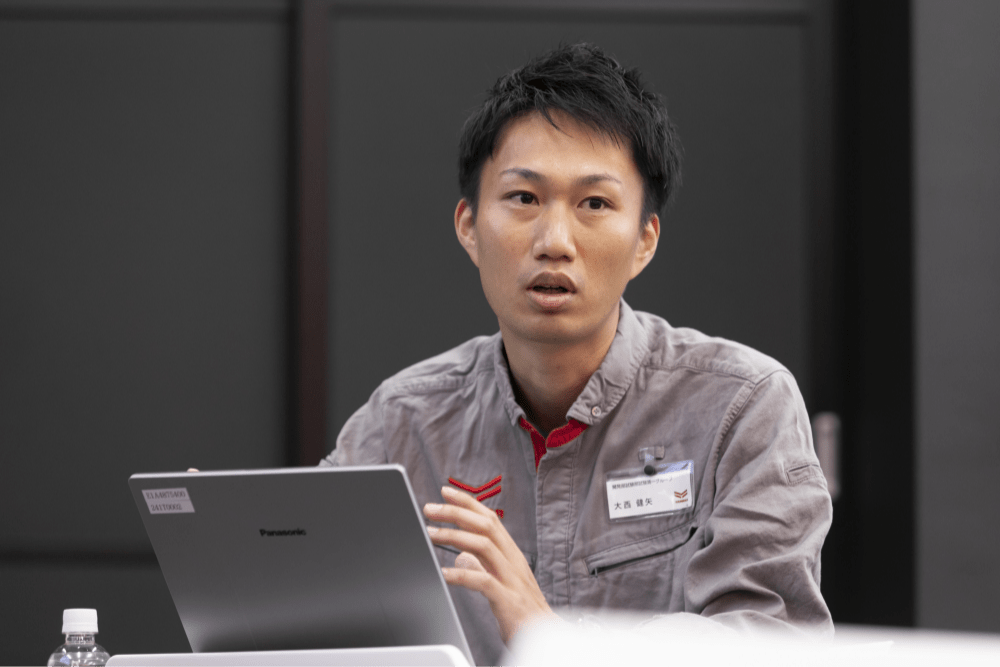
Ohnishi: “Research, development, manufacturing, business, services and support. They all collaborate to form our ‘on-site capabilities,’ our strength. They are all for the safety and trust of our customers.”
Minamino: “I’m very impressed. It's not just technology that drives the future; it’s the power of people.”
Dialogue that drives the future: Change and Challenge
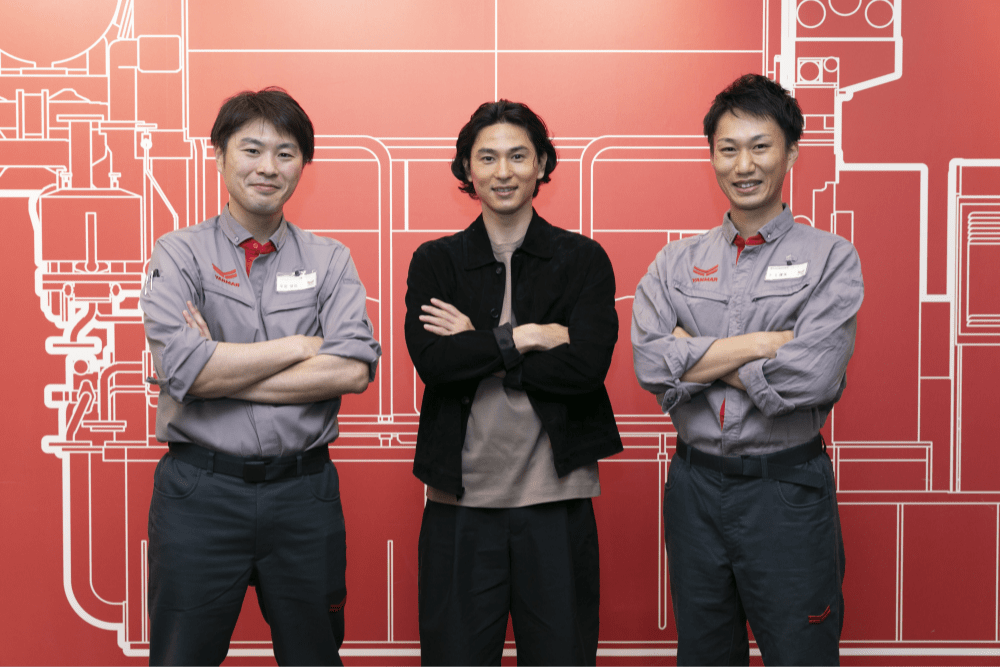
At the end of the lecture, Hiraiwa mentioned,
“Our job is not for our own internal value. Our customers’ happiness is the driving force behind all we do. Soccer is the same way, right?”
Minamino nodded.
“Before becoming a professional, I played for myself. But now, I do it for my family, the fans, the club…for someone. Having that responsibility gives me strength”
Ohnishi nodded at those words.
“Just holding up the words ‘for future generations’ makes us stand up straight. We’re creating a future where children can live with smiles. That is our sustainability”
This conversation widens to include Europe's environmental strategy.
“We have a lot to learn from Europe, not just in terms of technology, but also in terms of values and speed. Japan will have to catch up.”
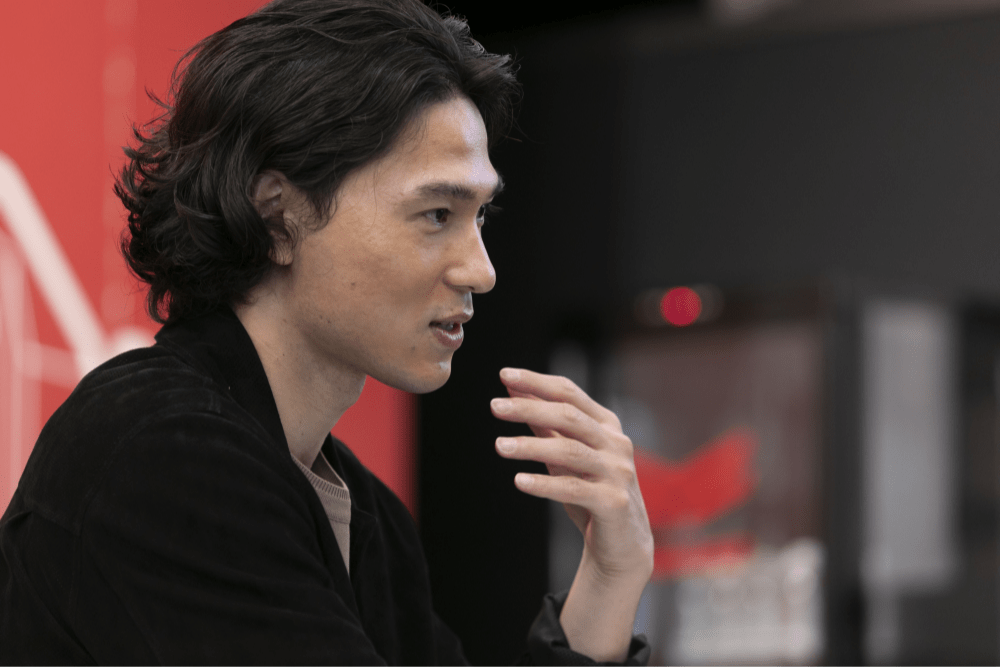
Minamino responded quietly,
“Experiencing cultural differences and ways of thinking broadens your own horizons. I think that’s the first step toward progress.”
In that moment, two people fighting in different fields crossed paths, looking toward the future.
“Now, let me show you around the factory.”
Minamino takes a step. To the “field” where the energy of the future will be born.