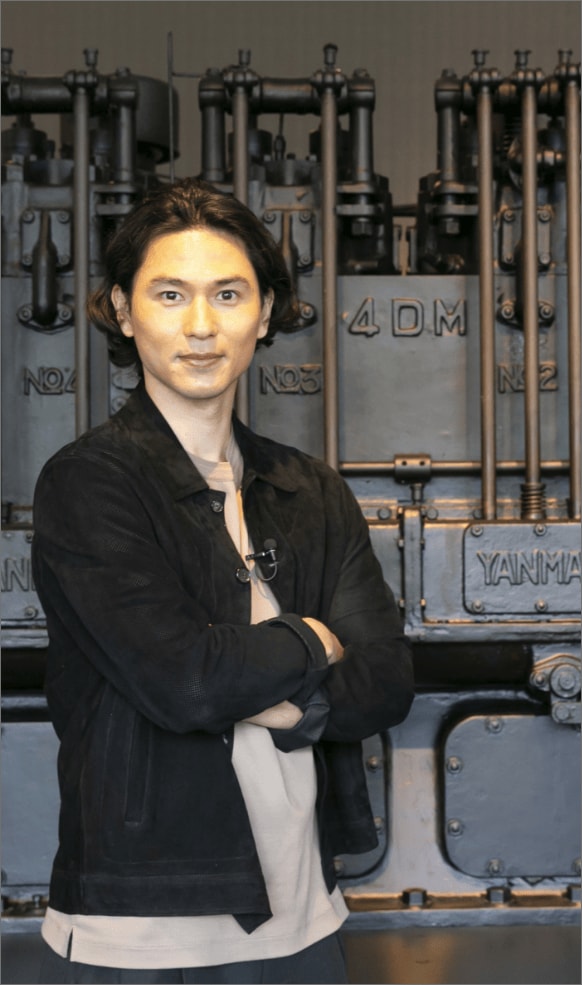


Someone’s Challenge Becomes
the Force That Moves
the Future —
Takumi Minamino Envisions
“What Comes Next”
Young Engineers
After visiting the Yanmar Power Solutions Amagasaki Factory and experiencing both classroom learning and the production floor, Takumi Minamino came away with a renewed appreciation for “the people who support the future behind the scenes.”
To conclude his visit, he sat down for a dialogue with young engineers who will lead the next generation. Through their perspectives, their words, and their passion for technology, Minamino encountered the place where the future of engine manufacturing begins—toward a sustainable society.
“Hands That Create the Future” — Encounters at the Technology Museum
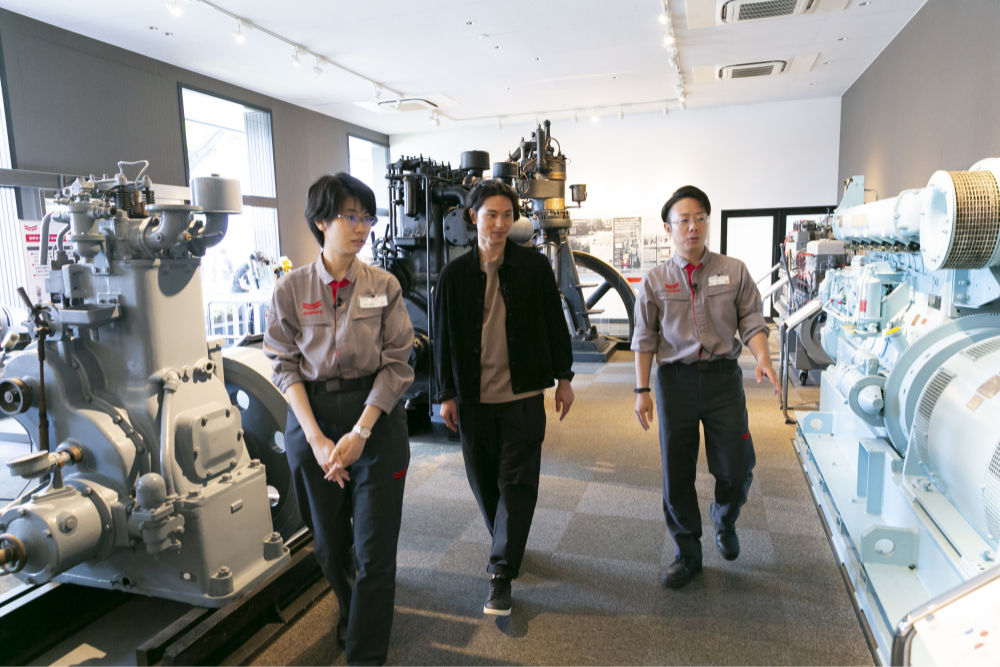
Inside the Yanmar Power Solutions Amagasaki Factory’s Technology Museum,
classic engines lined the left side of the room, while light-blue power generation units stood neatly arranged on the right.
Each piece reflected Yanmar’s long history of accumulated engineering expertise along with hints for the next era of manufacturing.
Standing in that space, Minamino felt the weight of time etched into the machines—
and, from the perspective of a professional soccer player, he prepared to engage with the “technologies that move the future.”
Awaiting him were young engineers responsible for advancing Yanmar’s technological legacy:
Ms. Uemura and Mr. Shimizu from the Development Division— engineers who continue to take on new challenges in their respective fields.
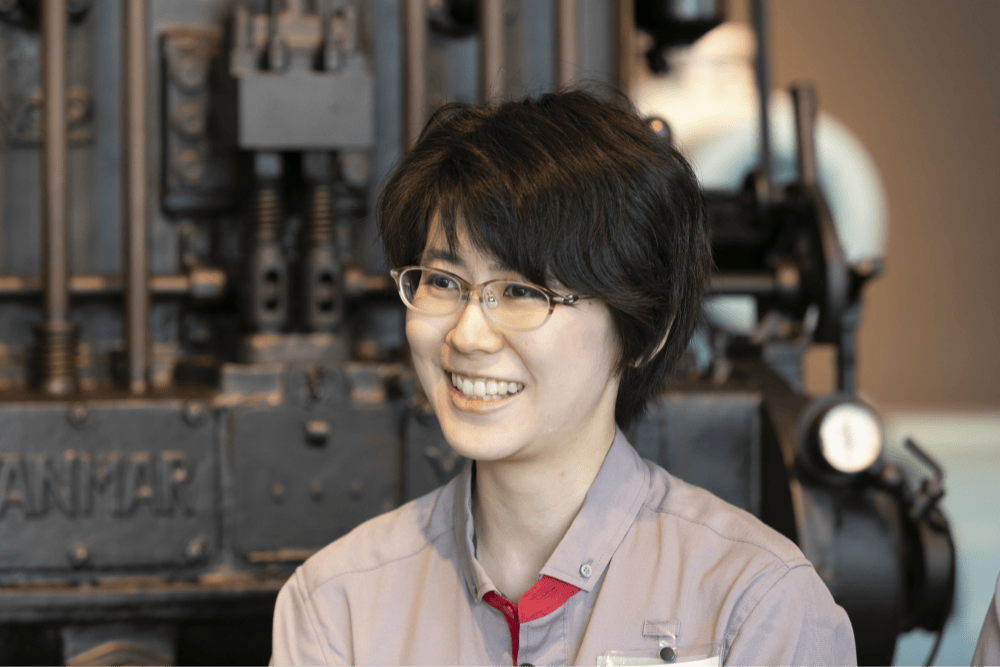 Yuka Uemura, Large Engine Engineering Division
Ms. Uemura is an engineer responsible for diesel engine design. In recent years, she has focused her efforts on developing methanol fueled engines, a next-generation fuel attracting global attention.
“It may seem understated, but design work is a constant series of challenges,” she said softly—yet her calm tone carried unmistakable passion beneath the surface.
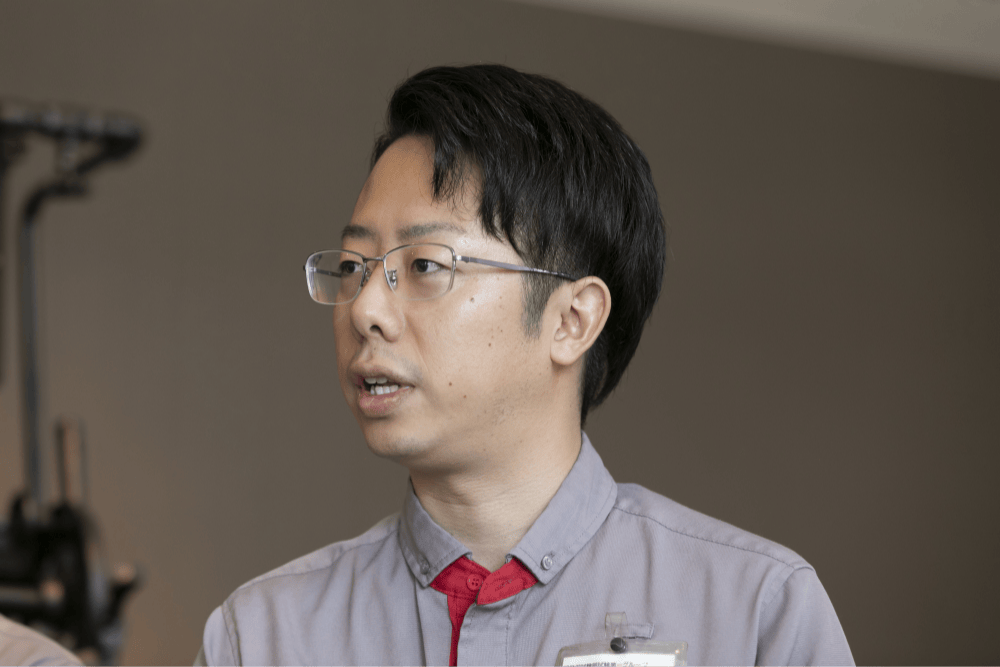 Koki Shimizu, Testing Department
On the other hand, Mr. Shimizu works in the testing division, spending his days verifying performance and durability by operating real prototype engines.
“You saw the 12GY175 engine earlier, right? That one’s actually my responsibility,” he said with a hint of pride.
The expression on his face revealed confidence forged on the testing floor—and a sincere dedication to craftsmanship.
To Build the Future, You Must First Confront the “Now”
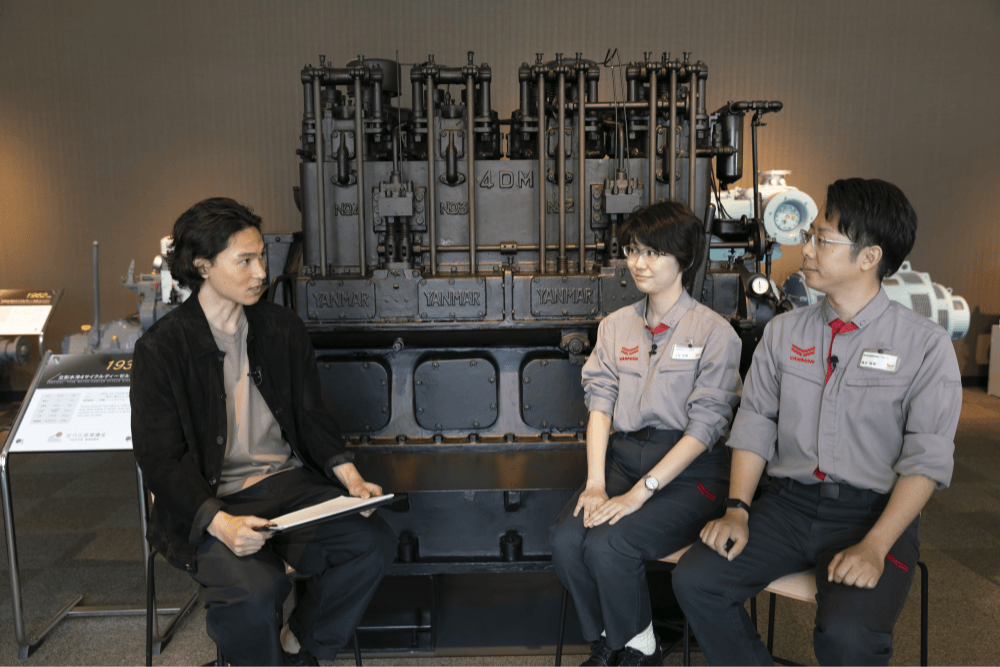
At the start of the discussion, Minamino posed a question:
“What kind of mindset do the two of you have when working with technologies of the future?”
Their answer reflected a strong commitment to the present.
“To build the future, you first need a deep understanding of the present. Only by thoroughly learning the fundamentals of diesel technology can we see what comes next,” said Ms. Uemura.
“In 50 years, today’s technologies might be considered completely ‘normal,’” Minamino added.
Both engineers nodded firmly.
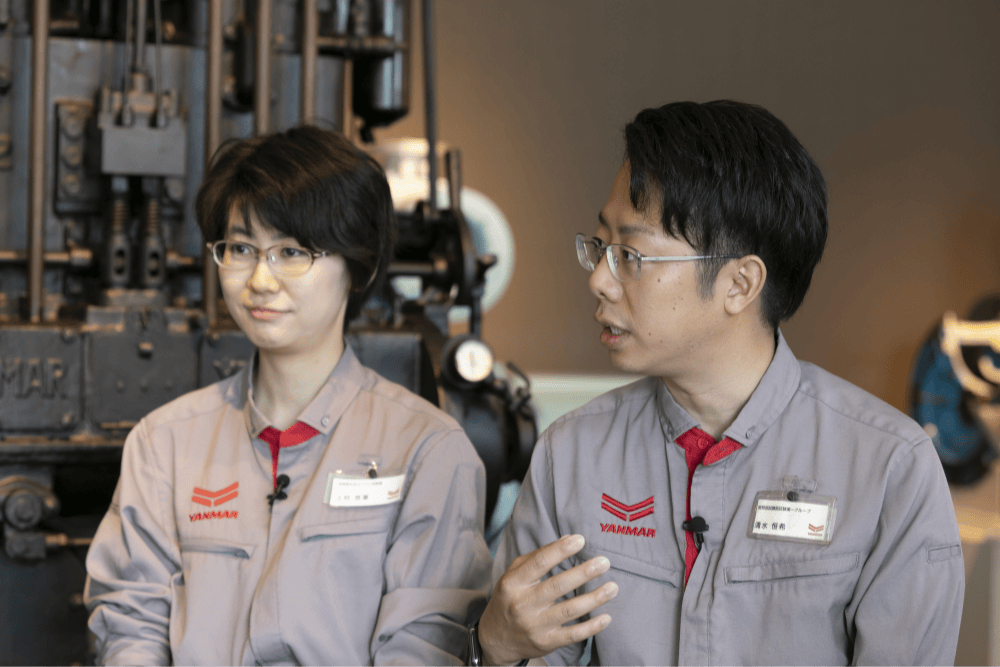
“Hydrogen used to be something we talked about as part of a far-off future. But now, it’s already here on the production floor. That’s why we must think carefully about how we apply all the experience we’ve gained up to now,” said Mr. Shimizu.
Minamino continued with another question.
“Working toward a sustainable society sounds easy to say, but it’s incredibly difficult to actually achieve, isn’t it?”
Ms. Uemura nodded softly.
“In my work—design and analysis—I often use a computer. But behind every screen, there is always a ‘person.’ I try to approach my work each day with the intention of delivering safety and trust to those people. No matter how big the vision is, the future is built through the accumulation of everyday efforts. That’s what I believe.”
The Starting Point of Technology Is Knowing the Basics—and Responding to Real Needs
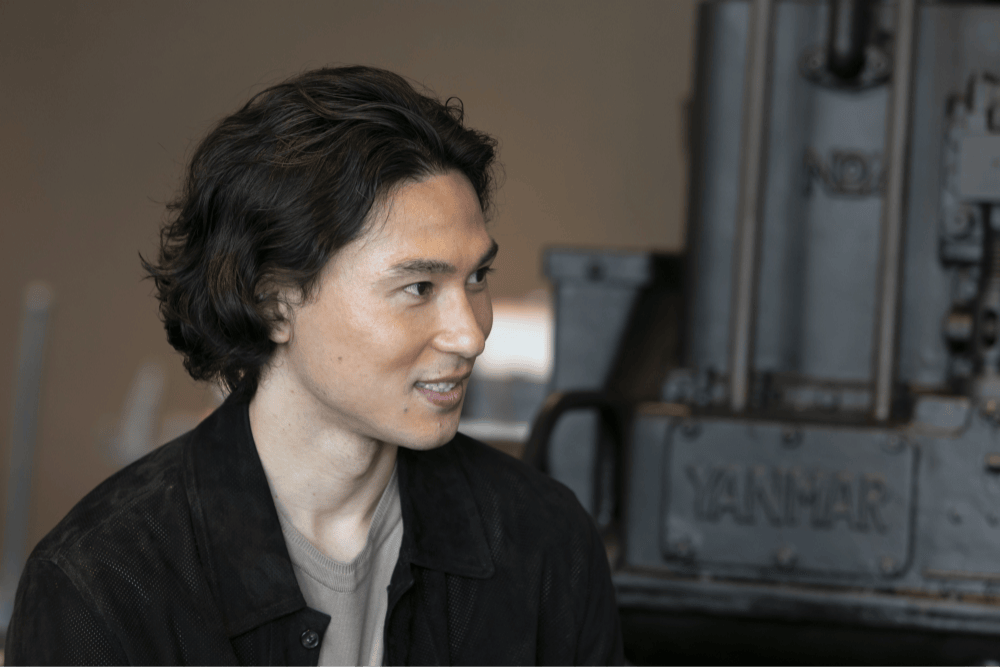
“What’s the very first thing you do when creating a new technology?” Minamino asked.
“We always go back to the basics. Even if it seems like the long way around, skipping the fundamentals only sends you back to square one. Understanding the foundation is the most important thing,” replied Ms. Uemura.
Mr. Shimizu added another perspective.
“What matters is determining whether the technology is truly needed by society. It’s not about creating something new just for the sake of it—our role is to deliver technology that helps someone who’s struggling.”
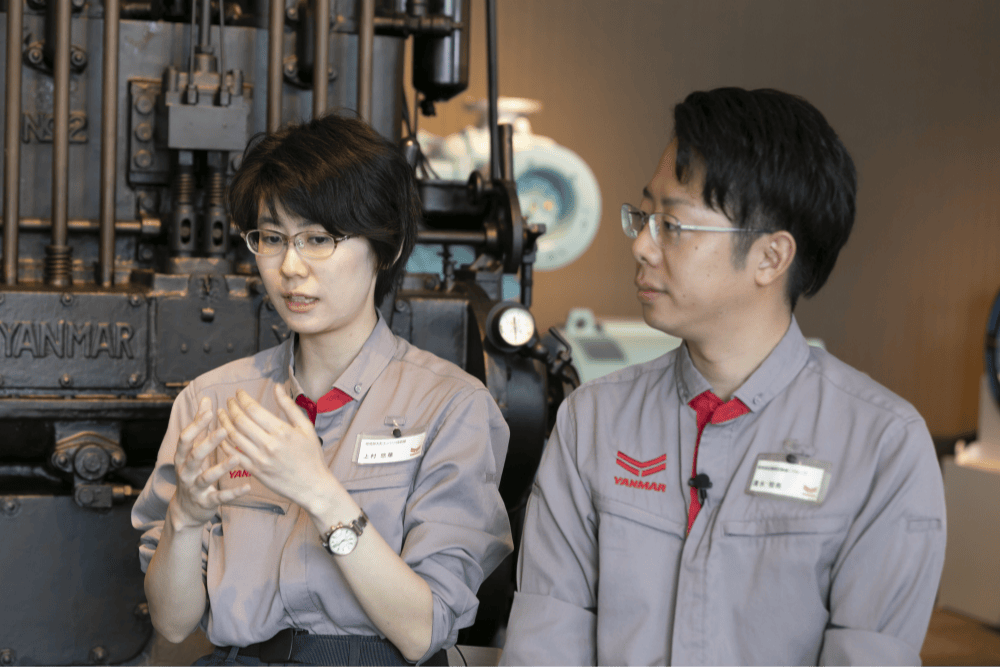
That mindset is reflected in the voices they hear from the field. When Minamino asked, “Do you feel expectations from the people around you?” Ms. Uemura nodded.
“When I tell people, ‘I’m working on designing methanol fueled engines,’ they often say, ‘That’s amazing!’ You can really feel how much interest there is.”
For Mr. Shimizu, however, those expectations sometimes turn into pressure.
“A fisherman once told me, ‘If the engine falls below ___ knots, we won’t accept it!’” he said with a laugh. “But when we respond to their needs and they say, ‘Thank you, that really helped,’ it makes everything worthwhile.”
For crew members who spend long periods on fishing vessels, engine quietness and reduced vibration directly affect their quality of life.
“We get many requests like ‘Make it quieter’ or ‘Reduce the vibration.’ I want to respond to those voices one by one,” he added.
Beyond Every Challenge Lies the Quiet Confidence of “We Did It.”
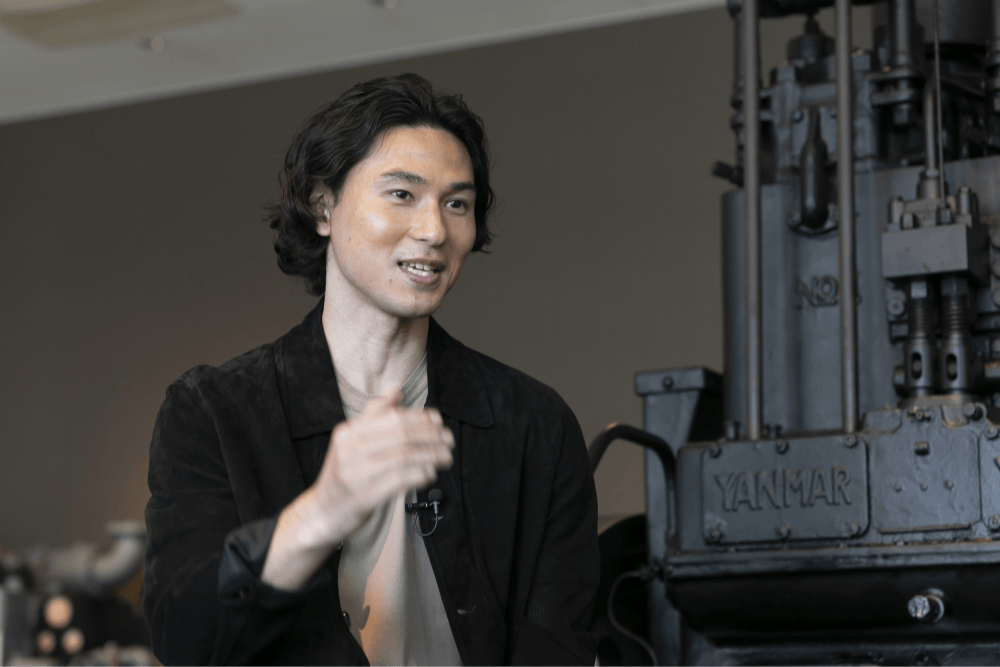
“Have there been moments in your work when you felt, ‘Yes—we overcame this’?”
Minamino asked. The two engineers each reflected on their own experience.
For Ms. Uemura, it came during the design of methanol fuel piping.
“Methanol is highly toxic and corrosive, and the safety standards are extremely strict. Our conventional designs didn’t apply, so we had to review and rethink the rules one by one.”
Although they struggled to balance safety and maintainability, they felt a great sense of accomplishment when they finally managed to do so.
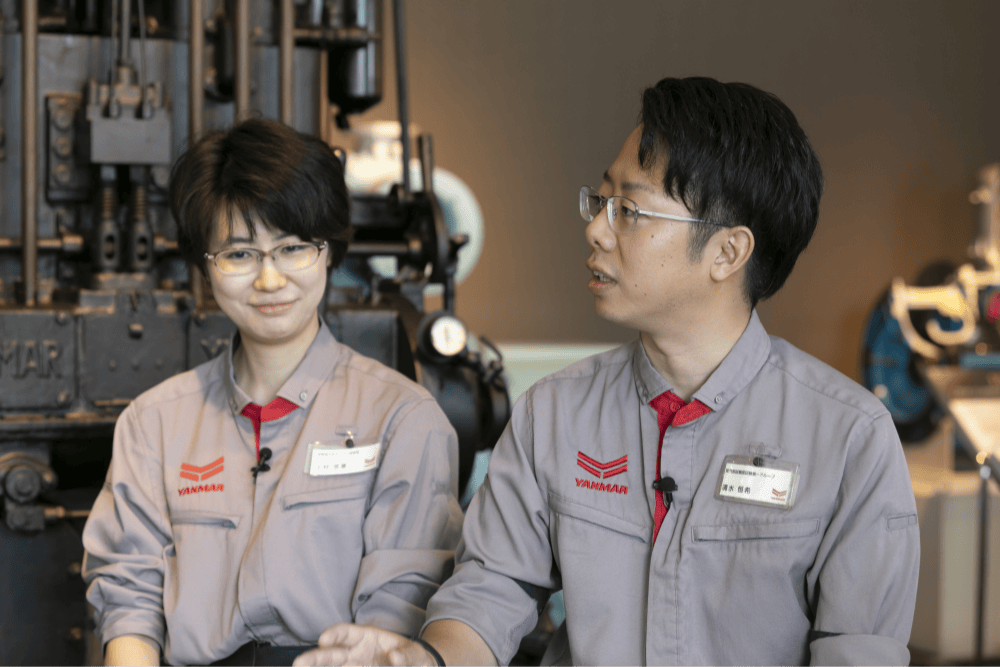
Meanwhile, Mr. Shimizu pointed to the testing of an “electronically controlled engine.”
“It was nothing like the mechanically controlled engines I had worked with before. It felt like pioneering completely new territory.”
Testing electronically controlled engines required many decisions based on his own judgment, testing his ability to balance freedom with responsibility. The expression on his face showed a quiet confidence—the kind that only comes from overcoming a true challenge.
Even When Unseen, the Power to Support Is What Moves the Team Forward
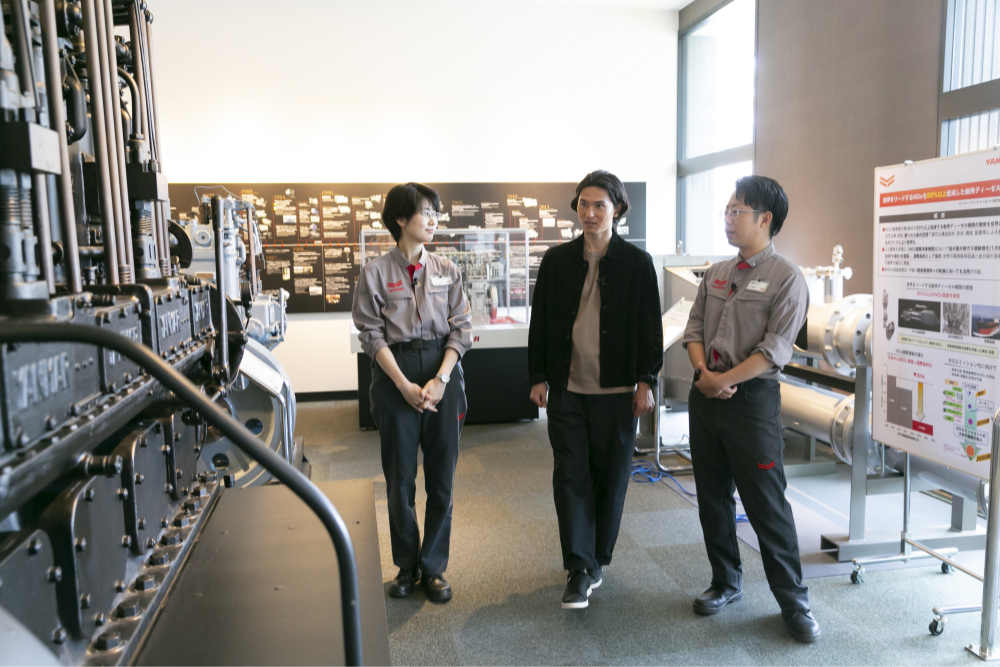
“Your work rarely appears in the spotlight, does it? When do you feel pride?” Minamino asked.
Ms. Uemura answered without hesitation.
“When a product finally takes shape, I can feel that it’s the result of the entire team. That’s when I feel proud.”
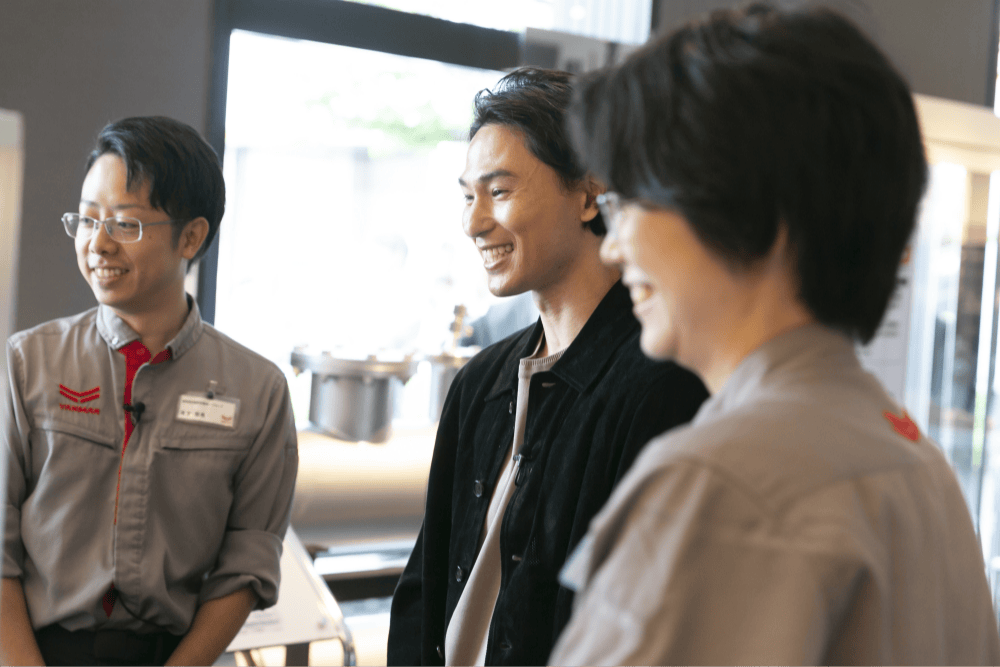
Mr. Shimizu nodded in agreement.
“For the development of the 12GY175 engine, the design, testing, and manufacturing divisions all worked closely together. Testing alone couldn’t have achieved it. It’s truly a crystallization of collective strength.”
Minamino nodded as well.
“That’s just like soccer. It’s not only the players—everyone who supports the team shares in the joy. That’s where the real value lies.”
The Future Is Built on Passion—and the Daily Effort to Pursue What You Love
“When a sustainable future is finally realized, how would you like your technologies to be utilized?” Minamino asked.
The two engineers spoke softly, yet with unmistakable conviction.
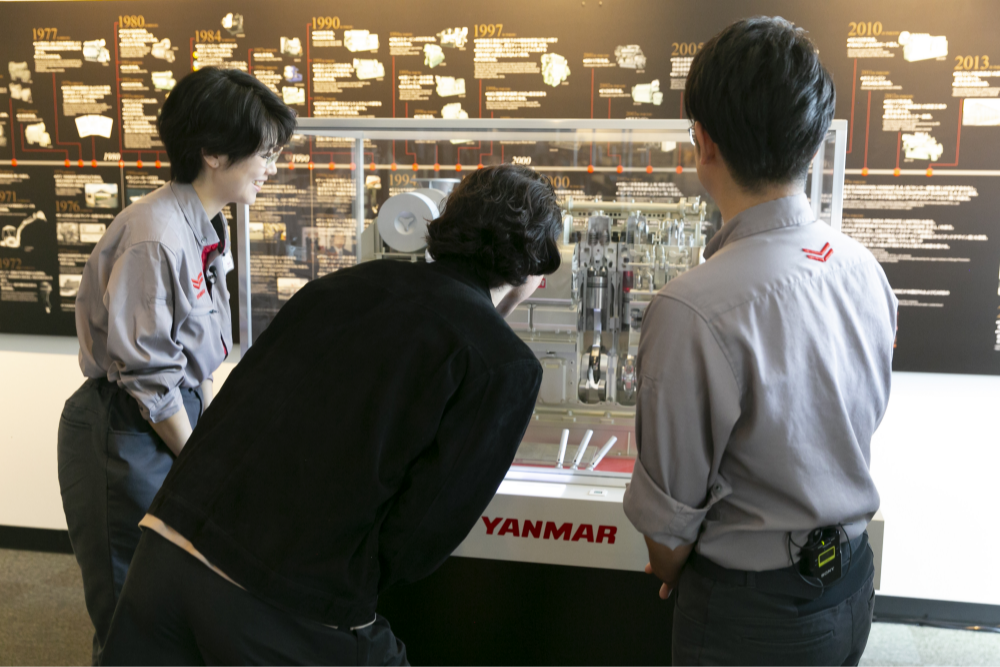
“Ideally, I’d like to see the engines we design being used around the world. But even if the form changes over time, if some part of our technology continues to live on somewhere, that alone has meaning,” said Ms. Uemura.
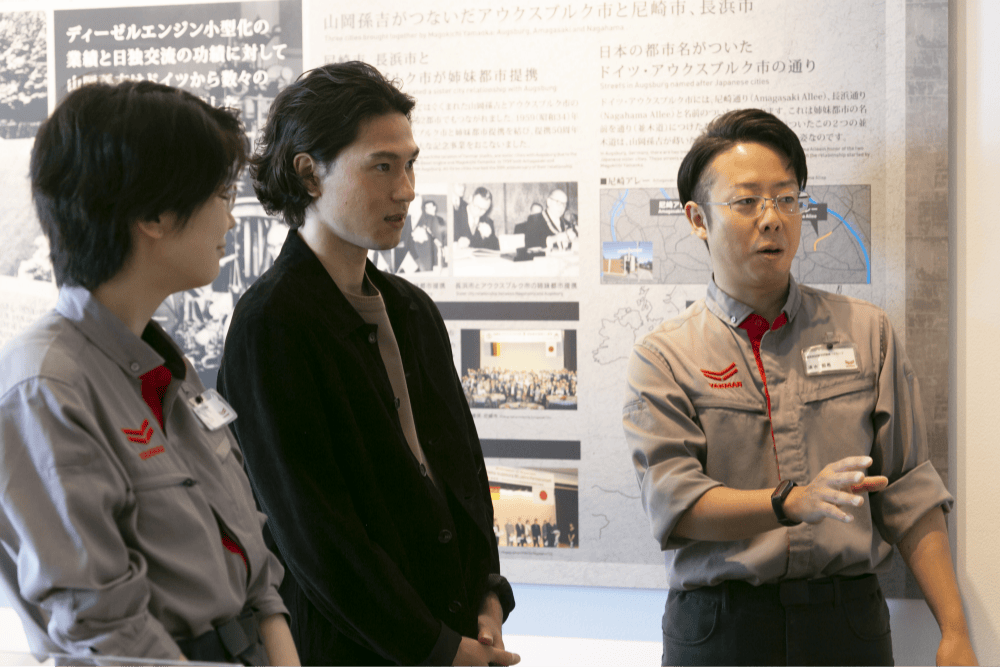
“Engines won’t disappear entirely— especially for long-distance applications, they are indispensable. Alongside batteries and fuel cells, I hope our technology remains as part of society’s core infrastructure,” added Mr. Shimizu.
Minamino nodded.
“What we build up now is what shapes the future. That’s why staying committed to the work in front of you is so important.”
Mr. Shimizu responded.
“We make mistakes too, but as long as we know where we’re headed, we can recover. What about you, Minamino-san? What do you do when you feel discouraged?”
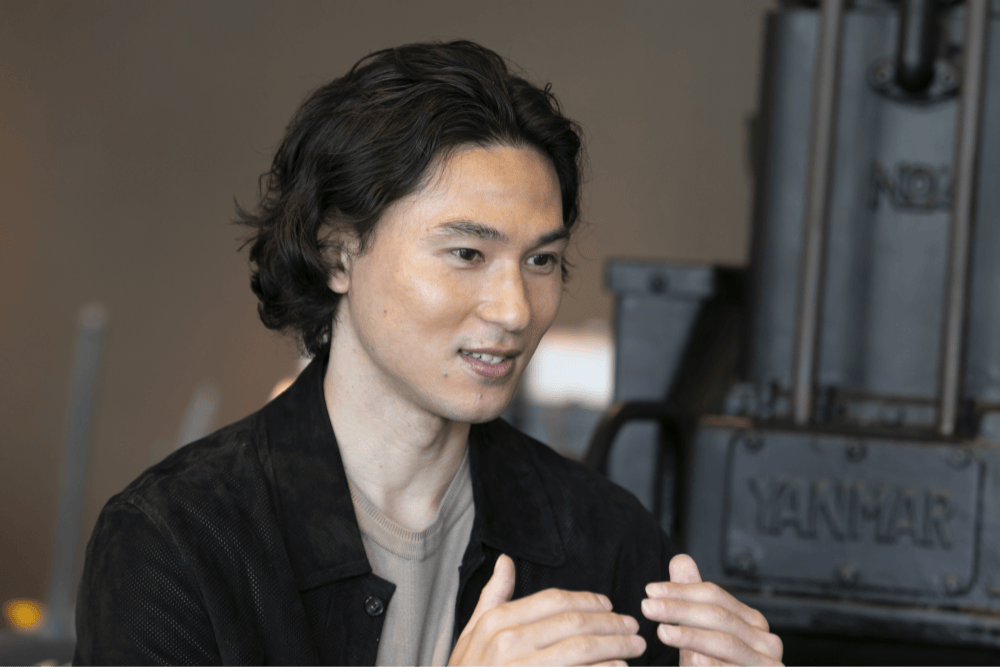
Minamino’s answer was simple.
“I go back to the starting point—‘I love soccer.’ Even when things aren’t going well, just kicking the ball makes me happy again. That’s how I reset.”
Moving forward, one step at a time, on the path you believe in—engineers and athletes alike quietly continue their journey toward the future.
The Pride and Responsibility Guided by What You Love—Becoming a Source of Strength in Your Own Way
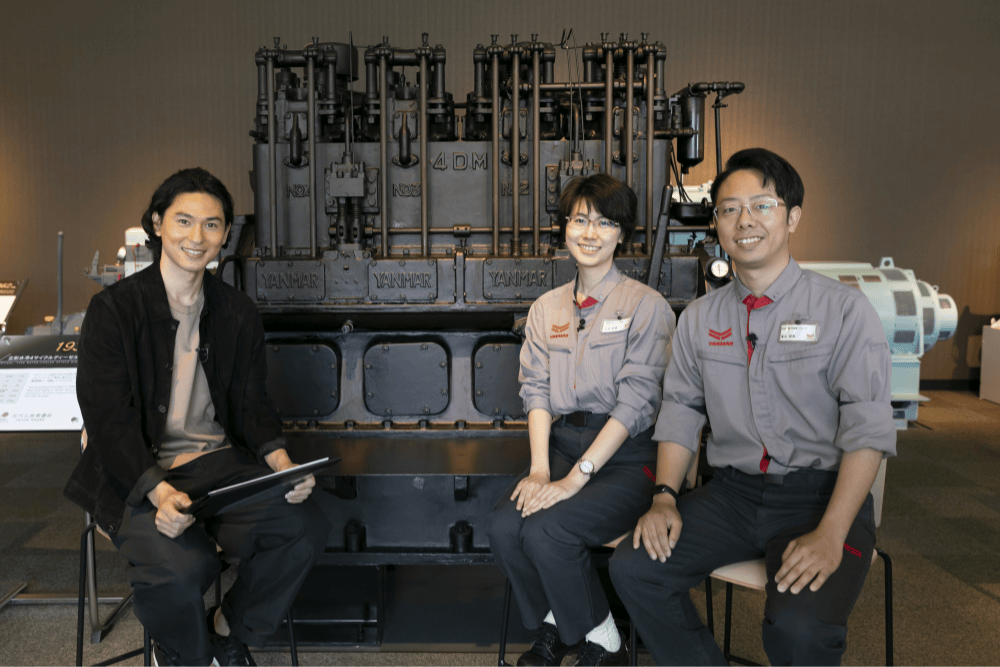
After listening to both the design and testing perspectives, Minamino quietly shared his thoughts.
“What I felt from talking with both of you is the strength of your pride in your work—and the passion that allows you to keep loving what you do. Engines aren’t something people usually see, but inside them is technology and effort refined with the assumption that they will be used for many years. The moments when you feel you’ve truly helped someone—that’s something we experience in our field as well. I really learned so much today. Thank you.”
The sensations he felt on the production floor, the words that stayed with him, and his own desire as a soccer player to inspire even more people—
Takumi Minamino shared in his own words the insights and emotions he gained throughout the day at Yanmar Power Solutions.
The Future Is Built on Someone’s Quiet Challenge
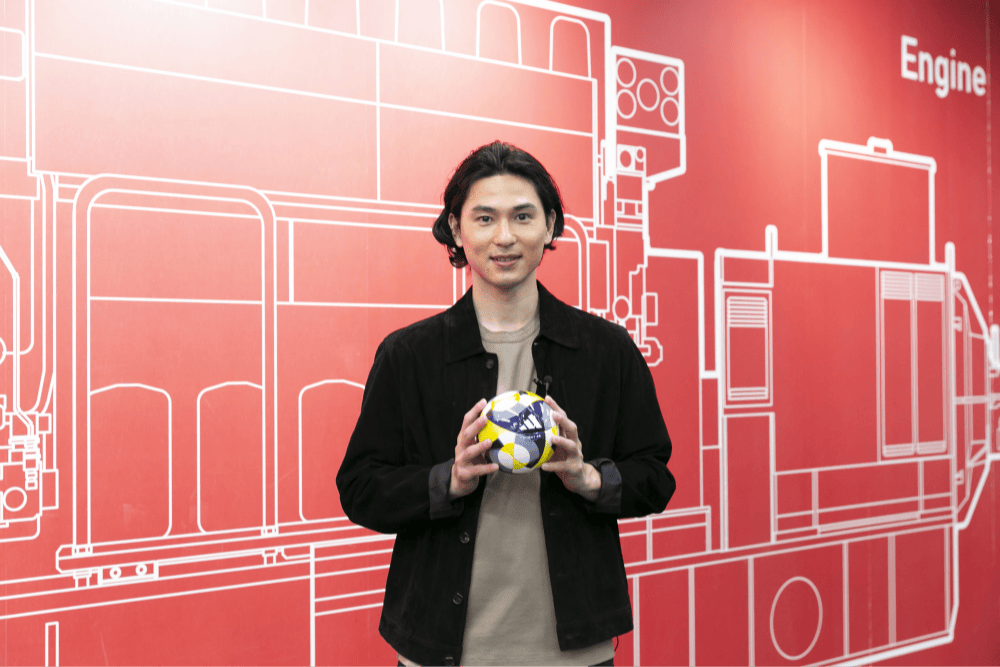
Alongside the land (agricultural machinery) and the city (construction machinery), Yanmar's domain is the sea.
Among Yanmar’s core domains, Minamino visited a marine engine site, an area where the company has continued taking on challenges for decades. There, he came face-to-face with the people whose passion drives the technology.
Through the interviews, a new question began to form within Minamino as a professional athlete:
“Am I contributing to the society of the future?”
“We hear words like environmental issues and sustainability all the time. But it wasn’t until I listened to the people actually working on these challenges that it truly felt real to me.”
Watching the engineers working silently and steadily on the production floor, he sensed a kind of pride that cannot be fully expressed in words.
“They don’t appear in the spotlight, but they’re the ones supporting the foundations of society. I found that incredibly inspiring. If my play can encourage someone in the same way, nothing would make me happier.”
The “makers” he met at the factory were building the future—not with flashiness, but with quiet determination.
And in their gaze lay a future no one has seen yet.
“A SUSTAINABLE FUTURE”—Takumi Minamino now carries a deeper meaning in those words, and he steps forward on his own path, marking that future with every play he makes.