Thinking About the Total Cost of Ownership (TCO) of a Wheel Loader: Avoiding False Economies
- Introduction
- Purchase price vs. real cost: the most common mistake
- What components make up the total cost of ownership of a wheel loader?
- How to optimize your total cost?
- Concrete example: 2 machines, 2 approaches
- And how to track all this on the ground?
- Conclusion
- FAQ: Total Cost of Ownership (TCO) of a Wheeled Loader
Introduction
When choosing a wheel loader, the natural reflex is to compare... prices.
But in the long run, it’s not the purchase price that weighs the most. It’s everything that comes after.
Maintenance, parts, fuel consumption, after-sales service, resale...
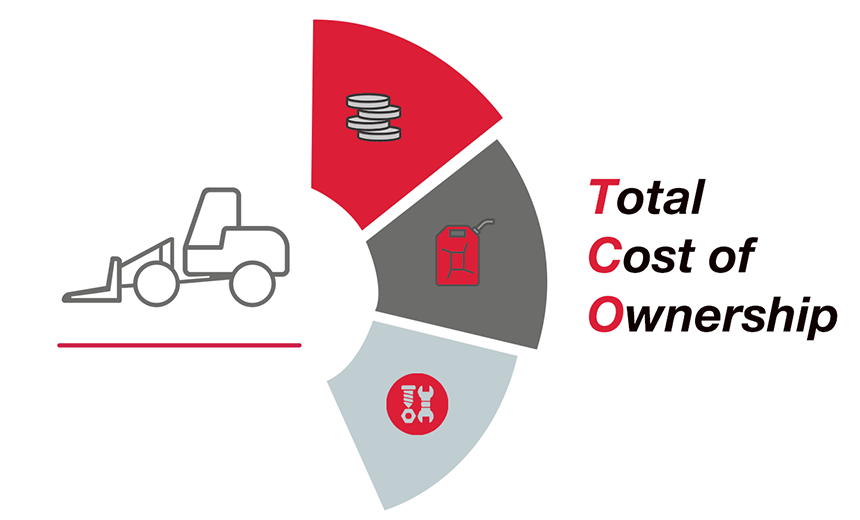
All these elements make up what’s called the TCO — Total Cost of Ownership.
Calculating it properly helps avoid false bargains and make a real strategic choice.
Purchase price vs. real cost: the most common mistake
This is a testimony heard several times in interviews:
“I bought a cheaper loader than usual... but it cost twice as much to maintain. I didn’t save anything.”
— Fleet manager, civil engineering sector
An attractive price can hide:
- High fuel consumption
- Very expensive parts
- Frequent servicing
- Low resale value
Conclusion? The “cheapest” at first can quickly become the most expensive over time.
What components make up the total cost of ownership of a wheel loader?
Here are the 6 main factors to include in your TCO calculation:
- Purchase price
This is the base, but only the beginning of the story. - Routine maintenance
Oil changes, filters, greasing, checks. The more a machine is used, the faster these costs add up. - Consumables
Fuel, tires, wear parts. To watch closely on intensive-use machines. - Breakdowns and repairs
A fragile or poorly maintained machine can blow the after-sales budget in a few months. - Insurance and warranties
Some brands offer warranty extensions: analyze cost/opportunity carefully. - Resale or trade-in value
A well-maintained, reputable machine retains real value after 5 or 7 years.
How to optimize your total cost?
Experienced pros apply several principles to control the TCO of their wheel loaders:
- Work with a reliable, well-established brand
- Choose machines adapted to real usage
- Plan maintenance preventively
- Track each machine with a dashboard
- Standardize the fleet to simplify management
“We know some brands are a bit more expensive upfront, but in use, they cost the least.”
— Technical director, civil engineering group
Concrete example: 2 machines, 2 approaches
Machine A: €80,000 purchase price
- Consumes 12L/h
- Requires oil change every 250 hours
- Parts available locally
- Estimated resale: 35%
Machine B: €70,000 purchase price
- Consumes 16L/h
- Frequent breakdowns, slow after-sales service
- Parts ordered from abroad
- Estimated resale: 20%
Result after 5 years:
→ Machine A costs less overall, despite a higher purchase price.
And how to track all this on the ground?
Pros organize themselves with:
- Excel files per machine
- Fleet management software (or via dealer)
- Scheduled alerts (oil changes, tires, etc.)
- Systematic user feedback
And above all… a fleet manager attentive to every anomaly.
“When a machine starts costing us too much, we know it must be included in the renewal plan.”
Conclusion
The total cost of ownership of a wheel loader is the real data to manage in order to stay profitable.
It’s not the price on the invoice that counts, but the real cost of use.
And you can control this cost if you:
- Choose a suitable machine
- Rely on a reliable after-sales service
- Closely monitor every intervention
A good purchase isn’t a good price. It’s a good investment.
Next read: Anticipating the renewal of your wheel loader fleet: methods and best practices.
FAQ: Total Cost of Ownership (TCO) of a Wheeled Loader
Q1: What is the TCO (total cost of ownership) of a loader?
It is the sum of the purchase price, maintenance, fuel consumption, repairs, insurance, and resale value.
Q2: Why isn’t the purchase price enough to decide?
A cheaper loader may cost more in use due to high fuel consumption or frequent maintenance.
Q3: How to reduce the total cost of ownership?
Choose a reliable brand, adapt the machine to the usage, plan maintenance, and standardize the fleet.