






















-
Our Philosophy
-

Realizing Sustainable Agriculture through Diverse Approaches: SAVE THE FARMS by YANMAR
Since its founding over 100 years ago, Yanmar Holdings has manufactured and sold agricultural and construction machinery, with engines at the core of its business. Hiroshi Okuyama, Managing Director overseeing Corporate Strategy, Technology, and Digital Transformation, is leveraging AI to develop a forward-looking vision that transcends the boundaries between the food and energy industries, while accelerating initiatives to bring it to life.
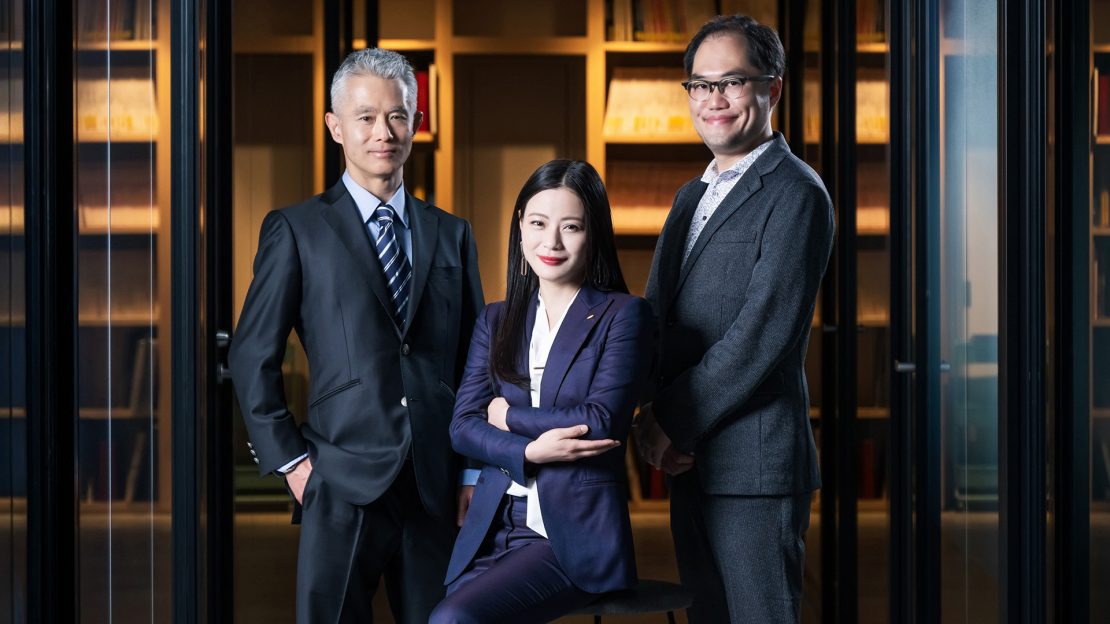
How can a company go beyond merely adopting technology to effectively embed its will within its business and organizational structure? Miku Hirano, President and CEO of Cinnamon AI—who has served as an expert on government panels and helped shape national growth strategies—and Isao Miyama, Head of the Future Design Lab at PwC Consulting, join us as we explore the ideal relationship between “will-driven management” and AI in forward-looking companies.
Fusing backcasting and forecasting to serve as a compass in an era of uncertainty
――Mr. Miyama, could you begin by describing the initiatives at your Future Design Lab?
Isao Miyama: Under my leadership, the Future Design Lab emphasizes a backcasting approach—working backward from a desirable future enabled by a game-changer, rather than from a future that is simply an extension of current operations. However, I must note that relying solely on backcasting is a gamble. The ideal is to combine the logic of optimizing resource allocation based on existing trends (forecasting) with the logic of working backward from a desired future (backcasting) to create a hybrid decision-making approach. This is precisely the mindset shift that management requires in today’s highly uncertain world.
Would it be correct to say that what Yanmar is currently working on is precisely the implementation of this hybrid decision-making approach?
Hiroshi Okuyama: Yes, that’s right.
In 2025, the Yanmar Group revised its groupwide mission and values for the first time in about 15 years. “Purpose: Why We Exist” is “A SUSTAINABLE FUTURE—New Value Through Technology.” We generally assume that human prosperity requires a trade-off with natural prosperity, where prioritizing one inevitably sacrifices the other. However, we defined our technology as the means to bridge that gap. We are especially focused on building a food value chain where these two areas intersect. By backcasting from our purpose and leveraging our existing strengths, we are taking on new challenges in fields such as agriculture, fisheries, and energy, while continuing to learn through trial and error.
Miku Hirano: As we enter a phase of redesigning the very structure of industry by working backward from our desired future, the role of AI is also set to change significantly. Drawing on my experience as an expert on a government panel involved in formulating the nation’s growth strategies and policies, I feel that the phase in which AI and digital transformation (DX) were viewed merely as cost-cutting measures has unequivocally ended.
I began to feel that turning point around the summer of 2025. As the United States and China successively unveiled national AI strategies, Japan has also gained momentum in establishing a legal framework by year-end. We now see a growing global consensus that AI is integral to a nation’s power, even shaping its foreign policy and national security. This paradigm shift is, naturally, sweeping through industry as well, and I believe that whether more companies—like Yanmar—will commit to structural transformation across all sectors will greatly determine Japan’s future industrial competitiveness.

The lack of will common among companies that have failed to achieve results with AI
――How is the Yanmar Group using AI and data within the SAVE THE FARMS by YANMAR initiative?
Okuyama: Japanese agriculture faces two major challenges: farmers leaving the industry due to an aging population and declining profitability, and emissions of methane and other greenhouse gases. In response, the SAVE THE FARMS by YANMAR initiative offers solutions that balance environmental sustainability with economic efficiency. The key takeaway is that Yanmar is actively engaged in agriculture as a business. Because we farm on our corporate land, we are free to collect a wide range of data and iterate as often as we like.
This practical experience led us to develop a solution that combines agricultural techniques to reduce methane emissions with methods that maximize the power of soil microorganisms to minimize the use of fertilizers and pesticides. At the same time, we have launched a project that ensures profitability by reducing greenhouse gas emissions through regenerative agriculture and by generating revenue from solar power by installing panels on farmland.
Our initiatives include implementing systems at client sites that use drone-based image recognition to determine the optimal harvest time for tomatoes and cucumbers, and underwater camera-based image recognition to assess and automate fish feeding. Our long-term goal is to create a world where AI automatically learns the tacit knowledge of skilled workers by analyzing logs and data, including videos of veteran workers performing tasks.
Miyama: That theme aligns closely with our efforts.
A common argument here is that if we envision a future in which everything is handled entirely by physical AI, it will take a decade or two to make that reality. However, I think there may be more areas than one might expect where intermediate solutions could work.
For example, if farmers were to acquire the literacy needed to interpret data from a drone they’ve flown as if it were an extension of their own physical senses, we could design new ways of working—or even new forms of agriculture—that differ from those of traditional farmers or from AI alone. The same should hold on the factory floor. Choosing such intermediate approaches and implementing them as quickly as possible is crucial.
Moreover, simply extracting the data and relying solely on AI for optimization risks losing important context—including how the data is compiled. In contrast, Yanmar’s active involvement in agriculture means its people can grasp the significance of such data and naturally implement human-in-the-loop and human-in-the-reasoning-loop approaches, ensuring that humans intervene in AI thought processes and decision-making. That point is critical.
Hirano: That’s exactly the heart of the matter.
In many cases, companies that fail to achieve their expected results after implementing AI lack a clear will for what they want to accomplish. Unclear intentions lead to unclear prompts, which can cause them to lose sight of their goal as the AI builds systems or prototypes. As a result, they don’t understand what they ultimately wanted to achieve, and the discussion gets bogged down in evaluating the PoC(proof of concept)’s accuracy alone.
AI lacks its own will. Humans must clearly demonstrate their will and build a relationship in which AI helps manifest that will. Embedding AI within an organization requires senior management to first clearly articulate their vision for what they intend to transform using AI.

Okuyama: To add to that, implementing AI must reflect the will of the people at the ground level. A corporate digital division could put all its weight behind a PoC—and it might even be a successful design—but it will not be implemented if front-line staff do not understand its significance. Those on the front lines are dedicated to solving the real-world challenges they face every day through digital means. Success in these situations is where our will is born.
Miyama: That said, when attempting to bring about sweeping changes, people in existing business units may feel that their role and identity are under threat, which can trigger a defensive reaction. That’s precisely why it’s important for management to redesign the entire system—including KPIs, evaluation systems, and incentive structures—while ensuring psychological safety that values the very act of taking on the challenge of transformation.
When leaders truly understand their team’s perspectives, those insights become assets that shape the future
――How exactly did Yanmar foster a shift in employee mindset and promote the adoption of digital technologies while ensuring psychological safety throughout the organization?
Okuyama: The first step we took was to bring together a community of like-minded individuals who use digital technology to solve front-line challenges. Some bottom-up activities had occurred earlier, but most of them remained largely out of the spotlight. Perhaps there was some concern among the staff that, if their boss found out, their efforts might be seen as stepping outside the scope of their duties.
We helped them recognize that their endeavor was legitimate and worthwhile and showed them that others in the company shared their aspirations. As a result, a community began to take shape organically, evolving into a powerful bottom-up movement. Furthermore, sharing the results with the executive committee triggered a top-down transformation, prompting division heads to acknowledge the need to adopt AI as well. As the bottom-up and top-down elements work in tandem, managers’ mindset—often the biggest barrier to change—is shifting significantly. Currently, this community of like-minded individuals has grown to 4,500 members.
As another unique experiment, I created an AI I call the “Okuyama Clone,” which I trained to learn everything from my decision-making criteria to the little tidbits on my travel blog. It is a way to leverage my knowledge as a resource for reviewing materials and career counseling. Questions one might be too shy to ask an executive or boss directly can be asked freely and without hesitation when speaking with a clone. It started as a joke, but its use has naturally spread throughout the company as a way for anyone to easily elicit insights from management.
Hirano: Business leaders who take a hands-on approach to using AI should have a powerful impact on organizational transformation. During meetings, such managers can demonstrate how to use AI. I believe their enthusiastic way of speaking and hands-on approach create a positive kind of pressure on the front lines, which then spreads throughout the entire organization.
Miyama: You’re absolutely right. Unless senior management demonstrates a commitment to leading by example, the psychological barriers among front-line employees will remain high, preventing organizational transformation from getting underway. However, I believe management should present it as more than just a demonstration of the tool’s convenience. They must emphasize the management vision for how this technology will transform the business structure and the business logic for translating that vision into actual on-the-ground systems. Isn’t the true role of decision-makers and leaders to bring these two perspectives together from a broader vantage point, translate them into the language of business, and ensure they resonate with those on the front lines?
Of particular importance, they must visualize that sense of excitement about the future to the point that it can be translated into the language of business. When envisioning the future of agriculture, fisheries, and food, we should try to translate our will into a future business portfolio. Taking that approach will reveal, through cold, hard logic, what it means from a business perspective. How we design that intersection will be key to moving our transformation efforts forward without derailing them.
Okuyama: Good point. As AI continues to evolve, general knowledge and wisdom will become commoditized, and true value will shift toward proprietary on-site data. Manufacturers like us—those with a real-world presence—can take the lead and compete more effectively in this area than giant platform companies. How can we leverage data from real-world settings—such as agriculture, fisheries, and construction—to build an ecosystem that enables those involved to generate diverse ideas?
Yanmar embodies our “HANASAKA” spirit, which believes in human potential and encourages people to take on new challenges. We intend to use these values as a foundation for building a platform that integrates diverse on-the-ground data and partners with organizations in Japan and abroad to address social issues worldwide.
Hirano: AI is evolving at an incredibly rapid pace, and I feel that simply being at the forefront of this field is valuable in itself. As AI becomes the norm, the pace at which people acquire specialized knowledge will accelerate, and the number of professionals with expertise across multiple fields will increase. As a result, we can expect greater cross-industry value creation.
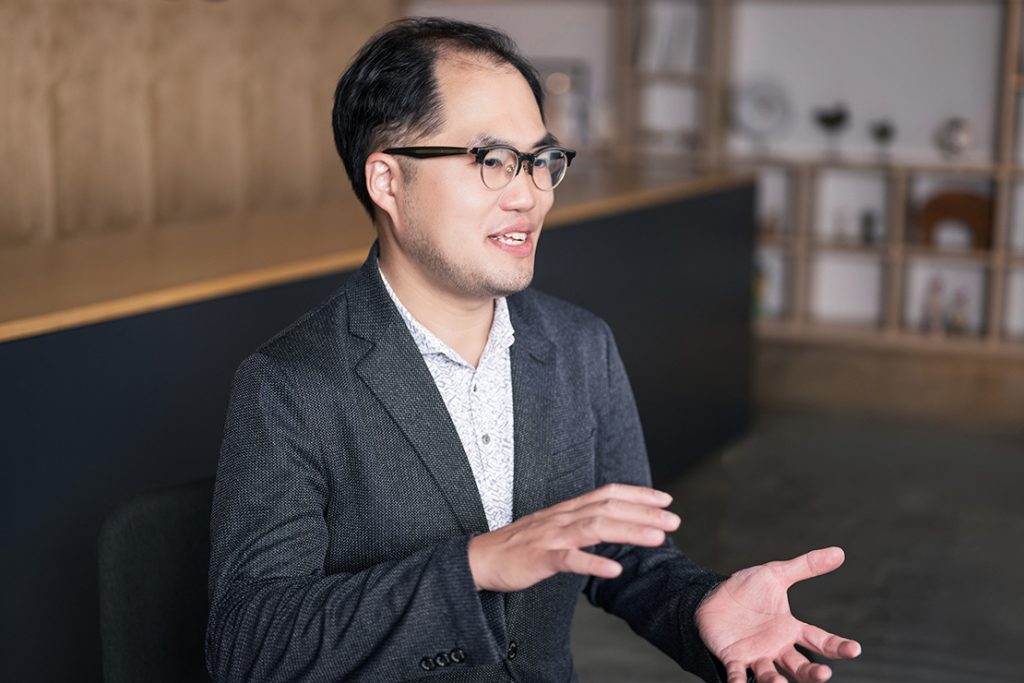
Miyama: As I listen to Mr. Okuyama, I strongly resonate with two trends: industrial convergence and the redesign of industrial architecture. Sustainable systems that transcend the boundaries between energy and agriculture do not simply build on existing industries; rather, they arise from a mindset of complete reconstruction. In fact, many Japanese companies have far greater potential than they realize. We have accumulated advanced engineering capabilities over the years, along with technologies such as biotechnology, our patents, and the tacit knowledge of our field staff. Despite these abundant assets, we’ve been constrained by existing frameworks and haven’t been able to fully harness that potential.
Naturally, Japanese companies aren’t limited to the manufacturing sector. That is precisely why I believe many leaders must collaborate as partners to answer how to leverage AI to expand their potential, envision a desirable future from a broad perspective that transcends industry boundaries, and determine how to connect their respective strengths within an ecosystem to create value.
With its population aging and set to decline, Japan needs the capacity to proactively shape the future rather than simply make pessimistic predictions. We should feel free to embrace greater optimism by envisioning a different kind of society in which decisive action increases productivity and makes everyone happier. We intend to continue widely sharing and discussing examples such as Yanmar’s initiatives—a concrete embodiment of that future—as a force capable of transforming the state of industry throughout Japan.
Hiroshi Okuyama
Managing Director overseeing Corporate Strategy, Technology, and Digital Transformation at Yanmar Holdings. He joined Sumitomo Corporation after completing his graduate studies at the University of Tokyo. He earned an MBA from Columbia University, worked at the Boston Consulting Group, and joined Yanmar Holdings in 2015. He was appointed to the Board of Directors in 2022.
Miku Hirano
Representative Director and CEO of Cinnamon AI. She graduated from the University of Tokyo’s graduate school. She founded Naked Technology while still a student, followed by Cinnamon AI in 2012. She has served as a member of the IT Strategy Office at the Cabinet Secretariat, the New Economic and Industrial Policy Subcommittee at the Ministry of Economy, Trade and Industry, and the Cabinet Secretariat’s Council for the Realization of a New Capitalism. She has also served as an expert member of the Japan Growth Strategy Council under the Takaichi administration.
Isao Miyama
Executive Partner at PwC Consulting. He leads the Future Design Lab within the company’s Strategy Consulting Division. He joined PwC Consulting after stints at a digital engineering firm and a foreign-affiliated consulting firm. In 2020, he established the Future Design Lab, a specialized organization focused on future-oriented consulting.