






















-
Threads of the Future: Yanmar and French cultural institution lille3000 co-host the innovative art exhibition “Futurotextiles 7”
-

What is the relationship between branding that starts with “people” and “HANASAKA”?
-

Yanmar Hosts Japan’s First Sailing and Wake Surfing Event, the Yanmar Premium Water Festa 2017 In Biwako
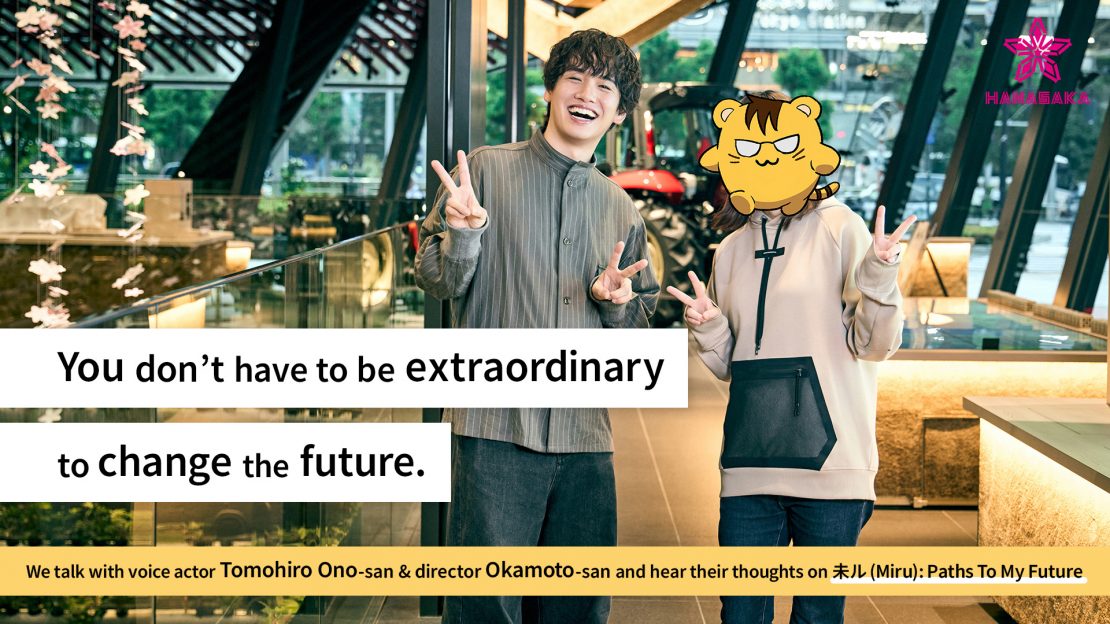
“未ル (Miru): Paths To My Future” an original anime series created and produced by Yanmar, was broadcast on terrestrial television from April to May 2025. MIRU is a robot that transcends time and space to assist people in various eras. In the five episodes of the anime, people struggling to survive amid hardship in different eras and locations each encounter MIRU, and together they take a step toward changing the future.
At the heart of the work lies the spirit of “HANASAKA”, a philosophy passed down since Yanmar’s founding. The values of HANASAKA—believing in people’s potential and nurturing people and the future by encouraging them to take on challenges—are reflected in the character of MIRU, who supports people in taking their first steps forward.
At Y media, we refer to both people taking on challenges and those supporting them as HANASAKA Heroes, and we share their efforts with the world.
This time, we’ll introduce you to Okamoto-san, the director of Episode 101: The King of the Forest, as well as Tomohiro Ono, the voice actor who plays the protagonist, Mario, in that episode.
Okamoto-san has been drawing since they were a child, opening the door to a career as an animation artist. Ono-san kept following his dream of being a voice actor even as he struggled to gain a foothold in the industry; this episode was his first leading role. They both believed in their own potential and carved out their own future path. We heard their thoughts on “未ル (Miru): Paths To My Future” and discussed how their own life stories are reflected in the anime.
The story is set in a tropical rainforest. I wanted to depict the sort of “living forest” that people would want preserve for the future.
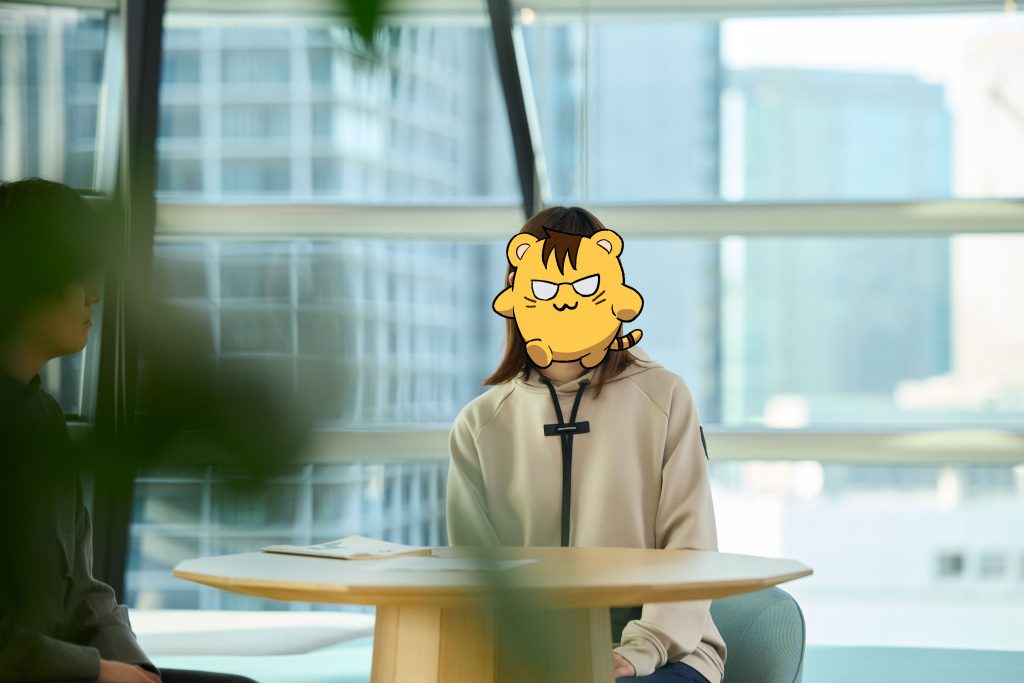
―You worked together on Episode 101: The King of the Forest of the anime “未ル (Miru): Paths To My Future” (“未ル(Miru)”) as the director and as the voice actor for the lead role. Has it been a while since you’ve met like this?
Tomohiro Ono (“Ono”): Since we said hello to each other when we were doing the post-recording, right?
Okamoto: About half a year, I think. It’s been a while.
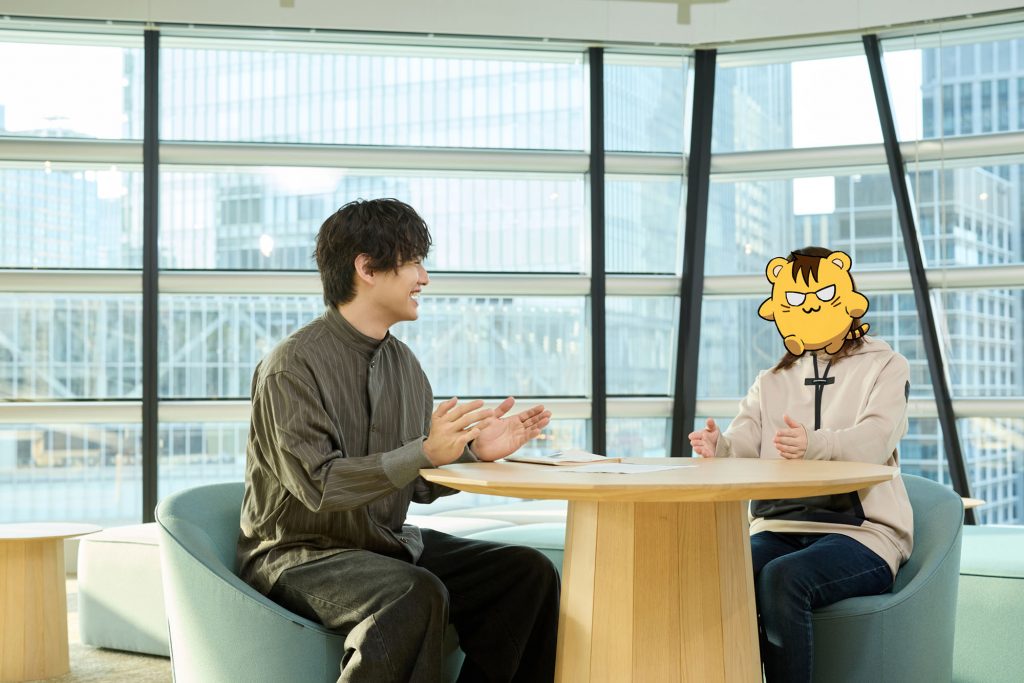
Ono: But—I think maybe Okamoto-san isn’t aware of this, but I actually auditioned for the first anime where she served as director, “Mecha-Ude -Mechanical Arms-”(“Mecha-Ude”) in 2024.
Okamoto: Really?
Ono: Yeah. Unfortunately, I didn’t make the cut that time, but I’m really happy that we were able to work together this time.
――Ono-san, your role as Mario Vasco Debritto here was your first time playing the lead in an anime production, is that right?
Ono: That’s right. I was thrilled to land my first lead role, and it was truly an honor to be part of a new venture where Yanmar went all-in on making an anime. By the way, it’s normal in the industry to have to wait a month or more after an audition to know if you’ve passed or failed, but this time they let me know after just two days that I had passed. Of course, I was happy, but I was also like, “Isn’t that a bit fast?” (laughs). There wasn’t much time between passing the audition and the recording, so I was really feeling a mixture of excitement and nerves.
――What did you focus on when playing the role of Mario?
Ono: When I first read the script, my impression of Mario wasn’t that he was a super-unique character, but more of a down-to-earth boy—in a good way. He feels a sense of sadness as the forest he’s known since childhood changes and animals disappear, but at the same time, he doesn’t believe he can do anything big to stop it. He’s just an ordinary person that you might find anywhere. So, I thought that if I overthought the role or tried too hard to shape the character, it would end up feeling unnatural.
Also, when Mario starts talking about the forest creatures he loves so much, he becomes so talkative that those around him are taken aback, and I thought that was something I had in common with him. I’m the sort of person who likes to talk so much that people say I was born mouth-first (laughs). I approached the post-recording with the idea that it was best to act naturally instead of trying too much to consciously shape my performance.
Okamoto: We really just had him perform naturally, and that was perfect for how we had envisioned Mario. With the story and the art this time, we weren’t trying to do something offbeat—we just created it with the mindset that we wanted to see what we could do, and I think the approach that Ono-san took was a perfect fit for the way that we were putting together this anime.
――Tell us the scene that really left an impression on you, your favorite scene.
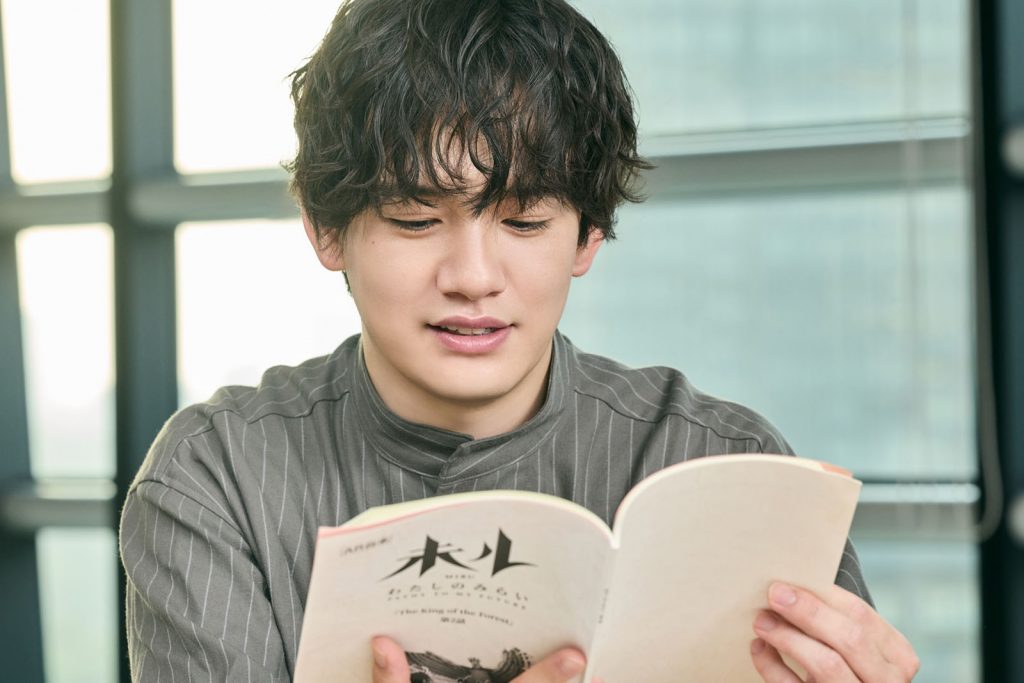
Ono: Episode 101 is set in a tropical rainforest, and I thought how that forest was depicted was wonderful. The plants and animals are drawn in such a real, lifelike way, and that really impressed me.
Okamoto: That was one point that we paid particular attention to. We brought in a nature filmmaker, Yasuhiko Ito, to supervise this and we had him verify each plant and animal, one by one, as we drew them. That’s because, while the setting for this anime is a jungle, it’s not explicitly meant to be any particular country or region. Including an animal that only lives in one particular region would narrow down our location, so we received advice from that perspective as well.
In addition—and this is a complete coincidence—I also developed an interest in plants and animals starting two or three years ago. I have more than 20 different snakes and cacti at home, I devour encyclopedias, and that experience and that knowledge came in handy when making this anime.
Ono: Wow, that’s an amazing coincidence. There are some snakes in that scene with the fire, for sure.
Okamoto: Some of the snakes in the anime are the same kinds that I have. It wasn’t originally something that I intended to connect to my work, I just had an interest in them, but when I got the offer for this anime, I felt like I had been drawn to it, somehow. I really hadn’t been interested in anything but drawing and making anime before, but I realized that expanding my interests might come in handy later on.
Doing ‘what I can’ at each moment in time built the foundation for where I stand now
――Ono-san, what line of Mario’s did you empathize the most with?
Ono: I like the line that Mario says after he gets the robot, MIRU, to help him protect the forest. At the end, he says, ‘I’ll do what I can [for the future].’ When it comes to protecting the forests, or to environmental problems, a single individual doesn’t really have much power, and I think unfortunately that can lead people to just stop thinking about it and stop taking action. But we should each try to do whatever we can. I don’t think there are many people who think that way and actually follow through, so I found it inspiring.
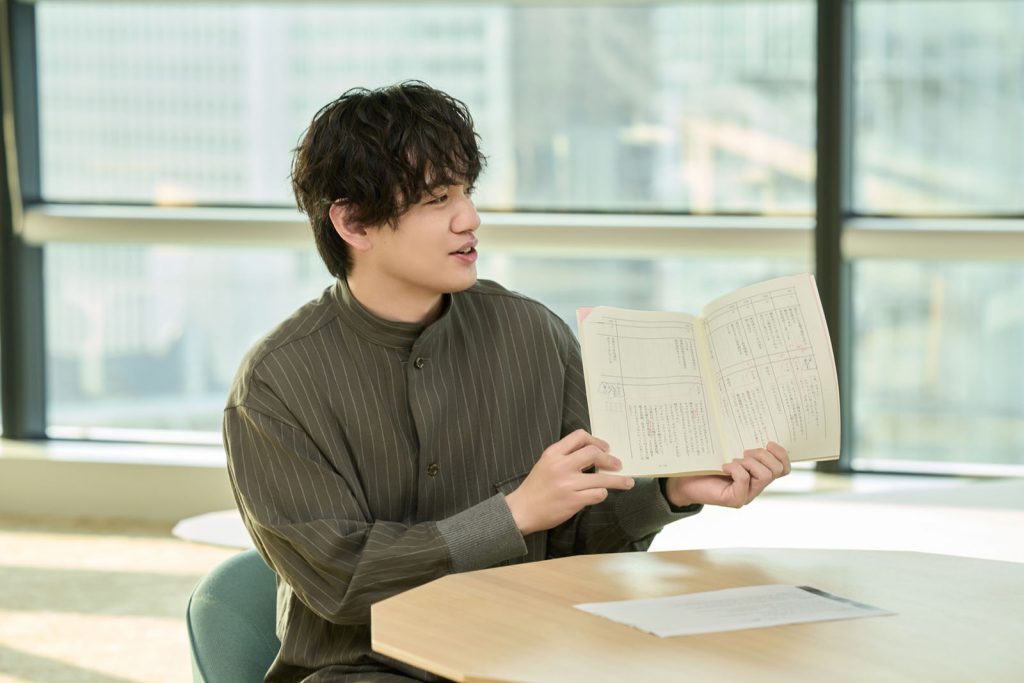
――Mario’s line, ‘I’ll do what I can’ also ties into the concept of the “butterfly effect*” that runs through the whole series. Have either of you ever experienced the “butterfly effect” in your own life?
*The Butterfly Effect: When a seemingly trivial occurrence ends up snowballing into an unexpectedly major event.
Ono: When I was a sophomore in college, I decided that I wanted to become a voice actor, over the objections of my parents…well, that is to say, we had a big fight, and I left for Tokyo. But the reality of it was harsh, and I was struggling to make any headway. Even so, I refused to give up, and over the course of seven years I went to four different voice acting schools. Part of me thought that going to more schools would increase my chances—but despite all that, I kept failing the auditions for voice acting agencies.
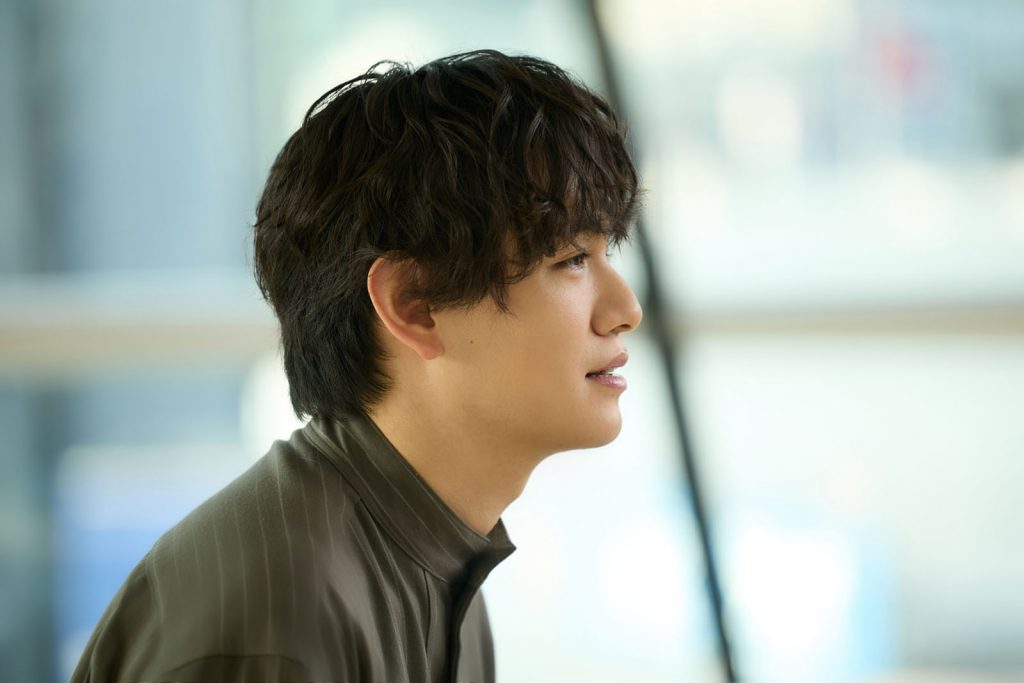
But I kept going to these voice acting schools, never missing a day, no matter how tough it got. Since I never took a break and I had a good attitude, I continued to be offered auditions. I continued going to classes, I continued going to auditions, and, eventually, an agency picked me up. From there, I’ve arrived at a point where I’m now fortunate enough to be working as a voice actor, which was once just a dream of mine. In the sense that my persistent efforts paid off, I suppose you could say that’s my own version of the butterfly effect.
――I’m sure there are plenty of people who have talent but aren’t able to make any headway and give up, but in your case, Ono-san, you continued doing what you could until you could seize an opportunity.
Ono: That’s right. In our line of work, chances are guaranteed to come around just because you belong to an agency. You have to audition for everything, and you won’t get called to audition in the first place if nobody knows who you are. In that sense, the importance I’ve put on interacting with people may have led me to where I am today.
Since I first started, I’d also been active in attending get-togethers with directors and anime production company staff. It was less about making work connections and more that I wanted to pick the brains of people in the industry, but the end result was that I was able to meet a lot of different people, and I think that helped make sure my name came up at casting meetings. It was through these get-togethers that I came to know Takeshi Takadera, the audio director for Episode 101, and it was at one of them that some people I know invited me to participate in Takadera-san’s anime. One by one these meetings with different people linked up, and I think that’s what made it possible to get to where I am today.
Okamoto: My story might be somewhat similar to Ono-san’s—in the sense that where I am now is the result of simply doing what I could, step by step.
Unlike Ono-san, at the start I didn’t have a clear idea of what I wanted to do, but since I was a kid I’d always enjoyed drawing and other creative activities, and I just kept at it. At that time, I never imagined that I would be making anime. When I was in college, I took a part-time job with a creative team that would later become TriF Studio, and I showed the CEO, Shuichi Aso, a drawing of a robot that I had been working on. That ended up being a major turning point. Aso-san loved my robot! He said, “These are awesome—let’s turn them into an anime!”. That comment set a lot of things in motion, leading to TriF Studio’s first anime, “Mecha-Ude”, and kicking off my career as an anime director.
――Things really came together for you.
Okamoto: TriF Studio started as a student film production club, so at that time, none of us had ever created anything animated. Even so, with the help and advice of lots of different people in the industry, over ten years we managed to get things organized and complete “Mecha-Ude”And we’ve made use of those accomplishments and that experience in 未ル(Miru) as well.
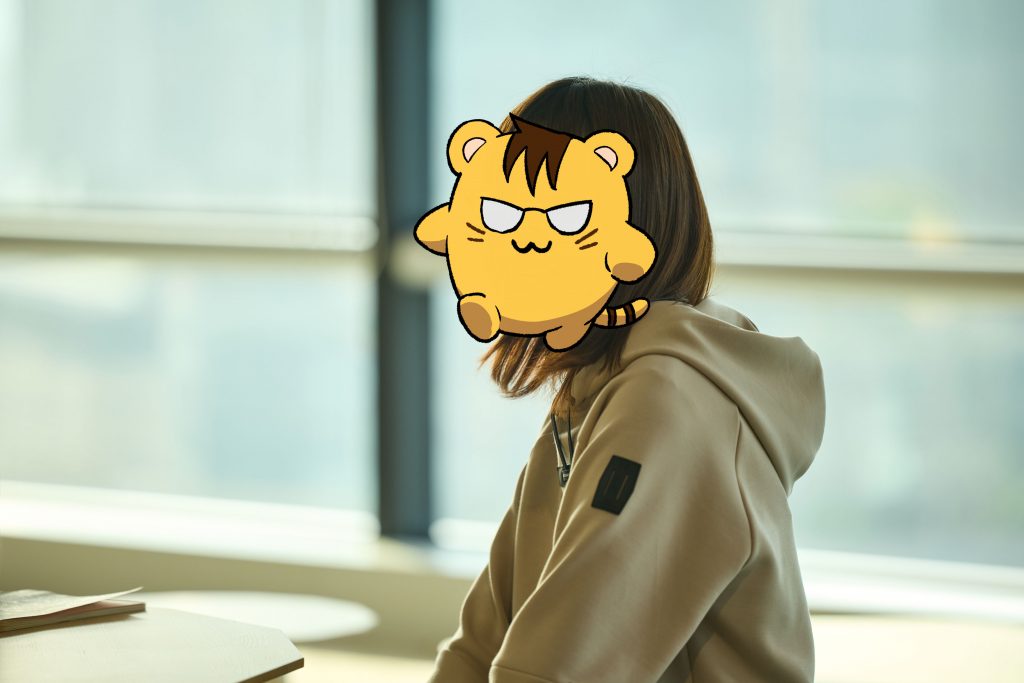
Looking back, being persistent with my art and continuing to draw pictures opened the door to an opportunity, and taking up that challenge has led to “Mecha-Ude”and 未ル(Miru). That’s not exactly a Butterfly Effect, but I feel that it’s led me to a future that I could never have predicted.
“I want to draw manga.” “I hope I’ll still be voice acting 50 years from now.” What kind of future do these two envision for themselves?
――In 未ル(Miru), there’s the idea that we can create our own future. What kind of future do you two want to create for yourselves? Tell us your goals and prospects for the future.
Okamoto: Right now, I’m mainly making anime, but for a while during my student days, I had a vague ambition to become a manga artist. I never really got started back then, but recently I’ve started drawing some manga as a hobby.
While it’s not exactly the same as Mario’s ‘I’ll do what I can,’ internally I feel like ‘what I can [do]’ has grown, and in the future I want to try different areas instead of tying myself to just one thing.
――How about you, Ono-san?
Ono: My immediate goal is to play the lead role in a 12-part anime series. Getting my first leading role in an anime in 未ル(Miru) has made me even more determined to take on a whole series instead of a single episode.
Beyond that? I want to keep voice acting right to the very end—I plan to die standing in front of a mic! I have no idea how anime will evolve, but no matter what form it takes and no matter how old I get, I want to keep performing in front of that mic.
――Exactly. There are living legends still going strong in their 70s and 80s.
Ono: That’s right. What’s unique about the world of voice acting is that even these superstars have to audition like everybody else, and sometimes even they don’t make the cut. Even voice actors with more than 50 years of experience are still doing it, still on the grind, so if someone like me with just nine years of experience fails an audition, that’s no reason to get discouraged. I hope to follow in the footsteps of the greats who came before me and have a long career as a voice actor.
Okamoto-san believed in her potential, became a director, and keeps on doing what she can do. Ono-san labored for a long time in obscurity, slowly getting closer and closer to his dream, and wants to have a long career as a voice actor. Yanmar believes that these two are real HANASAKA Heroes—fostering people and the future by believing in the potential of people and providing support as they tackle challenges.
Profiles
Okamoto
 Animation director and illustrator. Graduated from the School of Design at Kyushu University. Active as an illustrator and animator since graduating. Currently with TriF Studio, a video production company in Fukuoka. After producing music videos and other works, she raised production funds through crowdfunding both in Japan and overseas for the original anime“Mecha-Ude”, on which she was responsible for the original concept, direction, and character design.
Tomohiro Ono
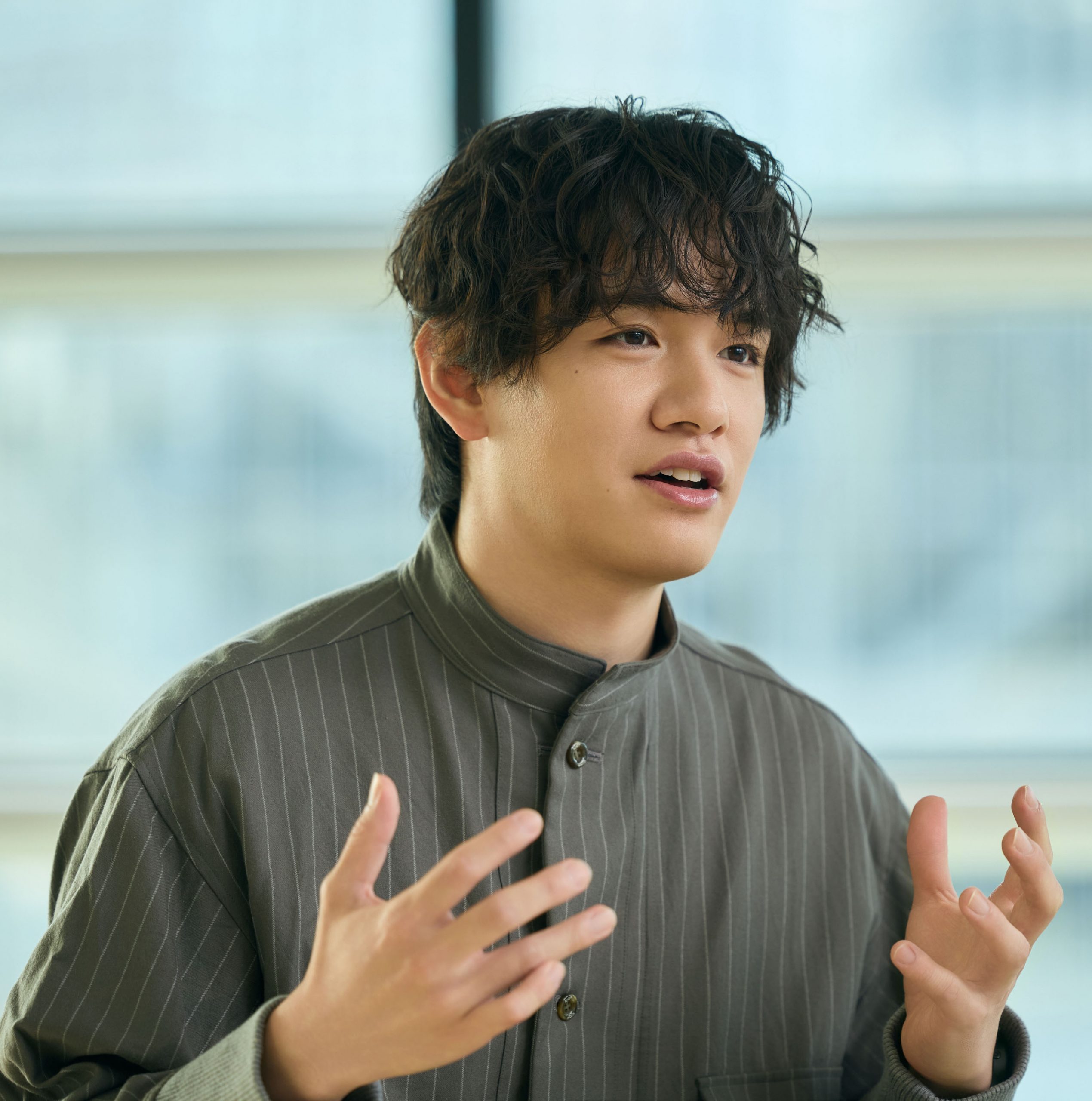 Voice actor. Currently with Mausu Promotion. Known for his work as the anime characters Makoto Shibe in Tomodachi Game, Rosie in THE RED RANGER Becomes an Adventurer in Another World, and Nobuyuki Kumano in Oshi no Ko.
Photos: Marie Ishihara
Interview/Text: Noriyuki Enami (Yajirobe)